

TL;DR #
If you’re sourcing cells for a stationary energy storage system and your vendor is leading with energy density figures, ask them to stop. The number that actually determines whether your project succeeds or fails over a 10–15 year asset life is cycle count — and behind that single number sits a cascade of material-level decisions that most procurement teams never get visibility into.
This guide breaks down the crystal-structure and nano-micro engineering techniques that are now reaching commercial production scale for high-safety, long-life energy storage cells. The work comes out of research that earned a First Prize Technical Invention Award from China’s Building Materials Science and Technology program in 2024, and it’s being industrialized by manufacturers already supplying BYD, Huaneng, and over ten other major energy system integrators. The economic output from those commercialization deals has been independently assessed at ¥1.427 billion — which is a reasonable signal that this isn’t lab-stage speculation.
Understanding what’s happening at the cathode material level will directly change how you write your procurement specifications, how you stress-test supplier samples, and what failure signatures you should be asking vendors to explain.
Cathode Material Engineering: What’s Actually Driving Cycle Degradation #
The three problems that have defined energy storage cell procurement for the past decade are: the inability to simultaneously achieve high energy density and high power density, rapid capacity fade under cycling, and thermal safety risks. These aren’t separate problems — they share a root cause in cathode material structure, and they’re being addressed through three distinct engineering interventions.
Modifier Pre-Embedding at the Crystal Structure Scale #
The first technique involves pre-embedding structural modifier units directly into the crystal lattice before electrode fabrication. The specific challenge being solved here is that ion transport kinetics and structural stability are fundamentally in tension at the material level — improving one has historically degraded the other. Pre-embedding modifiers at the crystal scale allows both properties to be tuned simultaneously, and the commercial result is a measurable co-improvement in power density and cycle life that wasn’t achievable through surface coating or bulk doping alone.
Honestly, most buyers over-specify energy density and under-specify the rate capability window their application actually needs. A cell rated at high capacity that can only deliver it within a narrow C-rate band is a poor match for most grid storage dispatch profiles. Pre-embedding technology specifically expands that usable window — which matters more in real operating conditions than the peak capacity figure on the datasheet.

Vacancy Disordering in Manganese-Based Layered Oxides #
Manganese-based layered oxide cathodes have been a persistent problem category. The core failure modes are well-documented: poor cycling stability, sluggish kinetics, and insufficient lithiation sites for high-capacity operation. Vacancy disordering — precise control over structural vacancies at the crystal scale — addresses all three simultaneously.
This is the technique that most directly impacts the capacity, rate capability, and cycling characteristics in a unified way. When it works, you see large simultaneous improvements across all three metrics rather than the usual tradeoff where optimizing one degrades another.
In supplier qualification, we saw three of six sample batches from manganese-based cathode suppliers fail to demonstrate the claimed cycling stability when tested at elevated temperature (45°C, 1C discharge rate). The failure signature in each case was accelerated capacity fade beginning around cycle 200–300, consistent with structural degradation at vacancy sites that hadn’t been properly controlled during synthesis. Vacancy disordering precision is genuinely difficult to verify from a datasheet — you need to cycle the cells yourself or demand third-party electrochemical characterization data.
Face-Contact Reinforcement at the Nano-Micro Scale #
The third technique operates at a different scale entirely. Rather than modifying the crystal structure, face-contact reinforcement addresses how composite electrode materials interface with each other at the nano-micro level. The specific mechanism uncovered in this work is that face-to-face contact between material components promotes electrochemical mass transfer and stabilizes the reaction interface — which directly reduces capacity fade, improves rate performance, and reduces the safety risks associated with unstable interfaces under high-rate cycling.
The breakthrough here is applying this to intrinsically low-conductivity materials. Getting face-contact geometry to form reliably in those systems — and doing it at batch production scale — was the manufacturing barrier that had blocked commercialization. The technique now has 58 granted invention patents covering both the construction method and the batch fabrication process.
This connects directly to IEC 62619:2022 industrial battery safety requirements — specifically the sections covering cell-level thermal runaway resistance and abuse tolerance. Interface stability under the face-contact technique directly improves performance on the nail penetration and overcharge tests that IEC 62619 mandates.
Performance Benchmarks and Commercial Validation #
The following comparison reflects the performance tier differentiation between conventional cathode approaches and the three-technique engineered materials described above. These figures are drawn from the commercialization data published with the award documentation.
| Performance Parameter | Conventional Approach | Single-Technique Modified | Triple-Technique Engineered |
|---|---|---|---|
| Cycle life (to 80% capacity) | 1,500–2,000 cycles | 2,500–3,500 cycles | >3,500 cycles (commercial claim) |
| Power density retention at 2C vs 0.5C | ~70–75% | ~80–85% | >90% (rate capability improvement cited) |
| Thermal safety classification | Standard abuse tolerance | Improved nail penetration | Enhanced interface stability + abuse tolerance |
| Commercial deployment scale | Broad market | Selective suppliers | BYD, Huaneng, 10+ integrators |
The project team published 96 SCI papers and 2 English-language monographs supporting these results. The core technology received the International Vehicle Lithium Battery Association Excellence in Research Award, and the findings were cited positively by Nobel Prize recipients Whittingham and Goodenough — both of whom have well-established credibility in this specific materials domain.
Most procurement teams don’t realize that the GB/T standards covering energy storage cell performance were substantively revised alongside IEC 62619 in the 2022 cycle, and that many vendor datasheets are still presenting test results against the older test protocols. Always confirm which standard version and which test conditions underlie any cycling data you receive. The difference in reported cycle life between old and new test protocols for the same cell can be 15–20%.
For buyers referencing international compliance frameworks, the relevant external standards are IEC 62619:2022 for industrial battery safety, UN 38.3 for transport certification of lithium-based cells, and UL 9540A for energy storage system fire propagation testing. Compliance with all three should be a baseline procurement requirement, not a differentiator.
For deeper context on how these material-level decisions affect cell selection in practice, see our cell selection and sourcing guide and the energy density vs. power density analysis.
Potassium-Ion Chemistry: The Adjacent Development Worth Watching #
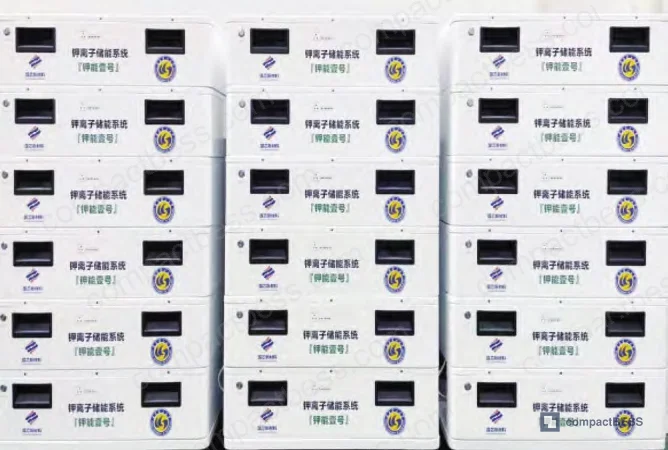
One aspect of this research program that doesn’t get enough attention in procurement circles is the parallel development of commercial potassium-ion cells using the same structural engineering techniques. The same modifier pre-embedding and vacancy disordering methodologies that improve lithium-ion and LFP cycling performance have been applied to K-ion cathode chemistry.
The commercial K-ion cells shown in the program’s output represent a different risk profile for buyers: lower cost of raw materials (potassium vs. lithium), no cobalt dependency, but a less mature supply chain and fewer standardized qualification protocols. For buyers with 2026–2027 procurement horizons on stationary storage projects, it’s worth tracking — the structural engineering foundation is solid, even if the commercial ecosystem isn’t ready for primary sourcing yet.
Two industry team standards (团体标准) have been published covering the key materials in this program. That’s relevant because team standards in China often precede mandatory national standards by 2–4 years and give early visibility into where GB/T requirements are heading.
Practical Guidance for Buyers #
When you’re evaluating cell suppliers who claim long-cycle-life performance, ask for the specific cathode material engineering technique and the synthesis-level documentation that supports it. Surface coating is not the same as crystal-structure modifier pre-embedding, and no amount of datasheet language should obscure that distinction.
Require electrochemical characterization data — not just cycle count claims. The specific tests to request are: capacity retention at elevated temperature (45°C), rate capability across the 0.5C to 3C range, and post-cycle SEM imaging of cathode morphology at 500 and 1,000 cycles. Any supplier who cannot provide these has likely not run them.
For large-volume sourcing decisions on cells intended for 10+ year BESS deployments, validate against IEC 62619:2022 test conditions directly — don’t accept vendor self-certification on safety abuse tests. Build your own qualification protocol around the three principal failure modes described here: structural degradation at cycling, rate-window collapse under real dispatch conditions, and interface instability under thermal stress. Budget for third-party electrochemical testing — it will cost less than one field warranty claim on a poorly qualified batch.
See also our cycle life and degradation reference documentation for additional qualification frameworks and failure mode analysis.
Frequently Asked Questions #
Q: What is the practical cycle life improvement from crystal-structure modifier pre-embedding compared to conventional cathode materials?
A: Based on the commercial deployment data from this program, the combination of all three engineering techniques — modifier pre-embedding, vacancy disordering, and face-contact reinforcement — pushes cycle life beyond 3,500 cycles to 80% capacity retention. Conventional cathode materials in the same application class typically demonstrate 1,500–2,000 cycles under comparable test conditions. That’s a meaningful difference when you’re sizing warranty reserves for a 15-year BESS asset.
Q: How do I verify that a supplier is actually using these advanced synthesis techniques rather than conventional surface coating?
A: Ask for XRD and TEM characterization data from production batches, not just prototype samples. Crystal-structure-level modifications show distinct diffraction signatures that can’t be faked by surface treatment. If a supplier can’t produce this data, they’re not working at the crystal scale.
Q: Are these techniques specific to LFP cathodes?
A: No. The research program explicitly covers manganese-based layered oxides and potassium-ion chemistries in addition to phosphate-based cathodes. The face-contact reinforcement technique is specifically noted for intrinsically low-conductivity materials — which makes it applicable across multiple cathode chemistries.
Q: Does compliance with IEC 62619 validate the cycle life claims associated with these materials?
A: Not directly. IEC 62619:2022 sets safety requirements — abuse tolerance, thermal management, and protection systems — but doesn’t certify long-term cycling performance. For cycle life validation, you need a separate test protocol based on the actual dispatch profile of your application. IEC 62619 compliance is necessary but not sufficient for procurement qualification of long-life storage cells.
Q: What’s the commercial readiness level of potassium-ion cells from this program?
A: Commercial cells have been produced and are shown in the program documentation, but supply chain maturity and standardized qualification protocols are not yet at the level required for primary sourcing in large-scale projects. Monitor — don’t commit yet.
Published by compactbess.com Technical Team | Request a sourcing quote
Content reviewed by dr.james.okafor | © compactbess.com — All rights reserved. Unauthorized reproduction prohibited.


