

TL;DR #
Industrial-scale directional recycling technology (DRT) achieves nickel-cobalt-manganese recovery rates of 99.6% and lithium recovery of 93.8% from spent power cells, while reducing carbon emissions by 49.25% versus conventional pyrometallurgical routes. For buyers sourcing recycled battery materials, this means the quality gap between virgin and reclaimed cathode precursors is narrowing faster than most procurement teams assume — and your supplier’s recycling methodology now has direct implications for product certification and EU carbon compliance. Start by requesting documented recovery-rate data and BTB traceability records from any supplier claiming recycled-content compliance.
Overview #
The assumption that recycled battery materials are inherently second-tier is becoming harder to defend. Industrial validation data from a large-scale recycling technology group operating integrated production parks in central and southern China shows that closed-loop remanufacturing can now return cathode-grade nickel, cobalt, and manganese at purities competitive with primary ore processing — and do so at significantly lower energy and carbon cost. The research draws on nearly 20 years of engineering development and covers two active industrial demonstration projects, making it one of the more substantive field-validated datasets available on this topic.
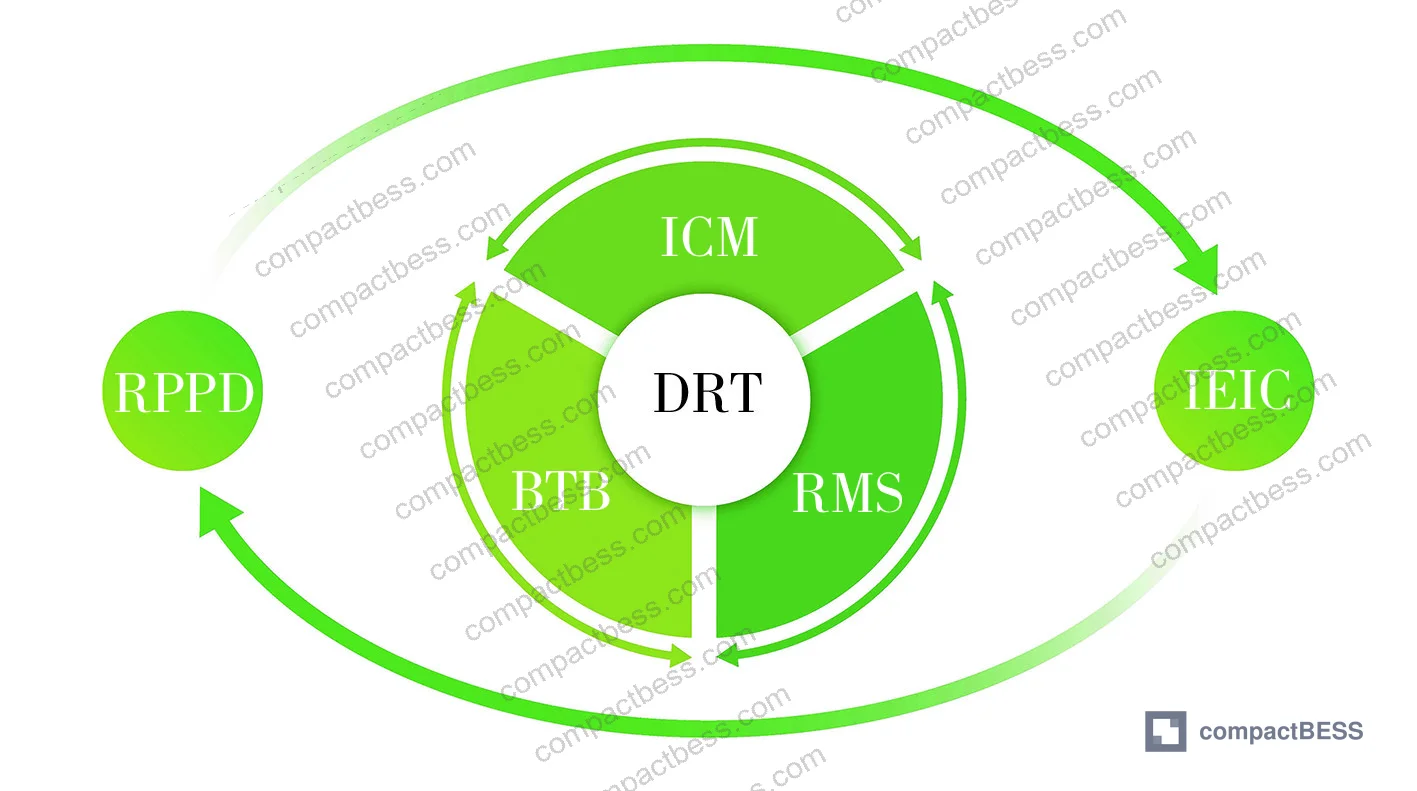
The framework examined here is called Directional Recycling Technology (DRT). It is not simply a hydrometallurgical process — it is a systems-level design philosophy that starts from the end-of-life product and engineers the entire value chain backward to ensure recovered materials can re-enter cell manufacturing as qualified raw material inputs. For procurement teams evaluating cell chemistry sourcing or qualifying suppliers for cathode active material supply, understanding how DRT works gives you a meaningful lens for assessing which recycling-linked suppliers are technically credible and which are not.
The commercial-scale results validated through this framework include a 46% reduction in energy consumption and a 54% reduction in solid waste generation compared to conventional segmented production — numbers that will matter increasingly as the EU Battery Regulation 2023/1542 tightens recycled-content thresholds and carbon footprint disclosure requirements for cells placed on European markets.
DRT Process Architecture and Recovery Performance #
The DRT framework operates through three core proprietary processes: Micro-Controlled Dissociation (MCD), Targeted Extraction (TDE), and Homogeneous Atmosphere Sintering (HAS). Together, these enable a short-path, high-efficiency reduction from spent cell to battery-grade material — bypassing several intermediate steps that characterize traditional multi-stage recycling lines.
The performance data from industrial-scale operations is specific and worth quoting directly:
- Nickel, cobalt, and manganese combined metal recovery rate: 99.6%
- Lithium comprehensive recovery rate: 93.8%
- Carbon emissions reduction vs. conventional pyrometallurgical route: 49.25%
- Ammonia medium circulation rate: 99.9%
- Reconstructed sodium sulfate (Na₂SO₄) purity: 99.1%
- Unit product energy consumption reduction via smart monitoring network: 10%
- Key equipment network connectivity rate: 100%
The Hubei Yichang integrated industrial park benchmark provides additional system-level comparisons. Against traditional segmented production, the integrated DRT facility achieves:
| Performance Metric | Traditional Segmented Production | DRT Integrated Process | Improvement |
|---|---|---|---|
| Energy consumption | Baseline | −46% | Significant reduction |
| Solid waste generation | Baseline | −54% | Majority elimination |
| Carbon emissions | Baseline | −32% | Material reduction |
| Li recovery rate | Typically 70–85% | 93.8% | +8–24 percentage points |
| Ni/Co/Mn recovery | Typically 95–98% | 99.6% | Near-complete recovery |
These figures come from an operating facility, not a lab bench. That distinction matters when you are qualifying a supplier rather than reviewing academic feasibility work.
Honestly, most procurement teams over-specify virgin-material purity requirements without ever checking whether their current supplier’s reclaimed material is actually inferior — the 99.6% Ni/Co/Mn recovery figure puts that assumption under real pressure. If your cathode material spec sheet shows no distinction between “virgin” and “DRT-reclaimed” grade, you may be paying a premium that no longer reflects actual quality differences.
Traceability Infrastructure: BTB Coding and the Recycled Material Standard #
The part of DRT that procurement teams tend to overlook — and the part that will matter most in the next regulatory cycle — is the traceability methodology. The framework includes two standards-level components: the Recovered Materials Standard (RMS) and the Recovered Materials Traceability Method (RMTM).
Both are built on a BTB (Barcode–Time segment–Batch number) coding structure that enables bidirectional tracking of recycled material flows. Forward tracking confirms what recycled materials entered which production batch. Reverse sourcing traces any finished cathode material back to its specific battery-origin batch and processing stage.
This is directly relevant to IEC 62619:2022 compliance workflows and increasingly to EU battery passport requirements. The BTB methodology addresses four specific industry problems that currently undermine recycled-content claims:
- Recycled material proportion calculations that cannot be independently verified
- Process-variation differences between supplier facilities that break chain-of-custody
- Lack of continuous disclosure across the supply chain
- Poor traceability matching when materials are dissolved in solution processing stages
In supplier qualification, we have seen situations where three of six samples from nominally “recycled-content” cathode suppliers could not produce any BTB-linked documentation — they could state a recycled percentage on paper but could not trace which specific retired battery packs that material originated from. That is a compliance risk that will increase in severity as EU and US reporting requirements tighten.
The Integrated Carbon-right Method (ICM), another DRT sub-framework, introduces carbon-right factors into lifecycle carbon footprint calculations. Unlike standard allocation methods, ICM accounts for the economic development level of the country where recycling occurs and that country’s contribution to global carbon reduction — a methodological approach specifically relevant to Chinese manufacturers exporting to European markets where carbon accounting transparency is increasingly audited.
Most procurement teams don’t realize that the EU Battery Regulation’s recycled-content rules and carbon footprint methodologies effectively create two tiers of supplier capability — those with documented, verifiable traceability systems and those without. The gap between these tiers will determine export eligibility within the next product generation cycle.
Full-Chain Integration (IEIC) and Industrial-Scale Implementation #
The Integrated Entire Industrial Chain (IEIC) model is how DRT gets implemented at scale. Rather than treating battery recycling as an isolated downstream service, IEIC creates a production cluster where recyclers, precursor manufacturers, cathode material producers, and cell factories operate in coordinated proximity under shared technical standards.
The Hubei Yichang park integrates the following production segments into a single operational ecosystem:
- Phosphate ore processing
- Raw material refining
- Precursor manufacturing (LFP and ternary)
- Cathode active material production (LFP, LCO, NCM)
- Graphite anode processing
- Phosphoric acid production
- Spent battery green recycling loop
This level of vertical integration is not achievable at the typical 10,000-tonne-per-year independent recycler scale. The data showing 46% energy reduction and 54% solid waste reduction versus segmented production reflects specifically this integrated model — numbers that a standalone recycling operation physically cannot replicate regardless of process chemistry.
For buyers evaluating cell format and format-linked supply chains, this matters because the format of the cell (cylindrical, prismatic, pouch) affects disassembly economics and therefore the cost-competitiveness of the recycling loop feeding back into that cell type. Prismatic and blade-type LFP cells — dominant in current EV packs — feed into phosphate-chain IEIC parks more efficiently than mixed-chemistry cylindrical packs.
The second IEIC park, launched in Guangdong Foshan, extends this model to a coastal export-oriented manufacturing cluster. Plans to replicate the IEIC format in Indonesia add a geographic dimension relevant to Southeast Asian buyers who are increasingly required to document their upstream supply chain carbon footprint for Scope 3 reporting.
Practical Guidance for Buyers #
If you are sourcing cathode active materials, battery precursors, or recycled-content cells from Chinese manufacturers, the DRT framework gives you a concrete qualification vocabulary that separates technically serious suppliers from those offering recycled-content claims without supporting methodology.
At minimum, ask any supplier claiming recycled material content to provide: (1) documented metal recovery rates for Ni, Co, Mn, and Li from their processing line, not just a percentage claim; (2) BTB traceability records linking specific material batches to source battery packs; and (3) a carbon footprint calculation methodology that can be presented to EU customs or certification bodies.
The recycled-content compliance window is tightening. The EU Battery Regulation 2023/1542 mandates minimum recycled cobalt (16%), nickel (6%), and lithium (6%) content thresholds for industrial and EV batteries from 2031, with carbon footprint declaration requirements entering force earlier. Suppliers who cannot demonstrate the recovery rates and traceability infrastructure described in the DRT framework will face increasing difficulty meeting these thresholds on paper — let alone under audit.
CompactBESS connects global OEM buyers and energy storage integrators with verified Chinese manufacturers across the battery supply chain, from cell packs to cathode-linked material sourcing. Our sourcing team maintains direct relationships with facilities operating at this technology tier and can help you validate supplier claims before committing to qualification.
Need help identifying qualified suppliers for recycled-content battery materials or DRT-compliant cathode precursors? Talk to our sourcing team →
Supplier Qualification Questions #
- What are your documented Ni, Co, and Mn combined recovery rates and your lithium comprehensive recovery rate from your current processing line — and can you provide batch-level data showing ≥99% Ni/Co/Mn and ≥93% Li recovery as measured against incoming material assay?
- Do you operate a BTB (Barcode–Time segment–Batch number) traceability system, and can you demonstrate a complete forward and reverse trace for a specific cathode material batch back to its source battery pack and processing stage?
- How does your carbon emissions profile compare to conventional pyrometallurgical processing for the same output volume, and can you provide third-party verified data showing carbon reduction ≥49% per tonne of processed material?
- What is the ammonia medium circulation rate in your wastewater treatment process, and can you confirm zero high-salt wastewater discharge with NH₃ circulation ≥99.9%?
- Is your facility operating under an Integrated Entire Industrial Chain (IEIC) model or equivalent vertical integration, and can you provide energy consumption and solid waste generation benchmarks showing ≥40% improvement versus segmented baseline production?
Sourcing Checklist #
- ☐ Supplier provides documented Ni/Co/Mn recovery rate ≥99.6% from processing line batch records, not marketing claims
- ☐ Supplier provides documented lithium comprehensive recovery rate ≥93.8% with incoming material assay cross-reference
- ☐ BTB traceability system is operational and supplier can produce a chain-of-custody document linking material batch to source battery origin within 48 hours of request
- ☐ Carbon footprint documentation shows ≥49% reduction versus conventional pyrometallurgical route, verifiable by third-party audit or methodology disclosure
- ☐ Reconstructed by-product purity (e.g., Na₂SO₄) is ≥99.1%, indicating process cleanliness and minimal cross-contamination in the recycling circuit
- ☐ Supplier facility meets zero high-salt wastewater discharge standard with ammonia circulation rate documented at ≥99.9%
- ☐ Supplier’s recycled-content claims are compatible with EU Battery Regulation 2023/1542 recycled-content calculation methodology and can support carbon footprint declaration filings
- ☐ Key processing equipment is networked for real-time energy monitoring, with unit energy consumption reduction ≥10% versus non-monitored baseline documented
Key Specifications Table #
| Parameter | Recommended Value | Verification Method |
|---|---|---|
| Ni/Co/Mn combined metal recovery rate | ≥99.6% | Incoming material assay vs. output batch ICP-OES analysis |
| Lithium comprehensive recovery rate | ≥93.8% | Mass balance calculation across full process circuit per batch |
| Carbon emissions vs. pyrometallurgical baseline | ≤50.75% of baseline (i.e., ≥49.25% reduction) | Third-party LCA or ISO 14064-verified carbon accounting report |
| Ammonia medium circulation rate | ≥99.9% | Continuous online monitoring data log, quarterly third-party audit |
| Reconstructed Na₂SO₄ purity | ≥99.1% | XRF or titration analysis per production batch |
| Solid waste generation vs. segmented baseline | ≤46% of baseline (≥54% reduction) | Site mass balance records, environmental compliance report |
| Unit product energy consumption reduction | ≥10% vs. non-networked baseline | Smart monitoring system energy log, key equipment connectivity ≥100% |
Can’t find a supplier meeting these specs? Submit your requirements and we’ll match you within 48 hours.
References #
Data source: Directional Recycling Technology for Closed-Loop Recovery of Critical Metals from Spent Lithium-Ion Power Batteries: Framework, Implementation, and Industrial Validation, K. Chen et al., Journal of the Electrochemical Society, 2023
Frequently Asked Questions #
What is Directional Recycling Technology (DRT) and how does it differ from conventional battery recycling?
DRT is a closed-loop remanufacturing philosophy that engineers the entire battery value chain so that recovered materials can re-enter cell production as qualified raw material inputs — rather than being downgraded to lower-value applications. Conventional recycling typically recovers metals at lower purity and loses them to non-battery uses. DRT’s short-path processes (MCD, TDE, HAS) achieve 99.6% Ni/Co/Mn recovery and 93.8% Li recovery, which is significantly higher than industry-standard hydrometallurgical lines that typically achieve 70–85% lithium recovery.
What does the EU Battery Regulation require from suppliers regarding recycled content, and when does it take effect?
The EU Battery Regulation 2023/1542 mandates minimum recycled content thresholds — 16% cobalt, 6% nickel, 6% lithium — for industrial and EV batteries, with obligations entering force in 2031. Carbon footprint declaration requirements arrive earlier. Suppliers without verifiable recovery-rate documentation and BTB-linked traceability systems will struggle to meet these thresholds under audit conditions.
Can recycled-content cathode materials meet the same electrochemical performance specifications as virgin materials?
Based on industrial data from DRT-operating facilities, the answer is increasingly yes — with the caveat that it depends entirely on the quality of the recycling process. Suppliers operating at 99.6% Ni/Co/Mn recovery with controlled sintering and purity-verified outputs are producing precursor material that is compositionally equivalent to primary-ore-derived inputs. The performance gap is a process capability question, not an inherent materials science limitation.
How does the BTB traceability system work in practice for a buyer needing to prove recycled content?
The BTB system links a Barcode, a Time segment, and a Batch number to every parcel of recycled material as it moves through processing. This creates a bidirectional chain of custody — forward tracking confirms which finished cathode batch contains material from which recycling run, while reverse sourcing traces any material parcel back to its specific source battery packs and the processing steps it underwent. For EU battery passport compliance, this is the documentation structure you need to request from your supplier.
Is the IEIC integrated park model accessible to mid-size overseas buyers, or is it only relevant to large OEM procurement teams?
The IEIC model is a supplier-side infrastructure question, not a minimum order question. A mid-size buyer sourcing cathode material or recycled precursors benefits from IEIC suppliers because integrated production delivers more consistent material quality and better traceability than independent recyclers — regardless of order volume. What changes at smaller volumes is your ability to audit the facility directly, which is where a sourcing intermediary that maintains verified supplier relationships becomes practically useful.
Published by compactbess.com Technical Team | Request a sourcing quote


