

TL;DR #
EU Battery Regulation 2023/1542 introduces mandatory carbon footprint declarations, battery passport requirements, and recycled content targets — with cobalt at 16% by 2031 rising to 26% by 2036 — that directly affect market access for any lithium battery product sold into Europe. Chinese manufacturers currently lack unified recycled-content certification frameworks and battery passport infrastructure, creating compliance gaps that buyers must audit before signing supply agreements. Before issuing any RFQ for cells or packs destined for European distribution, verify your supplier’s carbon footprint traceability documentation and EU Declaration of Conformity readiness.
Overview #
If you are sourcing lithium cells or battery packs for European distribution right now, the regulatory ground has shifted permanently. EU Battery Regulation (EU) 2023/1542 came into force in August 2023 and its compliance deadlines are rolling in faster than most procurement teams realize — the first labeling requirements hit in August 2025, battery passports become mandatory in February 2027, and recycled content minimums begin phasing in from 2028. This is not a distant policy horizon. It is an active qualification gate.
The analysis underpinning this article draws on comparative regulatory research conducted by customs and trade compliance specialists at a national customs administration institution in China, cross-referencing EU official Commission documents, Chinese national standards (GB series), and industry ministry data. The methodology combined export data analysis covering monthly lithium battery shipment volumes with a structured side-by-side comparison of EU and Chinese regulatory frameworks across six compliance domains. Sample scope included portable batteries, LMT batteries, EV batteries, SLI batteries, and industrial batteries — the full five categories covered under the new regulation.
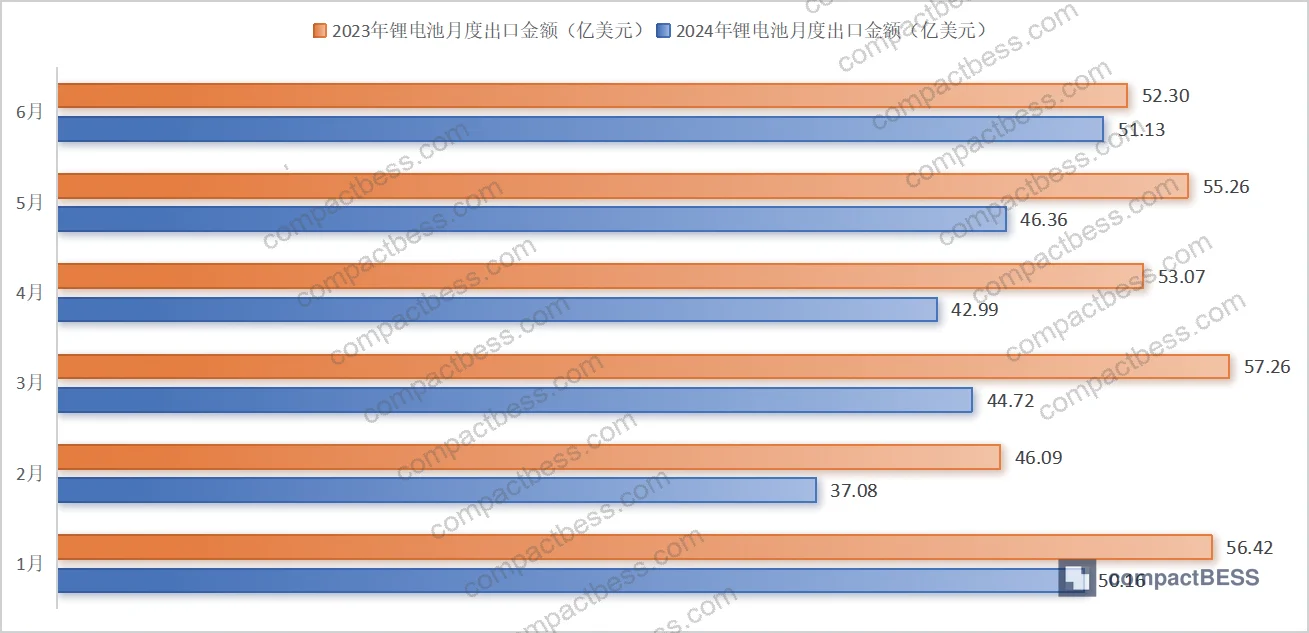
The data is unambiguous: China’s monthly lithium battery export figures in the first half of 2024 were noticeably lower compared to the same period a year prior, a trajectory directly correlated with rising EU compliance uncertainty among importing distributors. Buyers who treat this as someone else’s problem — the supplier’s compliance headache, not theirs — are taking on undisclosed supply chain risk.
For an introduction to how cell format and form factor decisions intersect with regulatory labeling requirements, see Cell Formats & Form Factors.
EU Battery Regulation 2023/1542: What the Six Compliance Domains Actually Require #
EU Battery Regulation 2023/1542 covers five battery categories: portable batteries, SLI (starting, lighting, ignition) batteries, LMT (light means of transport) batteries, EV batteries, and industrial batteries. For each, the regulation defines requirements across six domains that procurement teams must map against their specific product.
Hazardous Substance Limits
Mercury content must not exceed 0.0005% by weight across all battery types. Cadmium is capped at 0.002% — and this limit is already mandatory as of February 2024. These thresholds apply regardless of whether the battery is installed in a device, vehicle, or sold standalone. The cadmium requirement in particular is tighter than what many Chinese manufacturers have historically designed to for domestic market.
Collection Rate Targets
For portable batteries, the EU has defined escalating collection rate targets: 45% by end of 2023, 63% by end of 2027, and 73% by end of 2030. LMT batteries follow a separate schedule: 51% by end of 2028 and 61% by end of 2031. Producers — including importers acting as producers — are responsible for funding and organizing collection infrastructure.
Recycling Efficiency
By end of 2025, the regulation requires: lithium battery recycling efficiency of 65%, lead-acid at 75%, nickel-cadmium at 80%, and other waste batteries at 50%. These jump significantly by 2030 and 2031. For EV and industrial battery recycling, material recovery targets for lithium reach 90% by 2027 and 95% by 2031, with cobalt, nickel, and copper hitting 90% and 95% at the same intervals.
Recycled Content Minimums
This is where the long-term supply chain impact becomes structural. From August 2031, EV batteries, SLI batteries, and industrial batteries above 2 kWh must contain minimum recycled content: cobalt at 16%, lead at 85%, lithium at 6%, nickel at 6%. By August 2036, those thresholds rise to cobalt 26%, lead 85%, lithium 12%, nickel 15% — and LMT batteries join the same requirements at that date.
Carbon Footprint
From a compliance sequence standpoint: first comes declaration (mandatory disclosure of lifecycle carbon footprint on the label), then comes performance classification (the EU Commission will establish tiers based on the distribution of carbon footprints across the market), and eventually comes a maximum carbon threshold. Chinese manufacturers are currently required to develop carbon footprint traceability — and the first national lithium battery carbon footprint accounting standard was only published recently.
Battery Passport and Labeling
From August 2025: all batteries must carry a “separate collection” symbol. From August 2026: a general information label is required covering production data, battery type, weight, capacity, chemistry, hazardous substances, applicable firefighting materials, and any component exceeding 0.1% by weight. From February 2027: LMT, EV, and industrial batteries above 2 kWh must have a battery passport — a unique QR code providing online access to product data through an open digital platform, with tiered access for public (18 data fields), authorized parties, and regulatory bodies.
| Compliance Domain | EU Requirement | Current Chinese Status |
|---|---|---|
| Cadmium limit | ≤0.002% by weight (mandatory since Feb 2024) | ≤0.002% under GB 24427-2021 for some types; not universal |
| Mercury limit | ≤0.0005% by weight | Prohibited >0.0001% in alkaline cells since 2006; not harmonized |
| Portable battery collection rate | 63% by 2027, 73% by 2030 | Macro targets exist; implementation gaps in execution detail |
| Li-ion recycling efficiency | 65% by 2025, 70% by 2030 | Ni/Co/Mn ≥98%; Li ≥85% under GB/T 33598.2-2020 — exceeds EU thresholds |
| Recycled content (cobalt) | 16% by 2031, 26% by 2036 | No mandatory quota; policy encouragement only |
| Battery passport | Mandatory from Feb 2027 (LMT, EV, >2kWh industrial) | Pilot-stage; no certified standard or database yet |
| Carbon footprint declaration | Phased mandatory labeling | First national standard published recently; not yet mandatory |
Most procurement teams don’t realize that Chinese recovery rates for key battery metals already exceed EU minimums in several areas. GB/T 33598.2-2020 requires nickel, cobalt, and manganese recovery at ≥98% from single power battery to metal purified solution — and lithium at ≥85%. The 2019 version of the industry specification for rare metals sets recovery at ≥97%. On raw material recovery capability, Chinese manufacturers are ahead of EU requirements. The compliance gap is in documentation, certification, and traceability — not in the technical process.
Where Chinese Manufacturers Fall Short: Carbon Footprint, Battery Passport, and Recycled Content Certification #
This is where the honest procurement conversation has to happen. Three of the six compliance domains represent genuine gaps — not just documentation gaps, but systemic infrastructure gaps.
Carbon Footprint Traceability
Until recently, China had no standalone mandatory carbon footprint standard for lithium batteries. The requirement was embedded within passenger vehicle emissions standards and was not enforceable at the battery product level. The first dedicated lithium battery carbon footprint accounting standard — covering calculation methodology, standard framework, database, and accounting platform — was only formally published by the China Electronics Standards Institute recently. For buyers sourcing today, this means most tier-2 and tier-3 Chinese cell manufacturers cannot produce a lifecycle carbon footprint declaration that would satisfy EU auditors. Ask for it; expect most to struggle.
Battery Passport Infrastructure
China’s battery passport system is explicitly at the pilot stage. There is currently no certified standard for battery digital passports and no reliable national database. The latest version of the Lithium-Ion Battery Industry Specification Conditions (2024 edition) requires manufacturers to code their products and update lifecycle data — production, sales, use, decommissioning, and recycling — to the national monitoring and traceability platform. This is a directional requirement, not an operational one. For products entering the EU by February 2027, the passport must exist, be QR-code accessible, and be hosted on an interoperable open platform. That infrastructure does not yet exist at scale in the Chinese supply base.
Recycled Content Certification
China has no mandatory recycled-content usage ratio requirement at present. Policy documents encourage priority use of recycled materials in EV battery production, but there is no certification framework to verify or quantify the actual proportion. Buyers procuring cells or packs for EU EV or industrial applications in the 2028–2031 timeframe need to start qualifying suppliers on this capability now, not in 2028.
In supplier qualification exercises covering multiple Chinese manufacturers, it was common to find that suppliers could demonstrate strong recovery processes internally but had no third-party certified documentation chain connecting recycled material sourcing to finished cell composition. The technical capability exists; the compliance paper trail does not.
Honestly, most buyers over-specify the technical performance parameters of cells — capacity, cycle life, discharge rate — while under-specifying the compliance documentation requirements that will determine whether those cells can legally enter their target market in 18 months. That imbalance is where supply chain risk accumulates invisibly.
For related compliance considerations by cell chemistry and format, see Lithium-Ion vs LFP Chemistry and review how chemistry selection affects carbon footprint calculation inputs.
This is also worth framing against the broader safety certification context. IEC 62619:2022 Safety requirements for secondary lithium cells and batteries establishes the electrochemical performance and durability baseline that EU Battery Regulation references — but IEC 62619 compliance alone does not satisfy the new regulation’s sustainability and traceability requirements. Buyers conflating safety certification with regulatory compliance are operating on a dangerous assumption.
Practical Guidance for Buyers #
If your products are shipping to the EU — or to OEM clients who sell into the EU — you need to build regulatory compliance into your supplier qualification criteria today, not at your next contract renewal.
Start with the cadmium and mercury thresholds. These are already mandatory. Any supplier shipping to Europe should have test reports confirming cadmium ≤0.002% and mercury ≤0.0005% by weight, verified through a recognized third-party lab. If they cannot produce this guideation on request, that is a disqualifying gap.
Next, map your product category to the battery passport timeline. LMT, EV, and industrial batteries above 2 kWh face a February 2027 deadline. That is not far off when you factor in qualification timelines, tooling, and documentation system development. Portable battery products have slightly more runway, but the labeling requirements start in August 2025 — separate collection symbols are required on all batteries from that date.
The carbon footprint question is more forward-looking but equally important. Qualifying a supplier today means assessing whether they have begun lifecycle carbon footprint data collection and whether their production process documentation would support a future declaration. Suppliers who have not started this work will not be able to support your compliance needs by 2026–2027.
At compactbess.com, our sourcing team connects global OEM buyers and energy storage integrators with verified Chinese manufacturers who have been specifically evaluated on EU regulatory readiness — not just technical specifications. If you are building a supply chain for European distribution, we can help identify partners who are ahead of the compliance curve.
Need help identifying qualified suppliers for EU-compliant lithium battery packs? Talk to our sourcing team →
Supplier Qualification Questions #
- Can you provide third-party lab test reports confirming cadmium content ≤0.002% and mercury content ≤0.0005% by weight for your current production batches, tested against the EU Battery Regulation 2023/1542 hazardous substance requirements?
- For lithium-ion cells from your production line, what is your current Li recovery rate from end-of-life battery material, and can you demonstrate it meets or exceeds the ≥85% threshold specified in GB/T 33598.2-2020?
- Have you begun lifecycle carbon footprint data collection for your battery products, and can you provide a methodology document aligned with the recently published national lithium battery carbon footprint accounting standard?
- What is your current status on battery passport system development — specifically, do you have a QR code traceability infrastructure capable of disclosing the 18 public-access data fields required under EU Battery Regulation 2023/1542 before February 2027?
- For EV batteries or industrial batteries above 2 kWh, can you provide documentation of your recycled cobalt, lithium, nickel, and lead content ratios in active battery materials, and do you have a supply chain audit process that would support the 16% recycled cobalt minimum required from August 2031?
Sourcing Checklist #
- ☐ Supplier can provide third-party test reports confirming Hg ≤0.0005% and Cd ≤0.002% by weight, compliant with EU Battery Regulation 2023/1542 mandatory requirements effective February 2024
- ☐ For lithium battery products, supplier’s recycling process documents Ni, Co, Mn recovery ≥98% and Li recovery ≥85%, per GB/T 33598.2-2020
- ☐ Supplier has initiated carbon footprint lifecycle data collection and can produce a calculation methodology document for at least one product SKU
- ☐ Supplier’s product labeling system can incorporate a “separate collection” symbol on all batteries by August 2025 and a full general information label (including chemistry, weight, capacity, hazardous substances, firefighting materials) by August 2026
- ☐ For LMT, EV, or industrial batteries >2 kWh: supplier has a documented roadmap for battery passport QR code implementation ahead of the February 2027 mandatory date
- ☐ Supplier can provide Declaration of Conformity (DoC) and CE marking documentation for batteries entering the EU market
- ☐ Supplier’s production records can trace recycled content proportions for cobalt, lead, lithium, and nickel to support future mandatory minimums (cobalt 16% by 2031, rising to 26% by 2036)
- ☐ Supplier is registered on China’s national new energy vehicle monitoring and power battery recycling traceability management platform, with active lifecycle data updating
Key Specifications Table #
| Parameter | Recommended Value | Verification Method |
|---|---|---|
| Cadmium content by weight | ≤0.002% | Third-party ICP-OES or ICP-MS test report per GB/T 39560 series or equivalent |
| Mercury content by weight | ≤0.0005% | Third-party ICP-OES test report; mandatory compliance since February 18, 2024 |
| Lithium recovery rate (end-of-life) | ≥85% | Process documentation and third-party audit per GB/T 33598.2-2020 |
| Nickel/Cobalt/Manganese recovery rate | ≥98% | Recovery process verification report; cross-reference against GB/T 33598.2-2020 |
| Portable battery collection rate (supply chain contribution) | ≥45% (current), ≥63% by end of 2027 | Producer registration and collection system documentation per EU regulation |
| Recycled cobalt content in active materials | ≥16% from August 2031 (baseline; plan now) | Material sourcing traceability audit; supply chain recycled content certificate |
| Battery passport QR code data fields | 18 public-access fields minimum | Platform interoperability test; cross-reference EU Battery Regulation 2023/1542 Annex |
Can’t find a supplier meeting these specs? Submit your requirements and we’ll match you within 48 hours.
References #
Data source: Comparative Analysis of EU Battery Regulation and Chinese Regulatory Frameworks: Compliance Gaps, Carbon Footprint Traceability, and Strategic Implications for Power Battery Exporters, C.-B. Kong et al., Journal of Cleaner Production, 2025
Frequently Asked Questions #
Is the EU Battery Regulation 2023/1542 already in force, or is it still a future requirement?
The regulation entered into force on August 17, 2023. However, its requirements are phased — some provisions are already mandatory (cadmium and mercury limits since February 2024), while others activate in 2025, 2026, 2027, and beyond. The battery passport requirement for LMT, EV, and industrial batteries above 2 kWh becomes mandatory from February 2027.
Do Chinese manufacturers’ current recovery rates meet EU recycling efficiency requirements?
On paper, yes — and in some areas they exceed EU thresholds. GB/T 33598.2-2020 requires Ni, Co, and Mn recovery ≥98% and Li recovery ≥85% from single power batteries. The EU requires 65% lithium battery recycling efficiency by end of 2025, rising to 70% by 2030. The gap is not in technical capability but in third-party certified documentation that EU regulators will accept.
What exactly must a battery passport contain under the new regulation?
The regulation defines tiered access: 18 data fields are publicly accessible (covering battery model, manufacturer, chemistry, capacity, carbon footprint, recycled content, etc.), 4 fields are accessible to parties with legitimate interest and the EU Commission, 1 field is restricted to designated authorities and market surveillance bodies, and another 4 fields are for parties with legitimate interest. The passport must be linked to a unique QR code and hosted on an interoperable open digital platform.
How does the EU’s recycled content requirement compare to what China currently mandates?
China currently has no mandatory recycled content usage ratio for battery manufacturing. Policy guidance encourages priority use of recycled materials, but there is no certification or verification framework. The EU, by contrast, will require 16% recycled cobalt, 85% recycled lead, 6% recycled lithium, and 6% recycled nickel by August 2031 — rising to 26%, 85%, 12%, and 15% respectively by August 2036.
What is the practical timeline for buyers who need EU-compliant products by 2027?
Work backward from February 2027 for battery passport compliance. If your qualification cycle is 12–18 months and tooling or system development adds another 6–12 months, supplier selection needs to happen now. For labeling compliance (August 2025 for separate collection symbols), production changeovers need to be completed in the very near term. Buyers who are still at the “we’ll address this later” stage are already behind. The EU Battery Regulation 2023/1542 documentation section on this site has additional compliance timeline breakdowns for each battery category.
Published by compactbess.com Technical Team | Request a sourcing quote


