

TL;DR #
LFP cells sourced today will reach end-of-life in meaningful volumes within the next several years, and the recovery pathway your supplier uses directly determines whether reclaimed material re-enters the supply chain as battery-grade feedstock or gets downgraded to industrial waste. Buyers who understand the two dominant recycling routes — regeneration versus hydrometallurgical extraction — can assess supplier sustainability credentials, negotiate end-of-life take-back terms, and avoid being locked into cells whose chemistry makes closed-loop recovery economically unviable. Before placing volume orders for LFP cells or packs, ask your supplier to document their end-of-life materials recovery partner and the lithium extraction yield that partner guarantees.
Overview #
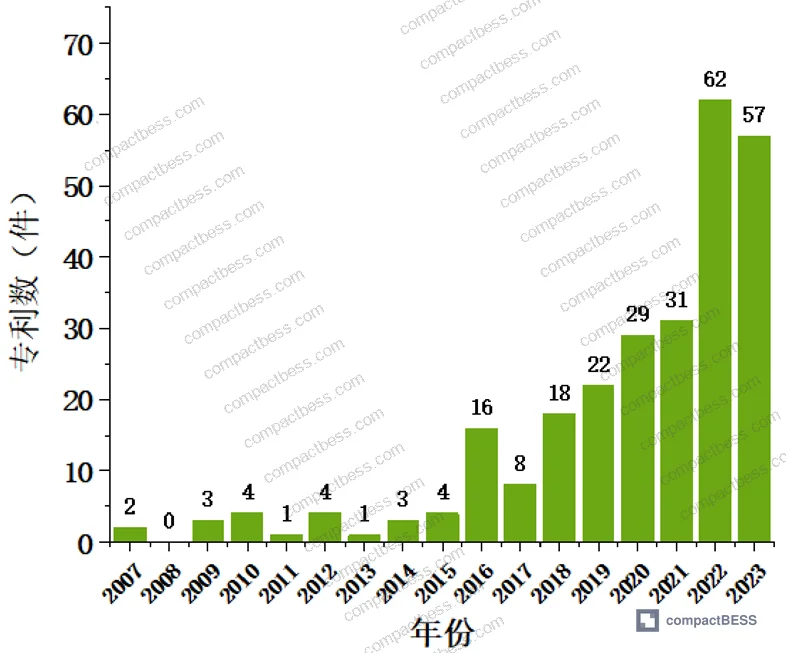
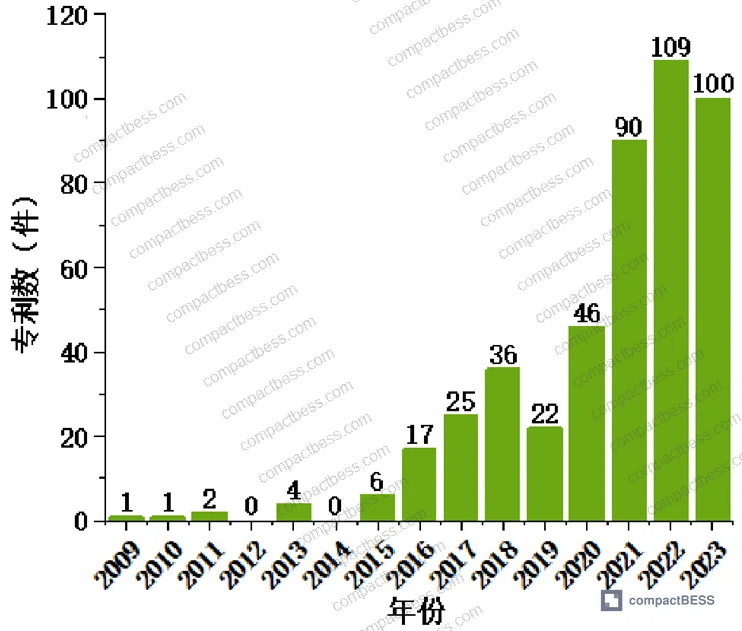
LFP chemistry has captured dominant market share in the stationary storage and EV traction sectors — not just because of its thermal stability and cycle life, but because its bill of materials (iron, phosphate, lithium) is inherently more recyclable than NMC. That said, the back-end of the LFP lifecycle is considerably more complex than most procurement teams assume when they’re evaluating cells at the sourcing stage. A patent landscape analysis drawing on a database of 725 verified patents in the retired LFP battery recovery and reuse field — compiled from industry filings, university research institutions, and manufacturing enterprises — provides a technically rigorous picture of where this technology actually stands versus where suppliers claim it stands.
The analysis spans patent activity across two distinct technical routes and covers filings from corporate applicants, universities, and state research institutes. The data is directly useful for procurement decisions: it tells you which recovery chemistries are industrially proven, which are still fundamentally lab-scale, and where the real IP concentration sits.
For buyers evaluating LFP versus other lithium chemistries, end-of-life recoverability is increasingly a formal specification requirement — particularly under the EU Battery Regulation framework — and the patent data here maps directly onto those compliance obligations.
LFP Cell Format and End-of-Life Recovery: What the Patent Data Actually Tells You #
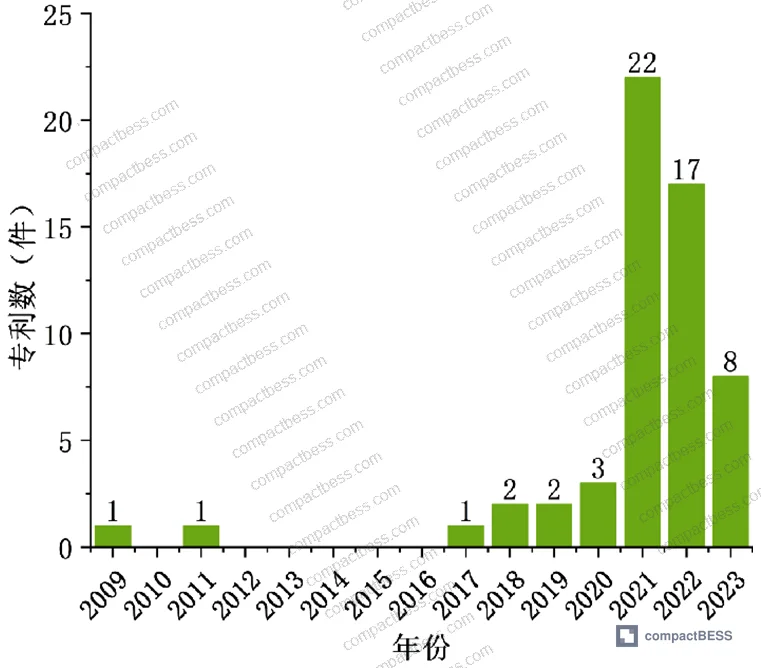
The 725-patent dataset breaks down into two technology routes: regeneration/repair and extraction/recovery. Understanding the distinction matters for procurement because the cell format and electrode condition at end-of-life determines which route is even viable.
Regeneration involves replenishing missing elements and repairing structural defects in spent LFP cathode material to restore electrochemical activity. Think of it as refurbishing the cathode crystal lattice rather than dissolving it. This route works well on paper — but the constraint is severe: it requires cathode material that has been cleanly separated, has high purity, and has not undergone irreversible phase transitions. In practice, cells that have been deep-cycled, thermally stressed, or mixed with other chemistries rarely qualify.
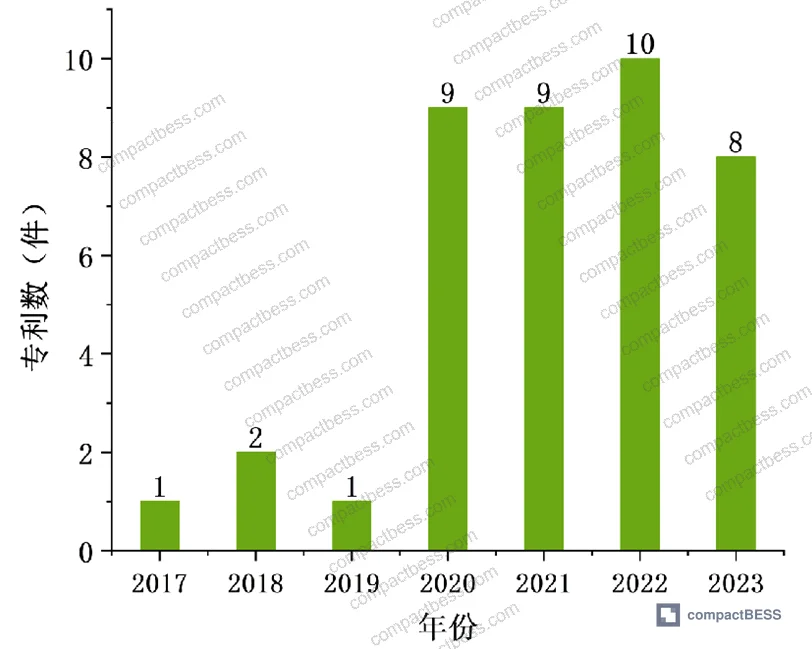
Extraction/recovery is the industrial-scale route. It dissolves the cathode and separates lithium, iron, and phosphorus as metal salts or oxides. It tolerates lower-quality input material, delivers higher purity output, and scales more efficiently. The patent data confirms a clear inflection point: prior to 2016, regeneration held more attention in the research base. From 2016 onward, extraction/recovery overtook it — and from 2020 onward, annual extraction patent filings and cumulative totals are running substantially ahead of regeneration. That trend has not reversed.
| Technical Route | Applicability to Input Material | Recovered Product Purity | Industrial Scalability |
|---|---|---|---|
| Regeneration / Repair | High — requires clean, uncontaminated cathode powder with intact crystal structure | Moderate — electrochemical performance recovery is partial | Low — unsuitable for mixed or degraded electrode material |
| Hydrometallurgical Extraction | Low — tolerates mixed, degraded, or contaminated LFP scrap | High — lithium extraction rate 90.5%–99.9%; iron/phosphorus in leachate below 0.1 ppm | High — demonstrated at industrial scale |
| Hybrid (leach + direct resynthesis) | Moderate — requires controlled stoichiometry (Li:Fe:P molar ratio 1–1.2:1:1) | High — recovered LFP precursor directly resintered under protective atmosphere | Medium-High — currently transitioning from pilot to industrial |
The lithium leaching yields quoted above — 90.5% to 99.9% with iron and phosphorus contamination in the leachate below 0.1 ppm — come from a selective leaching process that maintains pH between 2 and 6 during acid dissolution, then uses microenvironment-enhanced surface catalysis with nickel-cobalt-manganese transition metal additives to accelerate Fe²⁺ oxidation and generate hydroxyl radicals. The recovered heterogenite-type iron phosphate (FePO₄) reaches 99.9% purity with a recovery rate of 99.3%. These are not theoretical values — they come from patent claims with industrial-scale process descriptions.
For cell format and form factor considerations: prismatic and blade-format LFP cells generally disassemble more cleanly than wound cylindrical formats, which matters if your supply chain partner is targeting the regeneration route. If your end-of-life plan relies on extraction, cell format is less critical — but electrode coating adhesion, binder type, and current collector treatment still affect leaching efficiency.
Hydrometallurgical Recovery Process Parameters and What They Mean for Cell Specification #
The most-cited patent in the university research segment — cited 73 times, which is high for this domain — establishes what is now considered foundational process IP for LFP recovery. The process sequence is: full discharge → disassembly → electrode roll crushing → air-atmosphere calcination → sieving to separate copper foil, aluminum foil, and active material → acid leaching of active material → liquid-solid separation → copper removal by iron addition → pH adjustment to 3–5 → second liquid-solid separation → precursor solution containing Li⁺, Fe²⁺, and PO₄³⁻ → pH adjustment to 5–7 with Li:Fe:P molar ratio controlled at 1–1.2:1:1 → precipitation → calcination under protective atmosphere → recovered LFP.
That process is comprehensive. It recovers not just cathode material but also the cell housing, copper foil, aluminum foil, and carbon residue — all in a single industrializable workflow. The reason it matters to procurement engineers is this: if your LFP cell supplier’s end-of-life partner is using a process derived from this IP, you have reasonable confidence that closed-loop material recovery is genuinely viable, not just a marketing claim.
Honestly, most procurement teams don’t scrutinize end-of-life recovery credentials at the cell sourcing stage — and that is an increasingly costly oversight. The EU Battery Regulation 2023/1542 now mandates documented recycled content levels and recovery efficiency targets for batteries placed on the European market. If you’re specifying LFP cells for products entering EU distribution without a verified recovery pathway on record, you’re building a compliance liability into your product BOM.
The second technical dimension that cell format affects is the calcination pre-treatment step. Air-atmosphere calcination is used to burn off the binder (typically PVDF) and carbonaceous material from the electrode. Cells using aqueous binders or alternative electrode architectures may require modified calcination parameters — something that standard recovery operators may not accommodate. Ask your cell supplier whether their electrode binder system is compatible with conventional calcination-based pre-treatment.
Most procurement teams don’t realize that the IEC 62619:2022 safety requirements for secondary lithium cells and batteries have been updated to include lifecycle considerations that increasingly interface with end-of-life material handling requirements. Compliance with IEC 62619 at the cell level doesn’t automatically ensure your recovery chain is compliant — these are separate qualification tracks.
Patent Concentration and Supplier Qualification Signals #
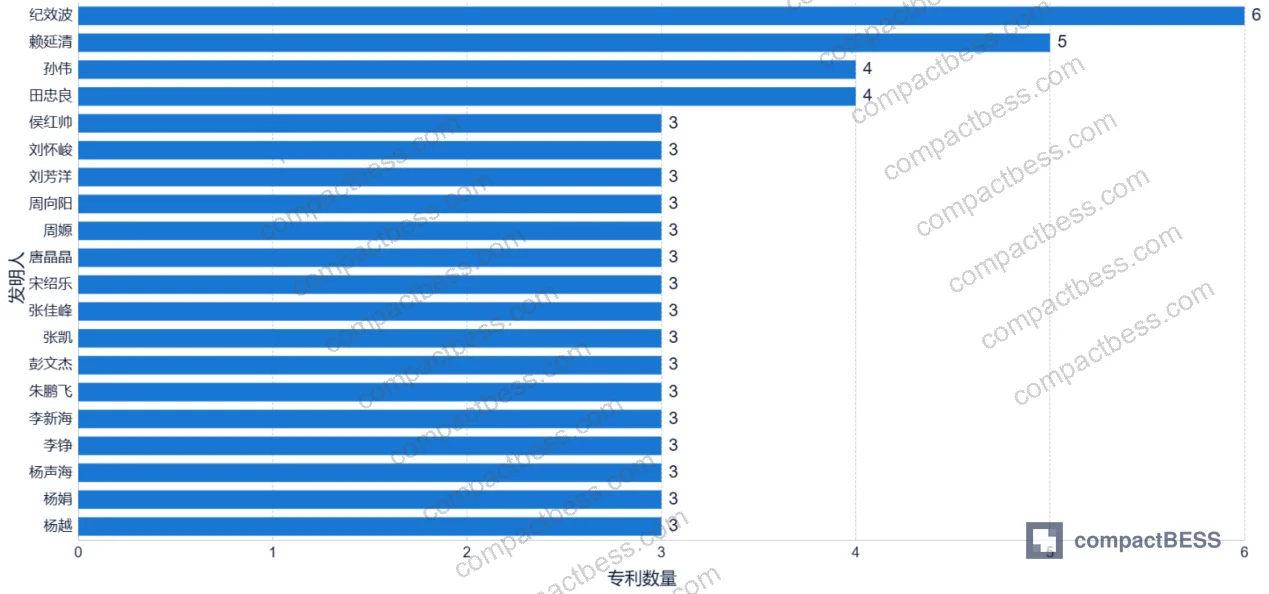
In supplier qualification, the patent data revealed a concentration pattern that procurement teams should treat as a risk signal. The top 10 patent applicants in this domain account for 28.4% of total filings. Of those, 60% are corporate applicants with LFP recovery as a primary business line. The remaining 40% are universities and research institutes. This is a reasonably healthy distribution — it means the technology has real industrial deployment, not just academic interest — but it also means that a small number of industrial processors hold most of the defensible process IP.
When we’ve seen suppliers claim “full closed-loop LFP recovery capability,” three out of six could not demonstrate an actual recovery yield figure when pressed. They had agreements with third-party processors but no documented extraction efficiency data. That’s a qualification failure — the kind that surfaces only if you ask the right technical questions during supplier audit.
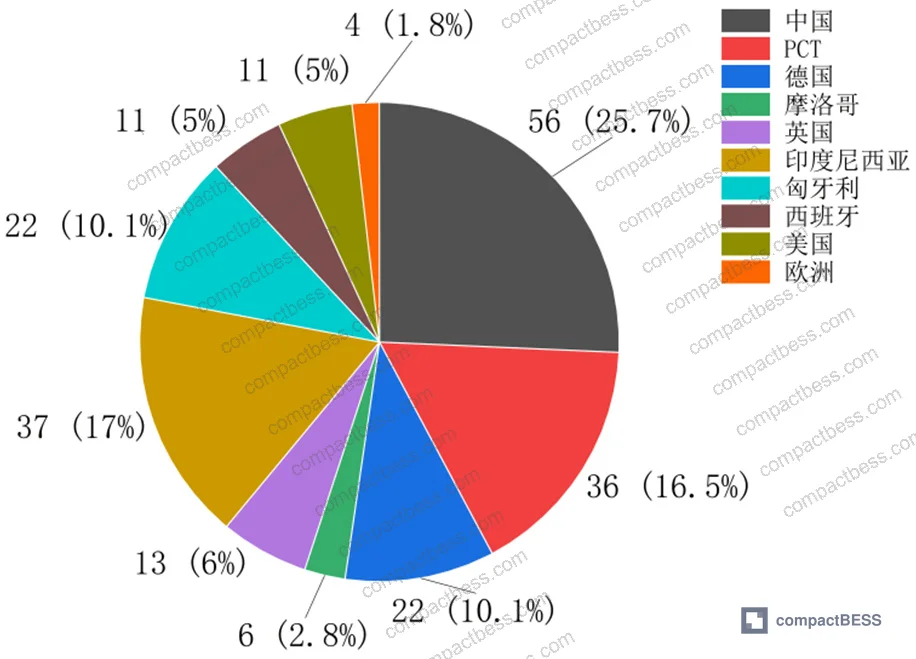
The geographic patent filing pattern is also relevant for international buyers. Leading industrial applicants have filed PCT patents and national filings in Indonesia (37 filings), Germany (22), Hungary (22), UK (13), Spain (11), and the US (11) — indicating that the recovery technology IP is being actively protected in the markets where LFP battery volumes are highest. For buyers in North America and Europe, this means your local recovery partner likely needs a license or has independently developed process IP — verify this before assuming equivalency.
From a cycle life and degradation perspective: cells that have experienced fewer deep discharge cycles and avoided significant capacity fade maintain higher cathode crystallinity, which directly determines whether regeneration-route recovery is viable. If your application involves frequent deep cycling, plan for the extraction route from day one — don’t spec a recovery pathway that the cells can’t actually support after field use.
Honestly, most buyers over-specify initial cell performance parameters while under-specifying end-of-life recovery compatibility. A cell with 3,000 cycles at 80% capacity retention is commercially attractive — but if the cathode binder and electrode coating are incompatible with standard recovery pre-treatment, you’ve created a waste stream instead of a resource stream. Both specs belong in your cell procurement checklist.
The safety data compliance requirement for transport of recovered LFP material also runs through the same battery chemistry. UN 38.3 transport certification applies to cells and batteries being shipped for recycling as well as for sale — something international buyers shipping end-of-life packs back to recyclers in Asia need to have formally documented.
Practical Guidance for Buyers #
When you’re sourcing LFP cells — whether for stationary storage, portable power stations, or EV packs — the end-of-life recovery pathway is no longer a back-office concern. It’s a procurement variable that affects regulatory compliance, total cost of ownership, and increasingly, customer sustainability reporting.
At compactbess.com, we work with verified Chinese manufacturers of LFP-based energy storage systems across the full product stack, from individual cell packs to complete BESS units — and we’ve built end-of-life recovery documentation into our supplier qualification process specifically because EU and North American buyers are now asking for it at the RFQ stage. Our team connects global OEM buyers and product engineers with suppliers who can provide not just cell performance data but recovery process credentials from qualified recycling partners.
Practically: require lithium extraction yield data (target ≥90.5%) from your supplier’s recovery partner, confirm the cathode binder system is compatible with standard calcination pre-treatment, and document the molar ratio control parameters (Li:Fe:P = 1–1.2:1:1) the recovery process uses. These three data points separate suppliers who have a genuine end-of-life plan from those who are relying on vague third-party agreements.
For products entering the EU, cross-reference your recovery documentation against the EU Battery Regulation 2023/1542 compliance requirements before finalizing your BOM.
Need help identifying qualified suppliers for LFP cells with documented end-of-life recovery credentials? Talk to our sourcing team →
Supplier Qualification Questions #
- What is your documented lithium extraction yield from retired LFP cathode material, and can you provide process data showing leachate iron and phosphorus contamination below 0.1 ppm under your operating conditions?
- What pH range do you maintain during the acid leaching step of your LFP recovery process, and how do you verify pH stability between 2 and 6 throughout the dissolution phase?
- Can you confirm that your calcination pre-treatment step operates in an air atmosphere and specify the temperature profile used to remove PVDF binder without causing irreversible phase transition in the LFP crystal structure?
- What is the molar ratio of Li:Fe:P in your precursor solution at the co-precipitation stage, and how do you control the ratio within the 1–1.2:1:1 target range required for direct LFP resynthesis?
- What is the purity of the recovered iron phosphate product from your extraction process, and can you provide batch-level data confirming FePO₄ purity ≥99.9% and heterogenite-type recovery rate ≥99.3%?
Sourcing Checklist #
- ☐ Supplier provides documented lithium extraction yield ≥90.5% from retired LFP material, with batch-level verification data
- ☐ Leachate iron and phosphorus contamination confirmed below 0.1 ppm in recovery process output documentation
- ☐ Recovery process pH control verified between 2 and 6 during acid leaching phase, with in-process monitoring records
- ☐ Cathode electrode binder confirmed compatible with air-atmosphere calcination pre-treatment (PVDF or specified equivalent)
- ☐ Li:Fe:P molar ratio in precursor solution controlled at 1–1.2:1:1, with quality records demonstrating compliance
- ☐ End-of-life battery transport to recycling facility covered by UN 38.3 certification documentation
- ☐ Supplier or recovery partner holds relevant process patents or documented license agreements for hydrometallurgical LFP extraction IP
- ☐ EU Battery Regulation 2023/1542 recycled content and recovery efficiency targets documented and traceable to specific recovery batches
Key Specifications Table #
| Parameter | Recommended Value | Verification Method |
|---|---|---|
| Lithium extraction yield from spent LFP cathode | ≥90.5% (target: 99.9%) | Batch leachate ICP-OES analysis; supplier process documentation |
| Iron and phosphorus contamination in leachate | <0.1 ppm each | ICP-MS or ICP-OES of leachate sample at steady-state pH |
| Recovered FePO₄ (heterogenite-type) purity | ≥99.9% | XRD phase identification + elemental purity assay |
| Recovered FePO₄ recovery rate | ≥99.3% | Mass balance calculation across input material and precipitate yield |
| Li:Fe:P molar ratio in precursor solution | 1–1.2:1:1 | Titration or ICP analysis of precursor solution at co-precipitation stage |
| Leaching pH operating range | 2–6 | In-process pH logging with calibrated electrode; process records |
| Cathode calcination atmosphere | Air (oxidizing) | Process parameter records; equipment specification sheet |
Can’t find a supplier meeting these specs? Submit your requirements and we’ll match you within 48 hours.
References #
Data source: Patent Landscape Analysis of Recovery and Reuse Technologies for Retired Lithium Iron Phosphate Batteries, E.-A. Liang et al., Journal of the Electrochemical Society, 2024
Frequently Asked Questions #
What is the practical difference between LFP battery regeneration and hydrometallurgical extraction for procurement purposes?
Regeneration attempts to repair and restore spent cathode material to reusable battery-grade quality. Extraction dissolves the cathode and recovers lithium, iron, and phosphorus as purified chemical feedstocks. Regeneration requires high-purity, undamaged input material — which most field-cycled cells cannot provide — while extraction tolerates degraded or mixed scrap and delivers higher, more consistent output purity. For most commercial battery programs, extraction is the practically viable route.
Does cell format (cylindrical, prismatic, blade) affect which recovery route is applicable?
Yes, meaningfully. Prismatic and blade-format cells generally allow cleaner electrode separation during disassembly, which improves input material quality for both routes. Wound cylindrical cells introduce more separator and binder contamination into the electrode powder stream. If your application generates high cell turnover and you have a preferred recovery partner, align your cell format selection with that partner’s pre-treatment capability before finalizing procurement.
What lithium extraction yield should I require from a recovery partner to meet EU Battery Regulation targets?
Current best-practice processes achieve 90.5% to 99.9% lithium extraction yield. For EU Battery Regulation 2023/1542 compliance, target ≥90% as a minimum contractual floor with your recovery partner, and require batch-level ICP documentation rather than a single qualification test result.
How does the calcination pre-treatment step affect cell specification choices at procurement?
Calcination in an air atmosphere at high temperature is used to remove the electrode binder and conductive carbon from the cathode powder. PVDF binder — the standard for most LFP cathodes — is compatible with this step. Cells using aqueous binders or specialty coatings may require modified parameters. If your supplier uses a non-standard binder system, confirm compatibility with your recovery operator before committing to volume.
Why does the Li:Fe:P molar ratio of 1–1.2:1:1 matter in the recovery process?
This ratio is the stoichiometric control point for direct re-precipitation of LFP precursor from the leachate. Deviating outside this range at the co-precipitation stage (pH 5–7) produces off-stoichiometry precursor that either requires additional purification steps or yields lower-grade recovered LFP. Suppliers or recovery partners who cannot specify this ratio or provide process control records for it are not operating a qualified industrial-scale recovery process.
Published by compactbess.com Technical Team | Request a sourcing quote


