

TL;DR #
A 16-cell, 100 Ah LiFePO₄ pack immersed in hydrocarbon synthetic oil kept peak temperature rise below 10.0 °C at both 25 °C and 40 °C ambient, while the same pack in an uncontrolled −40 °C environment saw a 50.0 °C temperature spike during 0.5C discharge. For buyers specifying residential BESS units destined for cold climates, this data means passive air cooling is categorically insufficient — thermal management strategy must be a qualification criterion, not an afterthought. Before issuing any RFQ for a 100 Ah-class LiFePO₄ pack assembly, require documented thermal characterization data across at least a −20 °C to 40 °C ambient range at your target discharge rate.
Overview #
Most procurement teams evaluate residential battery packs on capacity, cycle life, and BMS feature sets. Thermal management — specifically how the pack behaves at temperature extremes — rarely appears on the RFQ checklist until a field failure forces the issue. That’s a costly mistake, and the experimental data covered here makes the argument clearly.
The analysis draws from controlled laboratory testing conducted by a joint team from a lubrication technology research institute and a university mechanical engineering department. The test object was a 16S1P module built from 100 Ah prismatic LiFePO₄ cells, assembled into a stainless steel immersion enclosure (internal cavity 150 mm × 400 mm × 500 mm, 2.0 mm wall thickness). Temperature was monitored via eight K-type thermocouples placed at every other cell position, with a calibrated data acquisition system carrying a measurement uncertainty no worse than 2.23% across all test conditions. The immersion fluid was a hydrocarbon-based synthetic oil (polyalphaolefin base), and all charge/discharge cycling was performed at 0.5C rate. Environmental chambers covered the range from −40 °C to +40 °C, with stability held to ±0.5 °C.
This kind of wide-range thermal characterization — spanning 80 °C of ambient variation on real hardware — is exactly what B2B buyers should be demanding from suppliers but rarely see in product documentation.
LiFePO₄ Pack Thermal Performance Across Wide Temperature Ranges #
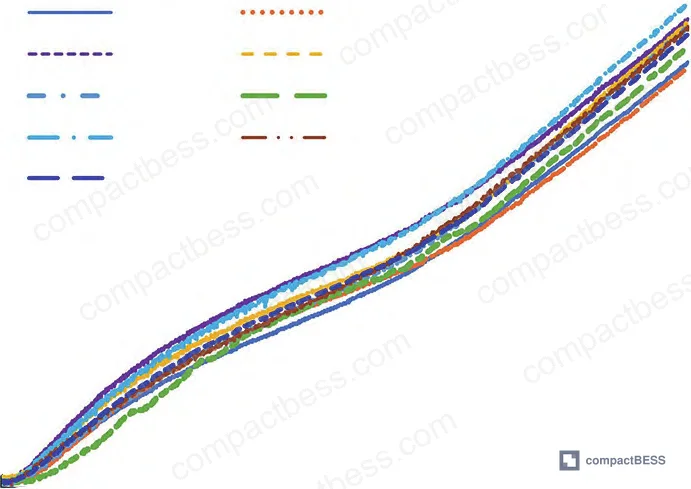
The headline result is stark: temperature rise is inversely proportional to ambient temperature, and the relationship is nonlinear.
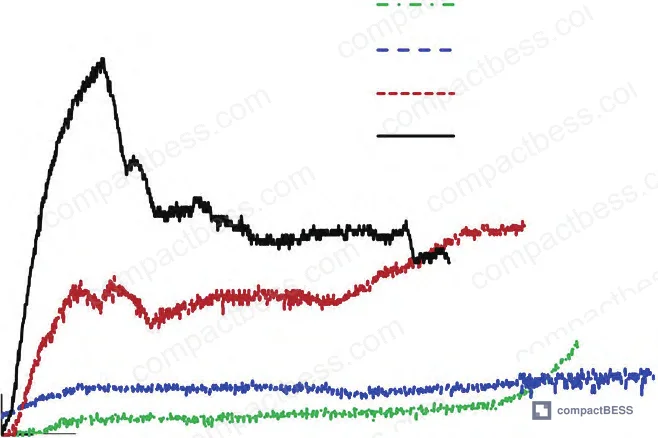
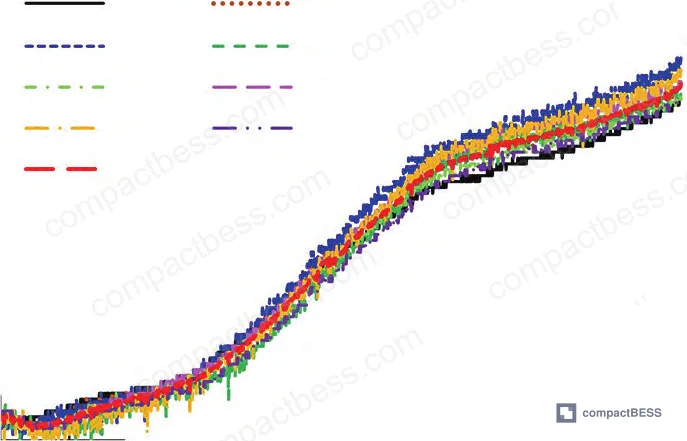
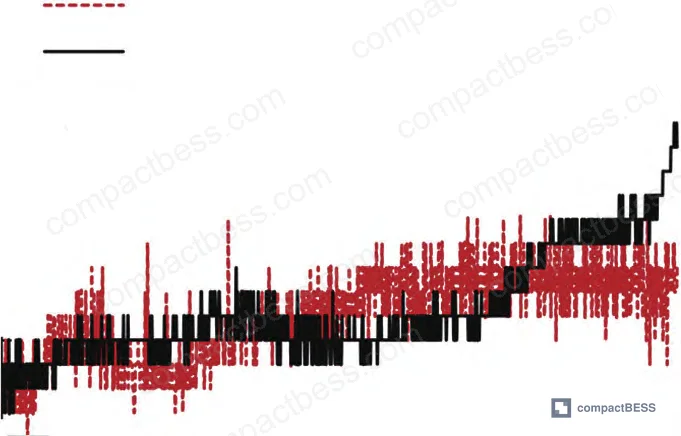
At 40 °C ambient, the immersed pack’s temperature rise during 0.5C charge/discharge stayed below 7.0 °C, with peak pack temperature reaching 46.40 °C during charging and 45.20 °C during discharge. The maximum intra-pack temperature differential stayed under 1.5 °C throughout. That’s genuinely good thermal uniformity.
At 25 °C ambient with immersion cooling active, average temperature rise during discharge was 6.8 °C, keeping the pack below 36.0 °C. Without immersion — standard air-cooled configuration — the same pack rose 10.1 °C, reaching a peak of 35.5 °C average, and exceeded the 2.0 °C intra-pack differential threshold after 5,600 seconds of discharge. That 3.3 °C delta between immersed and non-immersed at room temperature might sound modest. It isn’t, when you’re trying to keep cells within a tight operating window for longevity.

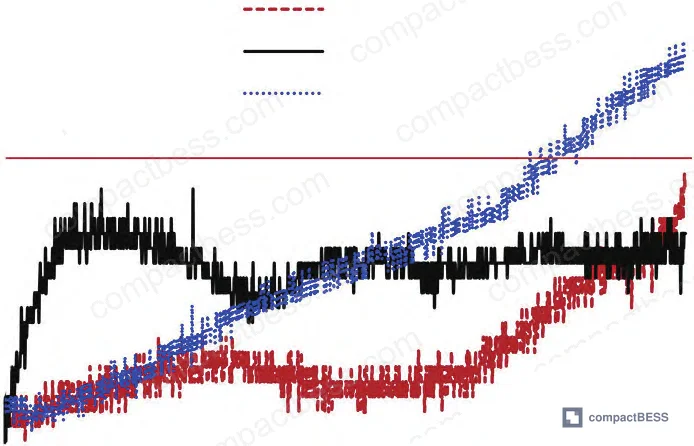
Now the cold side, which is where this data becomes genuinely alarming for anyone specifying BESS units for northern Europe, Canada, or high-altitude installations:
| Ambient Temperature | Discharge Rate | Temperature Rise | Discharge Efficiency | Max Intra-Pack ΔT |
|---|---|---|---|---|
| 40 °C | 0.5C | < 7.0 °C | Not constrained | < 1.5 °C |
| 25 °C (immersed) | 0.5C | 6.8 °C | Normal | < 2.0 °C |
| 0 °C | 0.5C | ~16.6 °C (discharge) | Reduced | < 2.0 °C |
| −20 °C | 0.5C | ~37 °C | 76.39% | < 5.0 °C |
| −40 °C | 0.5C | 50.0 °C | 64.95% | ~9.0 °C |
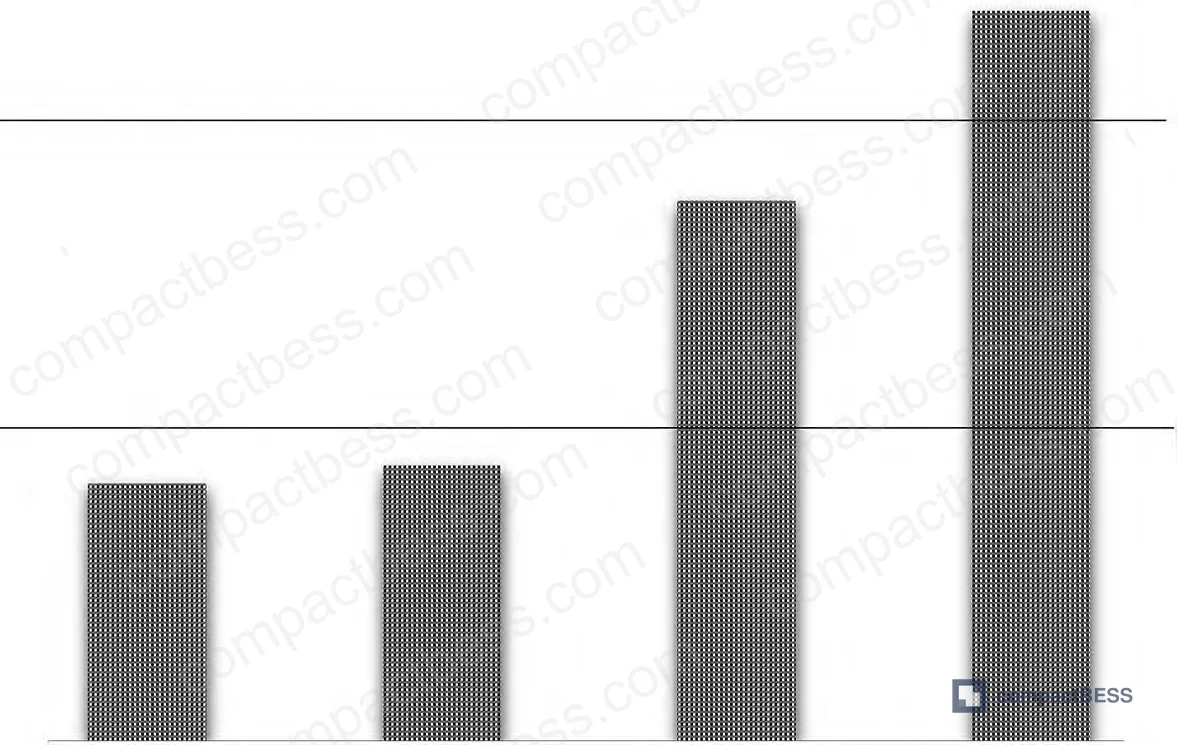
At −40 °C, discharge duration was only 4,677 seconds — the pack delivered just 64.95% of its rated capacity. At −20 °C, discharge time extended to 5,500 seconds with 76.39% efficiency. The mechanism is well understood: lower temperatures increase internal resistance (primarily polarization resistance, with minimal effect on ohmic resistance), which increases heat generation, depresses the voltage plateau, and cuts available capacity. Lithium-ion diffusivity drops with temperature, creating steeper intercalation concentration gradients that further limit capacity.
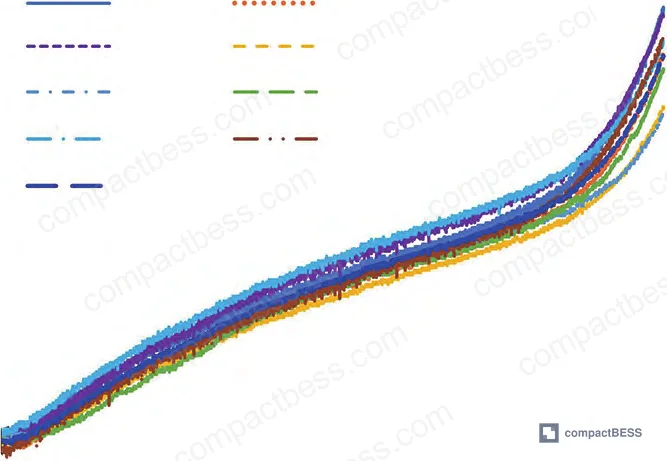
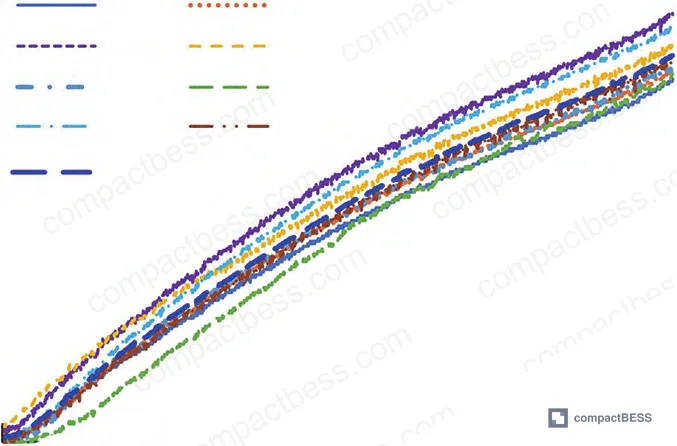
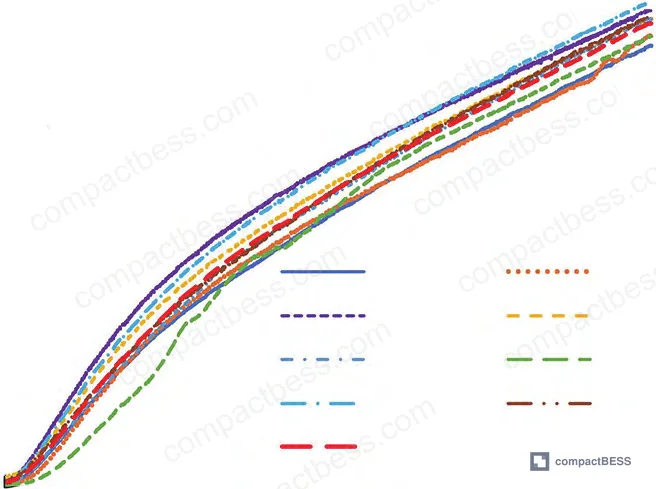
The 50.0 °C temperature spike at −40 °C deserves specific attention. The pack starts near −40 °C and ends approaching +10 °C by end of discharge. That’s a self-heating benefit from a system design perspective — but from a safety standpoint, a 50 °C swing within a single discharge cycle, concentrated in pack center cells, is not something you want happening in an unmonitored residential enclosure. At −40 °C, the maximum intra-pack differential approached 9.0 °C at around the 1,000-second mark before gradually declining as temperatures normalized.
The 0 °C condition showed average discharge temperature rise of 16.63 °C, with a pronounced thermal “spike” at end of discharge driven by sharply rising internal resistance at low SOC. Charging at 0 °C showed 17.78 °C average rise — slightly higher than discharge at the same temperature, attributable to entropic heat being larger during charging than during discharging.
Immersion Cooling Design Parameters for Residential Battery Packs #
The immersion fluid used in this evaluation — a hydrocarbon synthetic oil — has specific properties that directly influenced the test outcomes and matter enormously to buyers sourcing packs with this thermal architecture.
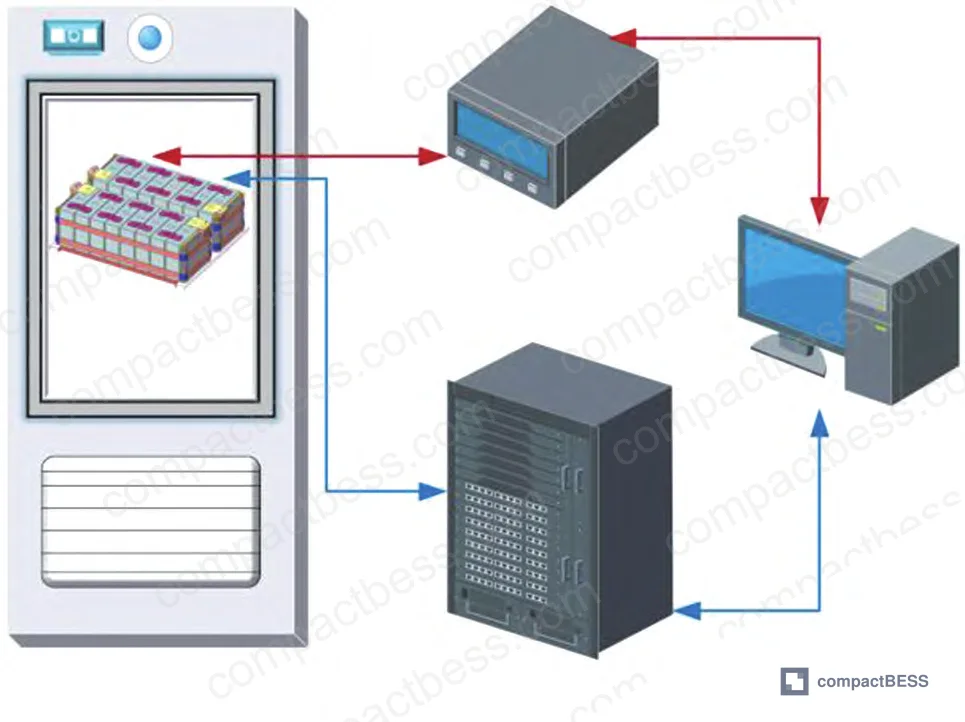
Key fluid properties: density of 796.3 kg/m³, specific heat capacity of 2,020 J/(kg·°C), and thermal conductivity of 0.14 W/(m·°C) at operating temperatures. Flash point of 177 °C. Dielectric breakdown voltage of 73 kV. Pour point of −66 °C. The low pour point is critical — this fluid remains pumpable (or flowable in static configurations) well below any realistic operating ambient.
The battery cells themselves: 100 Ah prismatic LiFePO₄, dimensions 50 mm × 160 mm × 119 mm (thickness × length × height), mass 1,950 g per cell. Nominal voltage 3.2 V, charge cutoff 3.65 V, discharge cutoff 2.50 V. Pack charge cutoff 58.40 V, discharge cutoff 40.00 V. Inter-cell spacing 2.0 mm with 2.0 mm copper busbars connecting the module string.
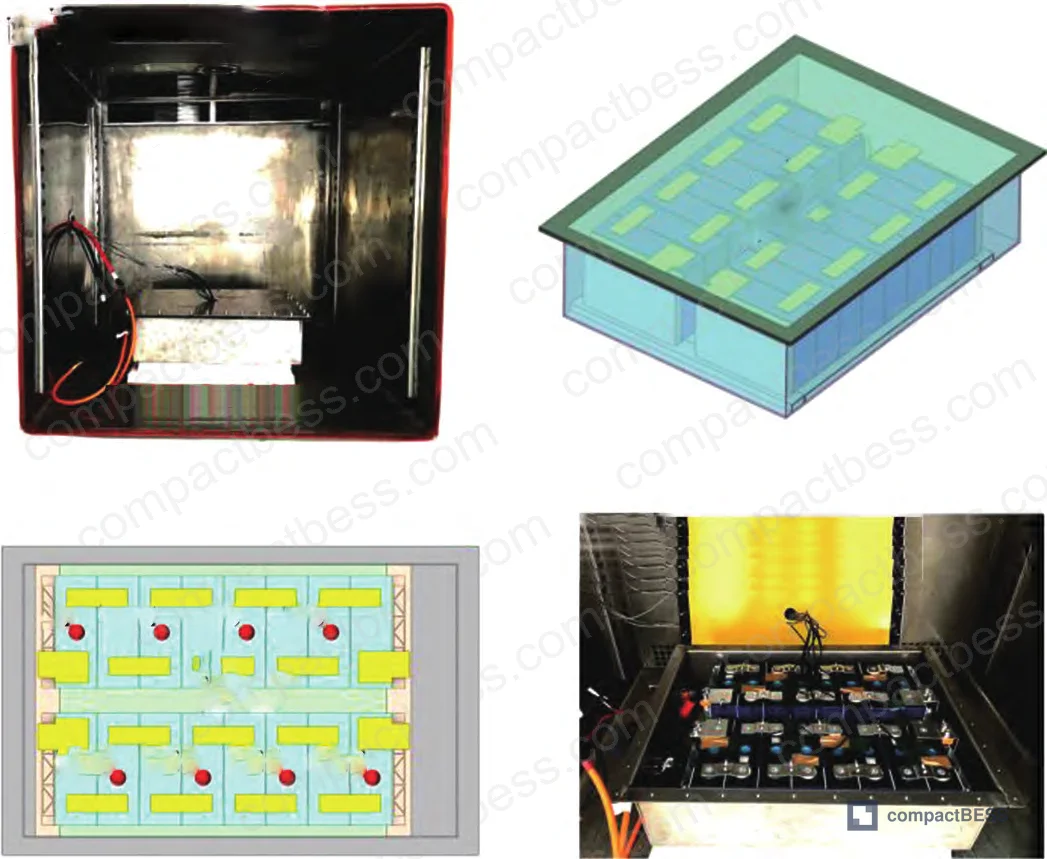
An important nuance on immersion fluid thermal behavior in cold environments: the fluid’s thermal conductivity decreases as temperature drops, approaching values comparable to insulating materials (≤0.12 W/(m·°C)) in extreme cold. This is actually a feature in sub-zero conditions — the fluid transitions from active heat extraction to passive thermal insulation, helping retain cell-generated heat and moderating the temperature differential across the module. This dual-role behavior is something air-cooled or cold-plate designs simply cannot replicate.
The static (non-circulating) immersion configuration kept intra-pack temperature differential under 2.0 °C at 25 °C ambient and under 1.5 °C at 40 °C ambient — achieved with zero pumping energy. Earlier research referenced in this domain shows that dynamic immersion with flow rates from 1.0 L/min to 10.0 L/min reduces temperatures by only 6.7% compared to static, indicating significant diminishing returns on pumping investment for residential applications.

Honestly, most buyers over-specify cooling system complexity for residential BESS. When you see the static immersion data — less than 2.0 °C intra-pack differential at room temperature with no pump, no flow control, no maintenance — the case for adding a circulation system in moderate climates is weak. Save the pumped loop budget for industrial deployments where continuous high-rate cycling or extreme ambient ranges actually demand it.
Practical Guidance for Buyers #
If your product is a residential or light-commercial BESS destined for markets with genuine seasonal temperature swings, the thermal management strategy must be part of your supplier qualification, not a post-design afterthought. The 64.95% discharge efficiency at −40 °C and the 50 °C temperature rise in the same condition aren’t edge cases — they’re the operating reality for BESS units deployed in northern regions.
For standard residential deployments in temperate climates (−10 °C to 35 °C ambient), a well-designed static immersion system using dielectric hydrocarbon fluid is technically sufficient and cost-competitive. The critical specifications to lock down in your procurement: immersion fluid flash point (minimum 150 °C for safety margin), dielectric breakdown voltage (minimum 30 kV per IEC 60156 protocol), pour point below your lowest expected installation ambient, and a validated intra-pack temperature differential under 2.0 °C at 0.5C rate in your target temperature range.
At compactbess.com, we work directly with verified Chinese manufacturers of LiFePO₄ pack assemblies and thermal management solutions, helping OEM brand owners and integration engineers in North America, Europe, and the Middle East connect with suppliers who can provide documented thermal test data — not just spec sheets — before samples ship. If your pack design requires cold-climate validation data or immersion cooling qualification, we can match you with the right facility.
Compliance references to verify during supplier qualification: IEC 62619 for stationary lithium battery safety, UN 38.3 for transport qualification, and GB/T 36276 for the Chinese residential BESS standard that governs most of what Chinese manufacturers are already certified to.
Need help identifying qualified suppliers for immersion-cooled LiFePO₄ pack assemblies? Talk to our sourcing team →
Supplier Qualification Questions #
- Can you provide thermal characterization data showing intra-pack temperature differential at 0.5C discharge across an ambient range of at least −20 °C to +40 °C, with ΔT confirmed below 2.0 °C at 25 °C ambient for your standard pack configuration?
- What is the discharge efficiency of your 100 Ah-class LiFePO₄ pack at −20 °C ambient and 0.5C rate — and can you document the actual discharge duration versus the rated 0.5C baseline to confirm efficiency above 76%?
- For immersion-cooled designs, what is the dielectric breakdown voltage and flash point of your specified immersion fluid, and does the fluid’s pour point fall below −40 °C to cover extreme cold deployment scenarios?
- What is the inter-cell spacing in your pack assembly, and can you confirm that your BMS has thermocouple or NTC sensor coverage at minimum every other cell position (equivalent to one sensor per 2-cell interval in a 16-cell string)?
- Under a static immersion configuration at 25 °C ambient and 0.5C charge/discharge, does your pack’s peak average temperature stay below 36.0 °C, and do you have test records showing the non-immersed temperature rise for comparison to confirm at least 3 °C suppression benefit from the immersion design?
Sourcing Checklist #
- [ ] Thermal test report covers ambient range from −20 °C to +40 °C minimum, with discharge efficiency data at each temperature point confirmed (≥76% at −20 °C, ≥65% at −40 °C if cold-climate rated)
- [ ] Immersion fluid flash point documented at ≥150 °C and dielectric breakdown voltage confirmed ≥30 kV per IEC 60156 test method
- [ ] Intra-pack temperature differential at 25 °C ambient, 0.5C rate verified ≤2.0 °C throughout full charge/discharge cycle
- [ ] Pack assembly uses ≥2.0 mm copper busbars and inter-cell spacing confirmed ≥2.0 mm in 100 Ah prismatic format
- [ ] Pack-level charge cutoff voltage confirmed at ≤3.65 V/cell (58.40 V for 16S) and discharge cutoff at ≥2.50 V/cell (40.00 V for 16S) per manufacturer cell spec
- [ ] IEC 62619 safety compliance certificate current and covering the specific pack configuration being sourced
- [ ] UN 38.3 transport test report available for the cell type used (required for any international shipment)
- [ ] Enclosure includes pressure relief valve and validated sealed wire entry (potted with encapsulant) to prevent immersion fluid leakage under thermal stress
Key Specifications Table #
| Parameter | Recommended Value | Verification Method |
|---|---|---|
| Intra-pack temperature differential (25 °C ambient, 0.5C rate) | ≤2.0 °C | K-type thermocouple array (1 per 2-cell interval), full charge/discharge cycle |
| Peak pack temperature rise at 25 °C ambient (immersed, 0.5C) | ≤6.8 °C (average); ≤10.0 °C absolute | Thermocouple mean of 8 sensor positions, end-of-discharge peak |
| Discharge efficiency at −20 °C ambient, 0.5C rate | ≥76.39% | Discharge duration ratio vs. rated 0.5C baseline; coulomb counting |
| Immersion fluid flash point | ≥177 °C | ASTM D92 Cleveland Open Cup method |
| Immersion fluid dielectric breakdown voltage | ≥73 kV | IEC 60156 standard test |
| Immersion fluid pour point | ≤−40 °C (cold-climate); ≤−20 °C (standard) | ASTM D97 pour point test |
| Maximum pack temperature during 40 °C ambient operation | ≤50.0 °C (any condition) | Environmental chamber set to 40.0 ±0.5 °C; peak thermocouple reading |
Can’t find a supplier meeting these specs? Submit your requirements and we’ll match you within 48 hours.
Frequently Asked Questions #
Q: Why does a LiFePO₄ pack generate so much more heat at −40 °C than at room temperature, even at the same 0.5C discharge rate?
A: The dominant factor is polarization internal resistance, which rises sharply as temperature drops. At −40 °C, this resistance is dramatically higher than at 25 °C — the ohmic resistance changes relatively little, but polarization resistance (driven by sluggish lithium-ion diffusion and slow electrochemical kinetics) causes both increased heat generation per unit of current and a depressed voltage plateau that cuts off the discharge earlier. The result is less energy delivered but more heat per unit time — a particularly unfavorable combination.
Q: Is static immersion cooling actually effective enough for residential BESS, or do you need a pumped circulation system?
A: For moderate-climate residential applications, static immersion is sufficient. The experimental data shows intra-pack differentials held below 2.0 °C at 25 °C ambient with no circulation. Dynamic immersion at flow rates from 1.0 to 10.0 L/min only reduces temperatures by an additional 6.7% — the marginal return on adding pump complexity and maintenance overhead is hard to justify for residential duty cycles.
Q: What happens to an immersion-cooled pack in extreme cold — does the fluid freeze or stop working?
A: A well-specified hydrocarbon synthetic fluid with a pour point of −66 °C remains fluid well below any realistic residential installation ambient. An interesting secondary effect: as temperature drops, the fluid’s thermal conductivity approaches that of insulating materials (≤0.12 W/(m·°C)), which actually helps the pack retain self-generated heat during discharge — acting as a thermal buffer rather than an active heat extractor. This is a genuine design advantage over air cooling in cold climates.
Q: At what ambient temperature does cell temperature uniformity become a serious concern?
A: Based on this test data, the threshold is roughly −20 °C. At 0 °C and 25 °C ambient, intra-pack ΔT stays below 2.0 °C throughout cycling. At −20 °C, maximum differential reaches up to 5.0 °C. At −40 °C, the differential spikes to approximately 9.0 °C around the 1,000-second mark before declining. Cell-to-cell temperature non-uniformity at this scale accelerates differential aging and can cause balancing problems over time — which is why cold-climate BESS designs need either active pre-heating or a thermal management system that limits that ΔT.
Q: Does the immersion fluid pose any compatibility or safety risk with LiFePO₄ cells?
A: Hydrocarbon-based dielectric fluids are chemically inert with LiFePO₄ cell casings and standard aluminum/stainless hardware. The key safety design requirement is the pressure relief valve on the enclosure top — in a thermal runaway event, combustion gas must have a controlled release path. The 73 kV dielectric breakdown voltage of the fluid also means it does not create an electrical short-circuit path within the pack, which is the primary safety concern for any conductive liquid near live terminals.
Published by compactbess.com Technical Team | Request a sourcing quote
Data source: Thermal Field Regulation of Residential Lithium-Ion Battery Packs Using Static Liquid Immersion Cooling Across Wide Ambient Temperature Ranges, H. Zhang et al., Journal of the Electrochemical Society, 2024


