

TL;DR #
China’s retired power battery volume surpassed 580,000 tonnes in a single recent year, and the cascade reuse market is growing faster than direct dismantling — yet the formal recycling rate remains below 25%, meaning most recovered material flows through unregulated channels. For buyers sourcing battery packs or cells from Chinese manufacturers, this supply chain reality directly affects whether your supplier’s raw material costs are stable and whether their ESG documentation will pass EU Battery Regulation scrutiny. Qualify your suppliers on traceability capability and material provenance before you lock in pricing, because commodity price swings in lithium and cobalt will hit unhedged, documentation-weak suppliers first.
Overview #
The gap between China’s recycling capacity on paper and what actually happens in practice is wider than most procurement teams appreciate. Industry-scale analysis drawing on patent databases, enterprise registration records, and multi-year market volume data from a university-affiliated research consortium — covering the full battery recovery value chain from discharge pre-treatment through precursor synthesis — reveals a structural tension that any buyer of Chinese-manufactured battery products needs to factor into supplier qualification.
The core finding is not that Chinese recycling technology is immature. It is that the policy enforcement infrastructure is uneven, the cost economics of formal recovery are marginal in many regions, and the international standard alignment required by markets like the EU is creating a two-tier supplier landscape. Suppliers who have invested in digital traceability and material certification are increasingly separable from those who have not — and that gap is widening as regulatory pressure mounts.
For buyers of cell formats and form factors, this matters directly: the chemistry and format of the cells in your product determine which recycling pathway applies, which certifications are required, and how vulnerable your supplier is to raw material cost shocks driven by import dependency.
China’s Battery Recovery Landscape: Patent Strength vs. Execution Gap #
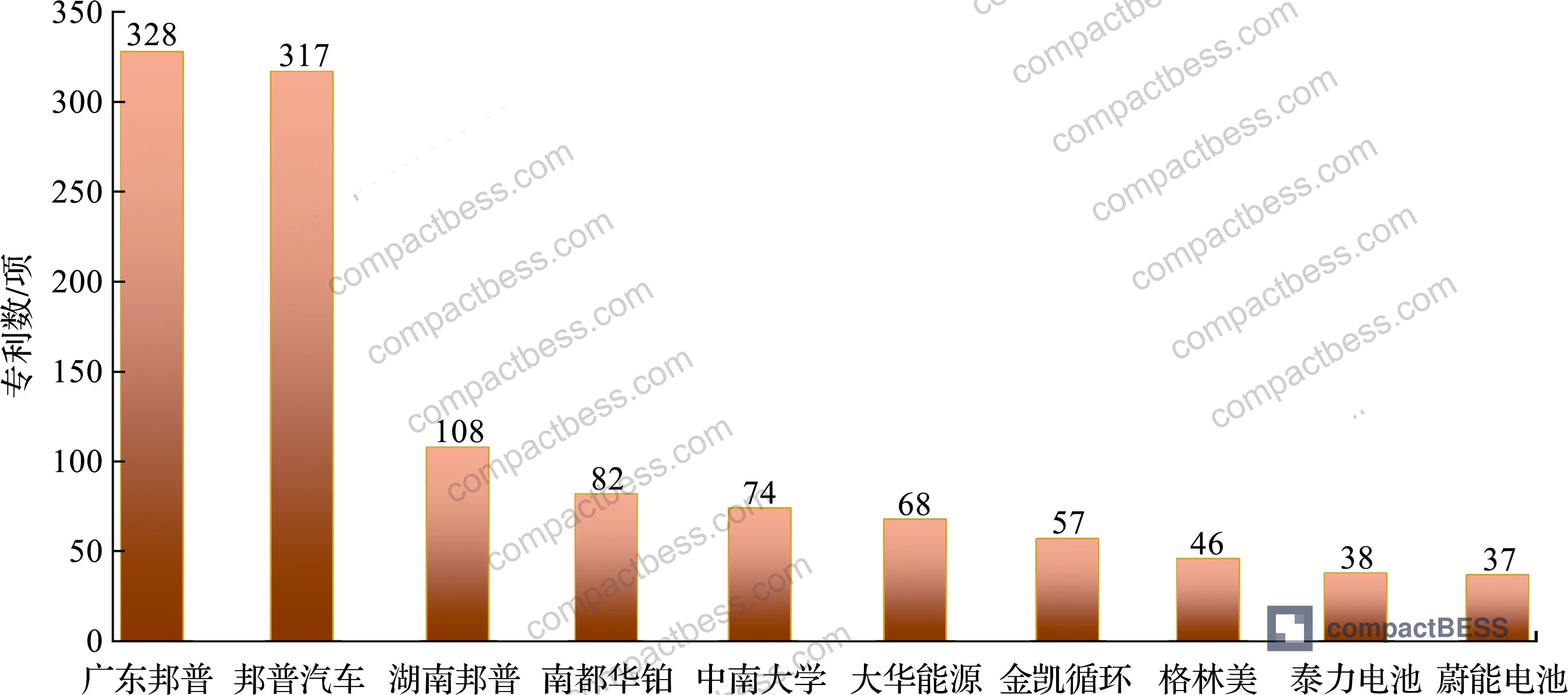
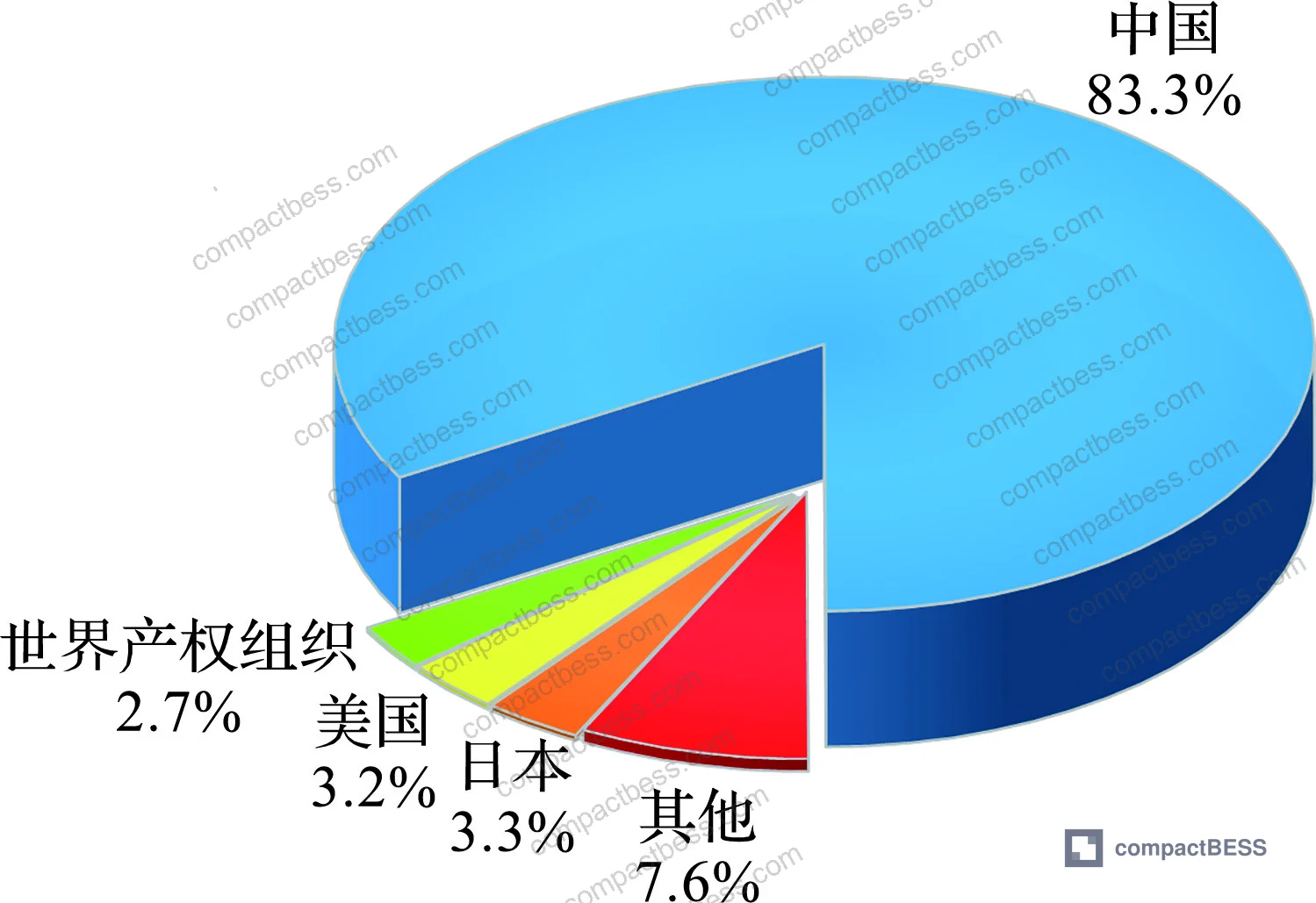
The patent position is genuinely strong. Global patent databases show 7,718 battery recycling-related patents worldwide, of which Chinese applicants hold the dominant share — spread across five technical branches: discharge pre-treatment, dismantling, leaching, metal separation and extraction, and precursor synthesis. Of the total, 3,329 are invention applications, 1,705 are granted inventions, and 2,628 are utility models. The research and development activity is concentrated in enterprises rather than universities, which signals commercialization intent rather than academic positioning.
That said, patent volume and operational execution are different things. China’s lithium ore production accounts for approximately 13.6% of global output, nickel for 4.1%, and cobalt for just 1.0% — while domestic demand for these materials is enormous. The structural import dependency for cobalt and nickel in particular creates a direct cost floor for any Chinese battery manufacturer that cannot recover and reuse these metals from its own production waste or end-of-life units.
The dominant recovery methods — hydrometallurgy and pyrometallurgy — both carry significant cost burdens. Hydrometallurgy is more selective and produces higher-purity outputs, but struggles with complex mixed-chemistry feed stocks. Pyrometallurgy handles diverse inputs more easily but generates environmental liabilities and leaves some materials unrecovered. Neither route is cheap: energy consumption, equipment capital, and process chemical costs routinely push formal recovery costs above the spot market price for recovered materials. This is the core economic weakness, and it explains why informal “workshop-style” recovery operations persist despite regulatory prohibition.
The EU regulatory environment is compounding this. Under the EU Battery Regulation 2023/1542, cobalt recovery targets are set at 90%, nickel at 90%, and lithium at 50% by 2028. Chinese suppliers exporting to European markets must either demonstrate compliance themselves or prove their cell materials originate from certified-compliant sources. That requirement is already creating sourcing bifurcation — buyers in Germany, France, and the Nordics are asking questions that most small Chinese pack assemblers cannot currently answer.
| Dimension | Strength | Weakness / Challenge |
|---|---|---|
| Patent position | 7,718 global patents, China dominant, enterprise-led | Foreign patent thickets (Umicore holds 2,000+ patents globally) |
| Market scale | Retired battery volume >580,000 t/year; market projected to exceed ¥100 billion by 2030 | Formal recovery rate <25%; informal channels persist |
| Raw material position | Closed-loop Co/Ni/Li recovery reduces import exposure | Li ore 13.6%, Ni ore 4.1%, Co ore 1.0% of global production — high import dependency |
| Regulatory compliance | 20+ national standards issued; policy system maturing | Regional enforcement gaps; EU/ISO standards drafted by non-Chinese bodies |
| Technology trajectory | Cascade reuse market growing faster than dismantling | Solid-state battery transition risk could invalidate current LFP/NMC recovery processes |
Cascade Reuse Standards and the 60/20 Capacity Threshold #
This is the part most procurement engineers get wrong. Cascade reuse is not a fallback option for degraded batteries — it is a defined technical pathway with specific capacity thresholds that determine which application a retired cell can enter.
The industry-standard cascade utilization framework works as follows: batteries retaining 60–80% of rated capacity are qualified for substation and power station energy storage applications. Those in the 20–<60% capacity range are routed to residential backup energy storage. Below 20% remaining capacity, the unit goes to dismantling and materials recovery. These thresholds are not arbitrary — they reflect the minimum energy delivery requirements for each application class and the safety margins needed to prevent thermal events in secondary-use installations.
For buyers, this framework has direct procurement implications. A supplier who manufactures battery packs for stationary energy storage but also claims to source “Grade A reconditioned cells” should be able to specify exactly where on this cascade curve those cells sit — and provide test data confirming capacity retention, internal resistance, and cycle history. Without that documentation, you are essentially buying at the same information asymmetry the paper describes as “gambling on stones”: the supplier completes the pack, and only then discovers whether the recovered cells met the application threshold.
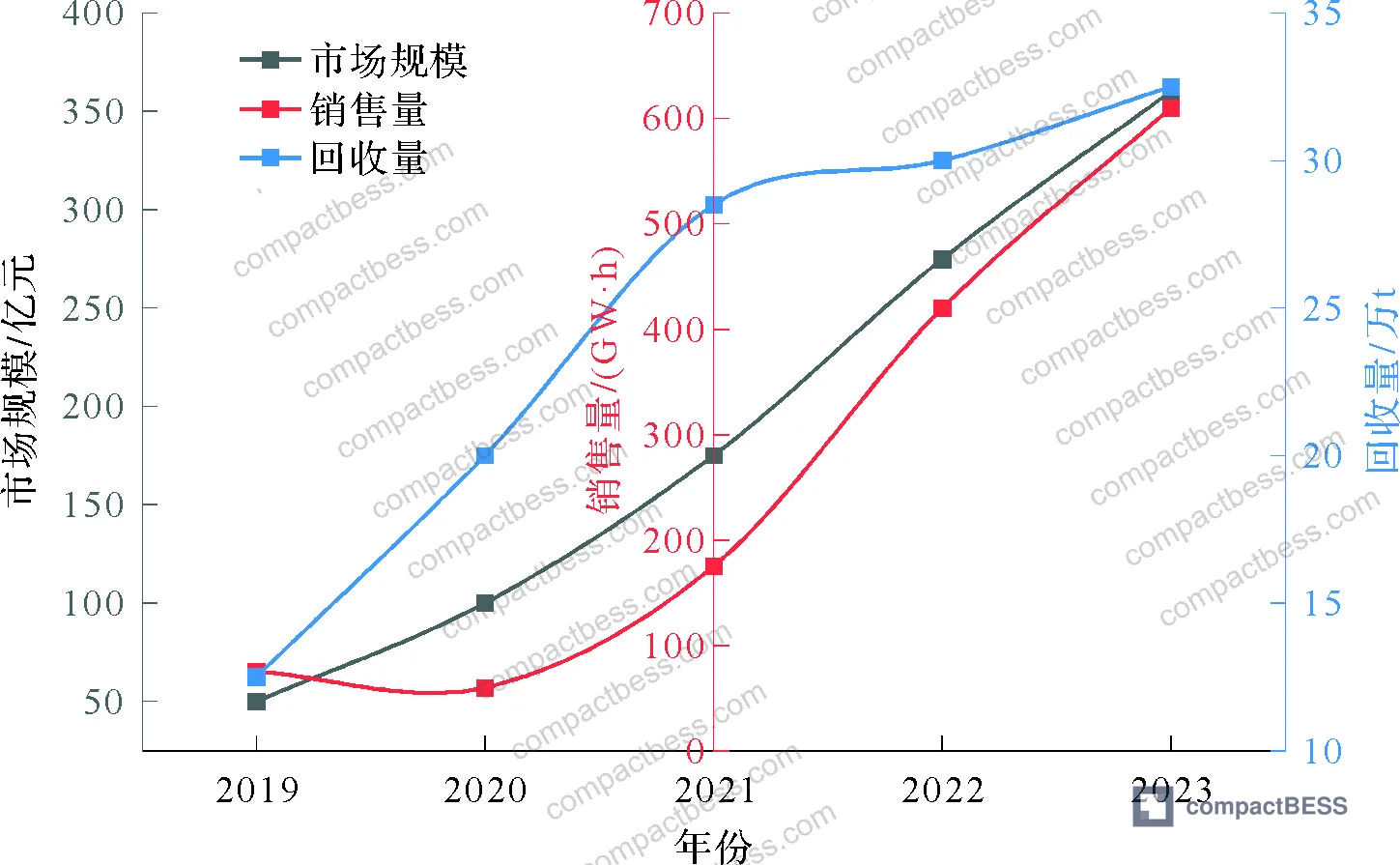
The cascade reuse market is currently larger and growing faster than the direct dismantling market — which makes sense given the economic logic. Reuse generates more value per kilogram than metals extraction. But it also concentrates quality risk at the secondary-use integration point. Buyers sourcing cells or packs for applications where safety certification is required — UPS, residential storage, grid-tied systems — need to be explicit about whether they will accept cascade reuse cells at all, and if so, under what documented conditions.
For context on how cell chemistry and format affect cascade suitability, our Cycle Life & Degradation documentation covers the capacity retention curves relevant to LFP and NMC chemistries in detail.
Enterprise Concentration and the Two-Tier Supplier Risk #
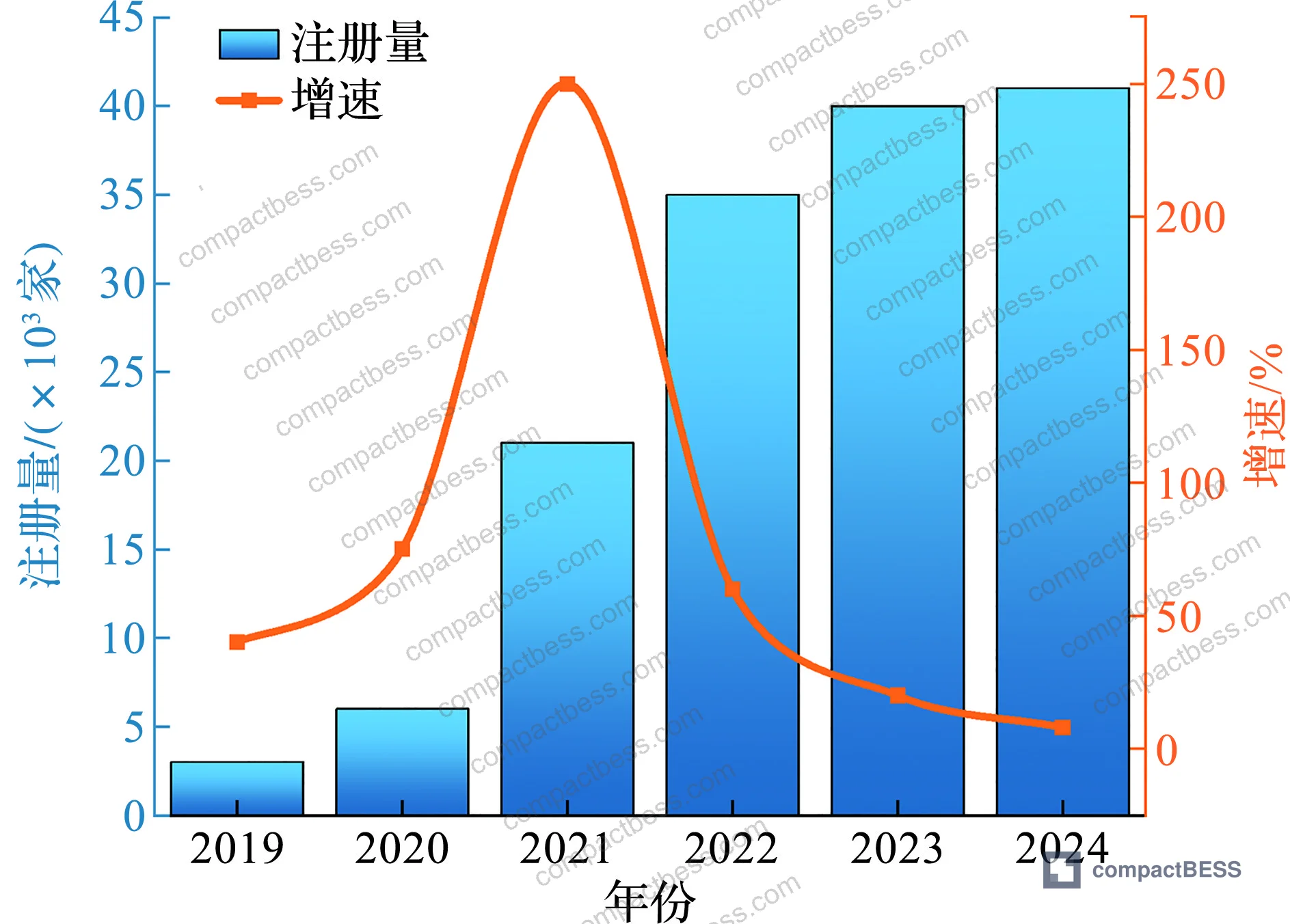
As of early 2025, approximately 170,000 enterprises in China have registered to operate in battery recovery-related businesses. That number sounds like a healthy competitive market. It is not. The enterprise registration data shows a sharp growth surge in 2021, followed by continued accumulation through 2024 — with Guangdong, Anhui, and Jiangsu provinces leading in company count. The geographic concentration reflects early infrastructure investment in those regions, but it also means that buyers sourcing from manufacturers in less-developed inland provinces are working with suppliers whose local recovery ecosystem is significantly weaker.

Most procurement teams don’t realize that the policy enforcement gap between coastal and inland manufacturing regions effectively creates two different compliance environments within a single country. A supplier in Shenzhen and a supplier in a tier-3 inland city may both hold the same national certifications on paper, but the practical availability of licensed dismantling infrastructure, hazardous materials handling, and environmental monitoring is substantially different. When those suppliers need to recycle their own production scrap — or handle warranty returns — the inland supplier’s costs and risks are materially higher.
In supplier qualification exercises covering a cross-section of mid-tier Chinese pack assemblers, a recurring pattern emerges: suppliers readily produce certificates for cell procurement but struggle to provide documented evidence of their own scrap battery disposal process. Three of six sampled suppliers in one qualification round could not provide a licensed third-party recycling contract, defaulting instead to vague references to “local recycling partners.” That is a compliance liability under both Chinese national standards and EU Battery Regulation extended producer responsibility clauses.
The IEC 62619:2022 Safety requirements for secondary lithium cells and batteries does not directly mandate recycling traceability, but it does establish the framework for battery system safety management that underpins responsible end-of-life handling. Buyers targeting EU markets should also confirm that their suppliers are tracking toward EU Battery Regulation 2023/1542 due diligence requirements, which include carbon footprint declarations and recycled content disclosure for industrial and EV battery categories.
Honestly, most buyers over-specify cell-level electrochemical performance while completely ignoring supplier-level material provenance documentation. A cell that measures within spec on day one but comes from a supplier with no auditable cobalt sourcing chain is a liability waiting to materialize in your EU customs clearance or your customer’s ESG audit.
Practical Guidance for Buyers #
If you are sourcing lithium battery packs, cells, or energy storage systems from Chinese manufacturers, the recycling compliance layer is no longer a back-office concern — it is a front-end qualification criterion. Here is how to operationalize that.
First, ask for the supplier’s end-of-life plan explicitly. Not a brochure answer — ask for the name and registration number of their licensed recycling partner, and verify that partner’s qualification status under China’s Ministry of Industry and Information Technology registry. Unlicensed informal recyclers are prohibited under current regulations, but enforcement is patchy, and many suppliers still default to them on cost grounds.
Second, for buyers targeting EU markets, request a preliminary carbon footprint declaration at the cell chemistry level. Under the EU Battery Regulation timeline, this will become mandatory for industrial and traction batteries. Suppliers who cannot yet produce this data are behind the compliance curve — which is useful information before you commit to a multi-year supply agreement.
Third, evaluate cascade reuse exposure in your supply contract. If the supplier sources cells externally rather than producing them in-house, you need contractual clarity on whether those cells may include cascade reuse units, and if so, what capacity retention floor they are guaranteed to meet. A 60% capacity floor is the minimum acceptable for most stationary storage applications; below that threshold, cycle life projections become unreliable.
At CompactBESS, we connect global OEM buyers and energy storage integrators with verified Chinese manufacturers across the full battery product spectrum — from cell packs and BMS modules to complete stationary storage systems. When your supplier qualification checklist goes beyond datasheet specs into material traceability and compliance documentation, our sourcing team can help identify manufacturers who are already aligned with EU and North American requirements.
Need help identifying qualified suppliers for battery packs with documented material traceability? Talk to our sourcing team →
Supplier Qualification Questions #
- What is your facility’s formal battery recovery rate for production scrap and warranty returns, and which MIIT-licensed recycling partner handles your end-of-life battery stream? Request their registration certificate number for verification.
- For cells sourced externally, can you provide documentation confirming that cascade reuse cells — if used — have been tested and confirmed to retain ≥60% of rated capacity, with internal resistance and cycle count data included in the batch release record?
- Your production involves cobalt- or nickel-bearing cathode materials — can you provide a material provenance declaration showing the mine-of-origin or certified recycled content percentage for cobalt and nickel in your current cell supply?
- What is your current formal battery recovery rate as a percentage of total batteries sold, and how does that compare to the <25% national average cited in current regulatory assessments? What documentation supports your claimed rate?
- Has your facility completed any assessment or internal audit against EU Battery Regulation 2023/1542 requirements for carbon footprint declaration and recycled content disclosure? If yes, at what stage is your compliance roadmap, and can you provide the gap assessment document?
Sourcing Checklist #
- ☐ Supplier holds or can name a MIIT-registered licensed battery recycling partner (not an unlicensed informal collector) for production scrap disposal
- ☐ Any cascade reuse cells used in finished products are documented with capacity retention ≥60% of rated value and supported by batch-level test data
- ☐ Supplier can provide cobalt and nickel material provenance documentation, including either mine-of-origin certification or verified recycled content percentage
- ☐ Supplier’s production facility is located in a province with established formal recycling infrastructure (Guangdong, Anhui, Jiangsu are tier-1; inland provinces require additional due diligence)
- ☐ Supplier has initiated or completed a gap assessment against EU Battery Regulation 2023/1542 carbon footprint and recycled content disclosure requirements
- ☐ Finished battery products carry or are progressing toward certification compliant with IEC 62619:2022 for secondary lithium cell safety management
- ☐ Supplier can produce a UN 38.3 transport certificate for the battery products being sourced, confirming safe handling classification for international logistics
- ☐ No open enforcement actions or regulatory violations recorded against the supplier under China’s solid waste pollution prevention regulations for improper battery disposal
Key Specifications Table #
| Parameter | Recommended Value | Verification Method |
|---|---|---|
| Cascade reuse minimum capacity retention (grid/substation storage) | ≥60% of rated capacity | Capacity discharge test at 0.5C, 25°C; compare to original rated capacity from cell datasheet |
| Cascade reuse minimum capacity retention (residential backup) | ≥20% and <60% of rated capacity | Same discharge protocol; document cycle history and SOH estimate |
| Formal battery recovery rate (supplier-level) | >25% (national floor); target ≥50% for EU-facing supply chains | Supplier-provided recycling partner weight receipts vs. total battery sales volume |
| Cobalt/nickel recycling target (EU Battery Regulation 2028) | Co ≥90%, Ni ≥90%, Li ≥50% | Third-party recycler certification against EU Battery Regulation 2023/1542 Annex XII |
| Patent-backed technical branches verified in recycling process | All 5: discharge pre-treatment, dismantling, leaching, metal separation, precursor synthesis | Supplier technical audit; request process flow documentation for each branch |
Can’t find a supplier meeting these specs? Submit your requirements and we’ll match you within 48 hours.
References #
Data source: Strategic Assessment of China’s Power Battery Recycling Industry: SWOT-PEST Framework Analysis and Sustainable Development Pathways, B.-F. Xu et al., Energy Storage Materials, 2023
Frequently Asked Questions #
What is the cascade reuse capacity threshold that separates grid storage from residential storage applications?
The established framework uses 60% retained capacity as the dividing line. Batteries at 60–80% capacity are routed to substation and power station energy storage. Those between 20% and below 60% qualify for residential backup storage. Below 20%, dismantling and materials recovery is the mandated pathway.
Why does China’s formal battery recovery rate matter to overseas buyers sourcing new battery products?
It is a direct indicator of supply chain maturity. A supplier operating in a region where informal recovery is common — meaning they have no reliable licensed recycling partner — is exposed to both regulatory risk and raw material cost instability. That exposure can become your problem when commodity prices spike or when your EU customers request extended producer responsibility documentation.
How does the EU Battery Regulation 2023/1542 affect procurement from Chinese manufacturers?
The regulation requires carbon footprint declarations, recycled content disclosure, and due diligence on cobalt, nickel, and lithium sourcing for batteries placed on the EU market. Chinese suppliers who cannot meet these requirements will face market access restrictions. Buyers should confirm compliance readiness now rather than at the point of customs declaration.
Is hydrometallurgy or pyrometallurgy better for battery recycling, and does it affect what I should ask suppliers?
Hydrometallurgy produces higher-purity metal outputs and is more selective by chemistry, but it struggles with mixed feed stocks and has complex process chemistry. Pyrometallurgy handles diverse inputs but generates environmental liabilities and has lower material recovery completeness. Neither is definitively superior — what matters for buyers is that the supplier’s recycling partner uses a process that can actually achieve the recovery rates required by applicable regulations, and that this is documented.
What is the solid-state battery transition risk mentioned in industry analysis, and should it affect sourcing decisions today?
Multiple manufacturers are targeting commercial solid-state battery production before 2030. If that timeline holds, the sulfide and oxide solid electrolytes used in those cells are chemically incompatible with current LFP and NMC recovery processes — meaning the existing recovery infrastructure would need significant retooling. For buyers on long procurement cycles, this is worth monitoring, but it does not require immediate sourcing changes. What it does suggest is avoiding suppliers who are entirely dependent on a single chemistry pathway with no R&D flexibility.
Published by compactbess.com Technical Team | Request a sourcing quote


