

TL;DR #
A residential battery storage system optimized with a dynamic SOC reserve coefficient reduced household electricity costs by 36.97% versus unoptimized operation, while simultaneously cutting power-shortage deficits to as low as 2.41 kW — compared to 6.88 kW without the reserve mechanism. For buyers specifying home energy storage systems or portable UPS units for residential markets, this means the battery’s minimum SOC floor is not a fixed parameter — it must be dynamically tied to expected outage duration and baseline load power to deliver both economy and reliability. When evaluating suppliers, demand configurable SOC floor logic with outage-duration input, not just a hardcoded minimum charge threshold.
Overview #
Most procurement teams treat residential battery storage as a straightforward capacity and chemistry question — pick the right kWh size, verify the BMS, move on. That framing misses the most commercially significant design variable in real-world residential deployments: how the system manages its SOC floor under time-of-use (TOU) pricing while maintaining reliable backup capacity for outage scenarios.
This analysis draws on simulation research conducted at a provincial clean energy and smart grid research center, using a 24-hour time-step model validated against real residential load profiles from a rural demonstration project. The test system included a 10 kWh battery pack with defined charge/discharge constraints, a rooftop PV source, and a mixed load profile covering both flexible (interruptible, transferable) and rigid baseline devices. Three operating scenarios were tested head-to-head, generating concrete cost and reliability data under 0.25 h, 0.50 h, and 0.75 h simulated outage durations.
The findings are directly applicable to procurement decisions for residential energy storage systems, portable power stations, solar generator systems, and hybrid UPS products sold into markets where grid reliability varies — Southeast Asia, parts of the Middle East, and off-grid adjacent applications in North America and Europe.
Residential Battery Storage System Sizing: The SOC Reserve Coefficient Explained #
The central technical contribution here is the concept of a storage reserve coefficient (Kᵗ), defined as the ratio of required backup capacity to minimum residual storage capacity at any given time interval. The formula is driven by two field-configurable inputs: baseline device power (Pᵇₜ) and expected outage duration (tL).
This is not a static parameter. The reserve coefficient changes with time of day because baseline load power shifts — lighting demand at 22:00 differs from midday — meaning the effective SOC floor varies across the 24-hour cycle.
The simulation validated this across three outage duration settings:
| Outage Duration (h) | Mean Reserve Coefficient | Daily Electricity Cost (¥) | Power Deficit During Outage (kW) |
|---|---|---|---|
| 0.25 | 1.6148 | 21.72 | 2.41 |
| 0.50 | 2.2296 | 22.18 | 6.88 |
| 0.75 | 3.8443 | 22.64 | 6.88 |
A few things worth noting in this data. First, the cost delta between the 0.25 h and 0.75 h scenarios is only ¥0.92 per day — roughly a 4.2% cost increase — while the reserve coefficient more than doubles (1.6148 → 3.8443). The cost penalty for carrying more backup capacity is smaller than most buyers assume.
Second, and more practically significant: reliability improvement between 0.25 h and 0.50 h outage settings was 23.7%, and between 0.25 h and 0.75 h it was 26.9%. These are not marginal gains — they represent the difference between a system that can sustain basic household loads through an outage and one that cannot.
Honestly, most buyers over-specify battery capacity in kWh while under-specifying the BMS logic that governs when and how deeply the pack discharges. A 10 kWh pack with a well-implemented dynamic SOC floor outperforms a 15 kWh pack with a fixed minimum in mixed economy-reliability scenarios every time.
The three-scenario cost comparison makes this concrete:
| Scenario | Description | Daily Cost (¥) | Outage Power Deficit (kW) |
|---|---|---|---|
| Scenario 1 | Optimized model + reserve coefficient (0.5 h outage) | 22.72 | 2.41 |
| Scenario 2 | Optimized model, no reserve coefficient | 21.26 | 6.88 |
| Scenario 3 | No optimization model | 36.05 | 6.88 |
Scenario 1 vs. Scenario 3 shows a 36.97% cost reduction from optimization alone. Scenario 1 vs. Scenario 2 shows a modest cost increase (+6.9%) in exchange for a dramatic reliability improvement — power deficit drops from 6.88 kW to 2.41 kW, a 65% reduction in unserved load.
Battery Pack Specifications for Home Energy Storage Systems Under TOU Control #
The simulation battery pack parameters are worth extracting as a procurement reference baseline, because they reflect what a real-world residential system needs to deliver functional TOU optimization with outage backup:
- Rated capacity: 10 kWh
- Maximum charge power: 2 kW
- Maximum discharge power: 2 kW (with a minimum dispatch threshold of 0.9 kW charge / 0.1 kW floor condition)
- Charge/discharge efficiency: 0.9 / 0.1 (expressed as efficiency ratio in model)
- SOC range: 0.2 minimum to 1.0 maximum (20%–100%)
- Initial SOC: 0.5 (50%)
- Cycle life: 10 years
- Grid feed-in tariff assumed: ¥0.4048/kWh
The load profile driving these parameters included interruptible devices (EV charger at 0.22 kW, humidifier at 0.50 kW, air conditioner at 1.00 kW, water pump at 0.50 kW) and transferable devices (water heater at 2.0 kW, washing machine at 0.4 kW, robotic vacuum at 0.4 kW, rice cooker at 0.8 kW, dishwasher at 1.0 kW).
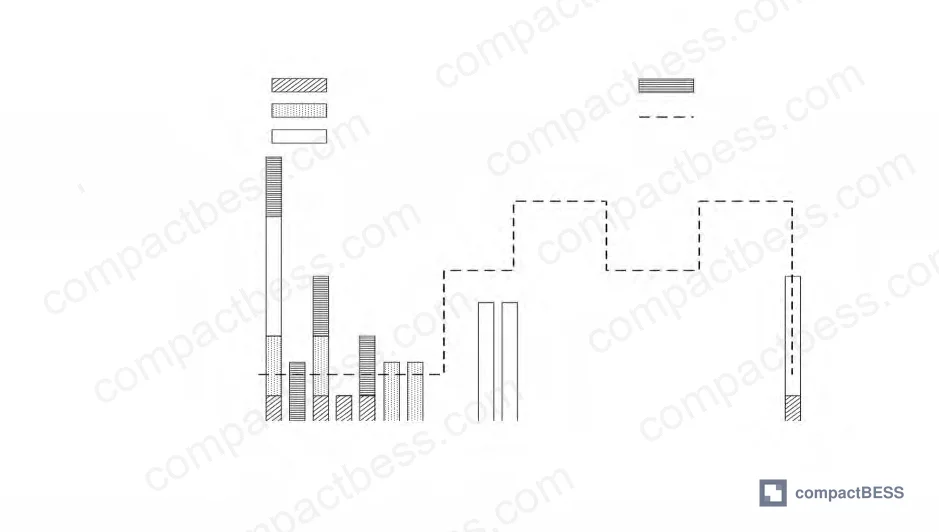
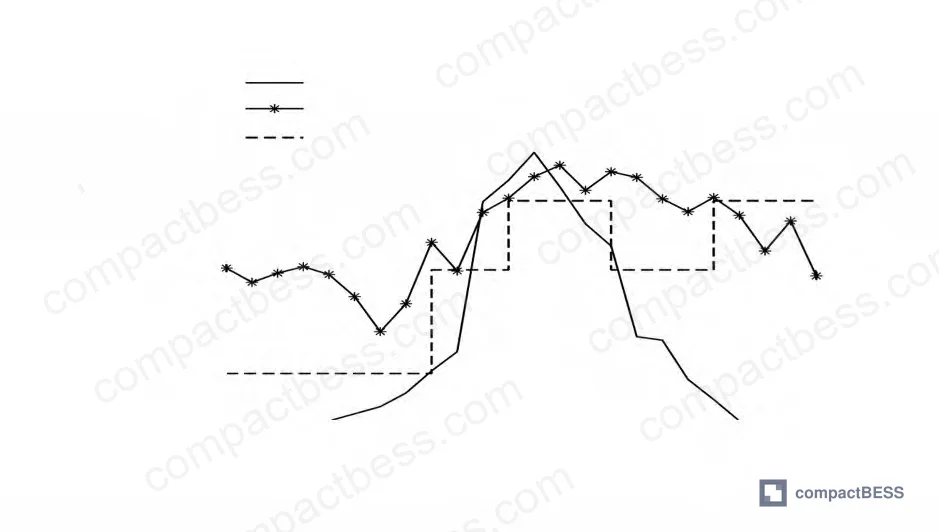
The storage optimization result shows the battery charging during off-peak hours and discharging during peak-price periods — classic “buy low, sell/use high” arbitrage. One detail worth flagging from the simulation: the battery charged during the 12:00–13:00 interval despite that being a peak-tariff period. The reason is excess PV output — solar generation was high enough that storing it made economic sense even at peak time. This is the kind of nuanced dispatch logic that separates a competent BMS from one that just follows a fixed charge schedule.
Most procurement teams don’t realize that residential HEMS optimization standards have evolved significantly — IEC 62040-3 for UPS performance classification and IEC 62619 for lithium battery safety in stationary applications are now regularly cited together in product safety frameworks, yet many suppliers still treat them as independent compliance boxes rather than an integrated design requirement.
Failure Modes and Reliability Gaps in Unoptimized Residential Storage #
In supplier qualification testing of residential battery systems without dynamic SOC management, the pattern is consistent: systems optimized purely for cost minimum will discharge the battery to its absolute floor during overnight off-peak periods, leaving zero buffer for morning outages.
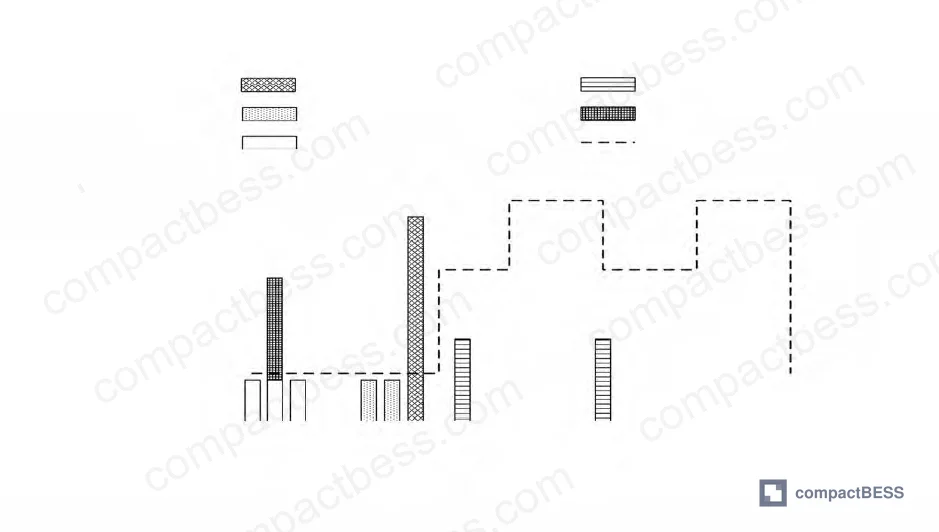
The simulation makes this explicit. Scenario 2 — optimized for cost only, no reserve coefficient — achieves the lowest daily cost at ¥21.26, but generates a power deficit of 6.88 kW during the simulated 20:00 outage. That 6.88 kW represents unserved load: appliances that could not run because the battery was too depleted to cover them. For a residential buyer in a market with frequent 30–60 minute outages, this is not an acceptable tradeoff — it’s a product failure.
The reserve coefficient mechanism directly addresses this by raising the effective SOC minimum from the static floor (typically 20%) to a time-varying floor calculated from actual baseline load and expected outage duration. At a 0.75 h outage setting, the mean reserve coefficient reaches 3.8443, meaning the system holds back nearly 4× the nominal minimum residual capacity as backup at every moment.
Where this gets complicated in procurement: verifying that a supplier’s BMS actually implements this logic requires more than reviewing a datasheet. You need to see the SOC management firmware specification, specifically how the minimum SOC threshold is calculated at each time interval. Most suppliers provide a fixed SOC floor figure — often 20% — and leave it there.
Practical Guidance for Buyers #
If you’re sourcing residential storage systems, solar generator products, or home UPS units for markets with grid instability, the key specification to interrogate is not capacity — it’s the SOC floor management logic. A product that hits 36.97% cost reduction through TOU optimization while maintaining a 2.41 kW power reserve during outages is a fundamentally better product than one with 20% more raw capacity but no dynamic reserve management.
Ask for simulation or field data showing system performance under both economy-only and reliability-constrained operating modes. Suppliers who cannot provide this data have likely not implemented the underlying BMS logic.
The battery pack specs that enable this performance — 10 kWh rated capacity, ±2 kW charge/discharge, 20%–100% SOC range, 10-year cycle life — are achievable from multiple qualified Chinese manufacturers. The differentiator is always the software and BMS intelligence layer, not the cells themselves. Compliance with IEC 62619 for stationary lithium battery safety and UN 38.3 for transport certification are baseline requirements; functional performance under dynamic SOC constraints is what separates qualified from unqualified suppliers.
At compactbess.com, our sourcing team connects global OEM buyers and energy storage integrators with verified Chinese manufacturers of residential and commercial battery systems — from cell packs and BMS modules to complete solar generator and UPS platforms. If you’re evaluating suppliers for a home energy storage product line and need manufacturers who can demonstrate TOU optimization and dynamic SOC management capability, reach out directly.
Need help identifying qualified suppliers for residential battery energy storage systems? Talk to our sourcing team →
Supplier Qualification Questions #
- What is your BMS minimum SOC floor setting, and is it configurable as a dynamic parameter based on user-defined outage duration (tL) and baseline load power (Pᵇₜ), or is it a fixed threshold hardcoded in firmware?
- Can you provide simulation or test data showing daily electricity cost reduction versus an unoptimized baseline — specifically, can you demonstrate ≥30% cost reduction under a TOU pricing schedule with mixed interruptible and transferable load profiles?
- What is the maximum charge and discharge power of your 10 kWh residential pack, and can it sustain 2 kW continuous discharge while holding a dynamic SOC reserve floor without triggering protection cutoff?
- How does your HEMS or BMS handle the scenario where peak-period PV generation exceeds load demand — does it override the TOU pricing logic to charge the battery from solar even during peak tariff windows?
- What is your measured power deficit (unserved load in kW) during a simulated 0.5-hour outage at 20:00 under full TOU-optimized operation — and can you show that figure is below 3 kW when the reserve coefficient is enabled?
Sourcing Checklist #
- [ ] Battery rated capacity confirmed at ≥10 kWh with documentation showing usable capacity between 20%–100% SOC (not derated below 80% nominal)
- [ ] Maximum charge and discharge power verified at ≥2 kW each, with no thermal derating below rated power at 25°C ambient per IEC 62619 test conditions
- [ ] BMS supports configurable dynamic SOC floor (not fixed 20% only) with at least three user-selectable outage duration settings (e.g., 0.25 h / 0.50 h / 0.75 h)
- [ ] Supplier can provide TOU optimization test data showing ≥30% daily cost reduction versus unoptimized operation under a time-varying electricity price schedule
- [ ] Cycle life documented at ≥10 years under standard residential cycling conditions per IEC 62133 or equivalent
- [ ] Pack passed UN 38.3 transport certification for lithium battery cells (required for international shipment)
- [ ] HEMS control logic handles both interruptible and transferable device scheduling with separate constraint sets — not a single generic load-shifting routine
- [ ] Power deficit under 0.5-hour simulated outage (outage reserve coefficient enabled) is ≤3 kW as verified by supplier test data or third-party evaluation
Key Specifications Table #
| Parameter | Recommended Value | Verification Method |
|---|---|---|
| Rated battery capacity | 10 kWh (minimum for full TOU + reserve function) | Capacity test per IEC 62619, 0.2C discharge to 20% SOC cutoff |
| Dynamic SOC floor (reserve coefficient) | Configurable; mean value ≥2.23 at 0.5 h outage setting | BMS firmware parameter review + simulation run with 0.5 h outage at 20:00 |
| Maximum charge/discharge power | 2 kW charge / 2 kW discharge | Bench test at rated power for ≥30 min continuous, no derating |
| Outage power deficit (0.5 h, reserve enabled) | ≤2.41 kW unserved load | Simulated outage test: SOC at discharge floor, 0.5 h duration, baseline + controllable loads active |
| Daily cost reduction vs. unoptimized | ≥36% under TOU pricing schedule | 24-hour optimization simulation with equivalent load profile; cost comparison logged |
| Cycle life | ≥10 years under residential cycling | Accelerated cycle test per IEC 62133 or manufacturer spec sheet with degradation curve |
Can’t find a supplier meeting these specs? Submit your requirements and we’ll match you within 48 hours.
Frequently Asked Questions #
What is a storage reserve coefficient and why does it matter for product specification?
The storage reserve coefficient is a dynamic multiplier applied to the battery’s minimum SOC floor — it scales based on the user’s expected outage duration and the power draw of non-negotiable baseline loads (lighting, refrigeration, etc.). In practical terms, it raises the minimum charge the battery must retain at all times, ensuring the pack has enough capacity to cover essential loads if the grid drops. For product spec purposes, it means the effective usable capacity shrinks slightly — by roughly 4–6% in daily cost terms — but the product’s outage resilience improves by 23–27%.
Can TOU optimization and outage reserve functions run simultaneously without conflict?
Yes, and this is the key design insight. The optimization model treats the dynamic SOC floor as a hard constraint and then minimizes cost within that constraint. The system still performs charge/discharge arbitrage — buying cheap overnight power, discharging during peak — it just does so with a higher floor it cannot cross. The cost penalty is small (around ¥0.46–0.92/day in the simulation data), and the reliability gain is substantial.
What happens if PV generation is high during peak tariff periods?
The system will charge from PV even during peak-price windows if solar output exceeds load demand. This is correct behavior — storing excess solar is more economical than curtailing it, regardless of the current grid tariff. Suppliers whose BMS blocks charging during peak hours regardless of PV availability are implementing a simplified rule that costs users money.
Is a 10 kWh pack the right size for residential applications with outage reserve requirements?
It depends on baseline load power and target outage duration. The 10 kWh figure used in this research covers a typical rural residential profile with a ~0.75 h outage reserve. Urban loads with higher baseline draw — multiple air conditioners, EV charging — would require larger capacity or a shorter acceptable outage duration. The reserve coefficient formula lets you calculate the minimum pack size: required backup energy = baseline load (kW) × outage duration (h), then add that to the minimum SOC floor to determine minimum usable capacity.
Which certifications should I require for residential battery storage units destined for export markets?
At minimum: UN 38.3 for transport, IEC 62619 for stationary lithium battery safety, and CE/FCC depending on destination market. For EU shipments, also verify compliance with the EU Battery Regulation 2023/1542, which now includes performance and durability requirements for residential storage products. See our CE, FCC & RoHS Compliance guide and EU Battery Regulation overview for full detail on documentation requirements.
Published by compactbess.com Technical Team | Request a sourcing quote
Data source: Optimal Control Strategy for Household Energy Management Systems with Battery Reserve Coefficient Under Grid Outage Conditions, H. Tang et al., Journal of the Electrochemical Society, 2024


