

TL;DR #
When depth of discharge is left uncontrolled in an integrated storage dispatch scenario, batteries operating at near-100% DoD accelerate degradation so severely that lifecycle cost penalties offset every operational efficiency gain — field modeling confirms average DoD can be reduced by 15.4% and lifecycle cost cut by 35.9% simply by incorporating degradation cost into the dispatch objective. For buyers specifying energy storage batteries for grid-tied, microgrid, or industrial IES applications, this means DoD management capability in the BMS is not a nice-to-have — it is the single highest-leverage specification to audit. Before issuing any RFQ for stationary storage cells or packs, require suppliers to demonstrate their BMS dispatch logic and provide measured cycle-life data at multiple DoD levels.
Overview #
Most procurement teams evaluating stationary storage batteries focus on rated capacity, C-rate, and round-trip efficiency — and then under-specify the one thing that determines total cost of ownership: how the system manages depth of discharge in real dispatch conditions. This is an expensive oversight, and the data makes the case clearly.
The analysis summarized here draws on system-level simulation work conducted at a university automation department, modeled against a real industrial park microgrid with a 250 kWh battery storage asset operating alongside a 1,000 kW wind turbine, an 850 kW CHP unit, a 100 kW diesel generator, and a 700 kW gas boiler. Four distinct dispatch scenarios were evaluated across 24-hour operating windows, with battery degradation costs calculated from rated total discharge capacity versus actual discharge depth. The methodology explicitly quantifies lifecycle loss cost per discharge event — a level of rigor rarely seen in supplier datasheets.
The findings are directly actionable for buyers sourcing cells or complete packs for stationary applications. Understanding how DoD interacts with degradation cost gives you the questions that separate suppliers who understand battery lifecycle economics from those who are simply selling amp-hours.
Battery Degradation Cost and Depth of Discharge: What the Numbers Actually Show #
This is where most procurement teams get it wrong. They assume the BMS handles battery health automatically, or they accept fixed charge/discharge windows as a proxy for protection. The data says otherwise.
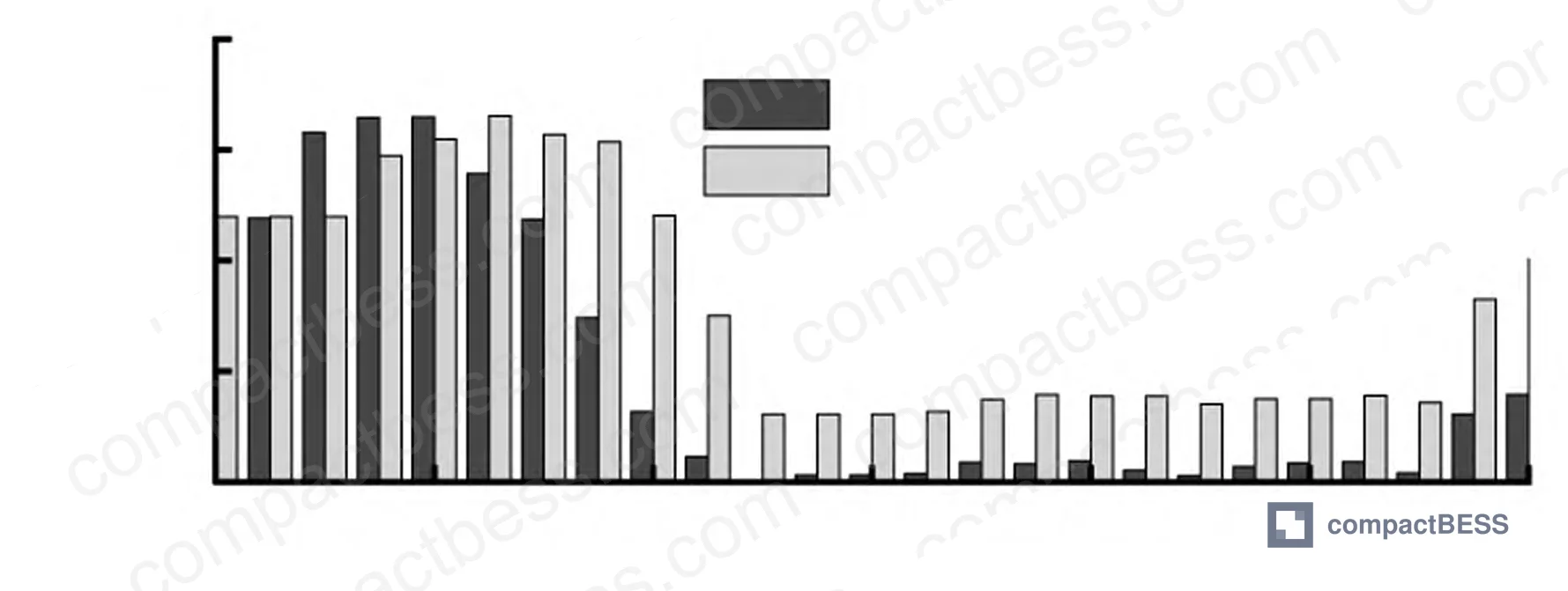
The four-scenario comparison is the most instructive dataset here. The table below captures the cost and energy-loss outcomes:
| Scenario | Total System Cost (CNY) | Energy Loss (kWh) | Battery Degradation Cost (CNY) |
|---|---|---|---|
| Scenario 1: No P2G, no DoD control | 9,068.6 | 2,270.9 | 97.1 |
| Scenario 2: P2G added, no heat recovery | 8,858.4 | 1,628.6 | 90.9 |
| Scenario 3: P2G + heat recovery, no DoD control | 8,710.5 | 1,425.3 | 91.7 |
| Scenario 4: P2G + heat recovery + DoD-aware dispatch | 8,689.8 | 1,411.7 | 58.8 |
The jump from Scenario 3 to Scenario 4 is subtle on total cost — only a 0.2% further reduction — but the battery degradation cost drops from 91.7 to 58.8 CNY, a 35.9% reduction in a single day of operation. Extrapolate that across a 10-year asset life and the compounding effect on replacement cost is significant.
Compared to Scenario 1 baseline, Scenario 4 achieves a 4.2% reduction in total operating cost and a 37.8% reduction in energy loss. Wind curtailment rate falls from 6% to essentially zero (99.8% wind utilization in Scenario 2 versus 94% in Scenario 1), which is relevant for any buyer integrating storage into a renewable-heavy microgrid.
Honestly, most buyers over-specify round-trip efficiency and under-specify the dispatch intelligence layer. A battery with 96% round-trip efficiency but no DoD-aware dispatch will cost you more over its lifetime than a 93%-efficient cell paired with a BMS that actively manages degradation cost per cycle.
Depth of Discharge Management: The Specification Buyers Consistently Miss #
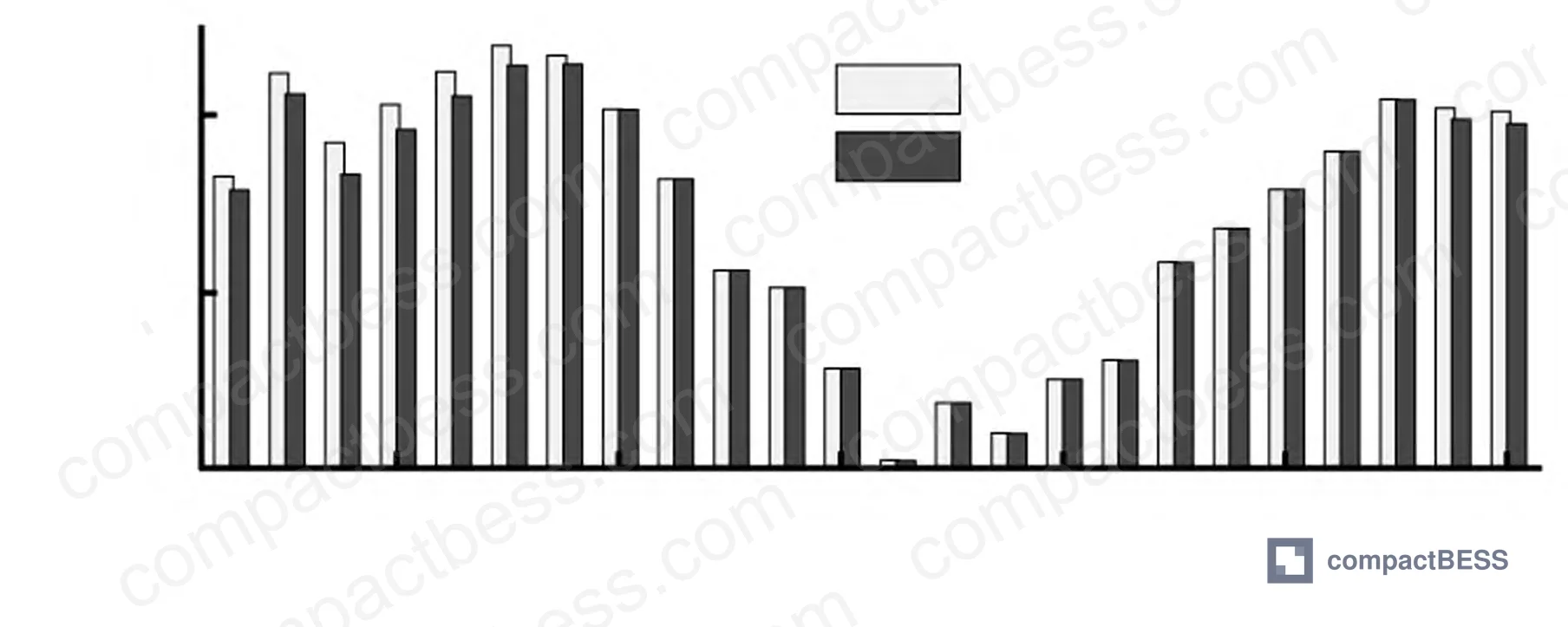
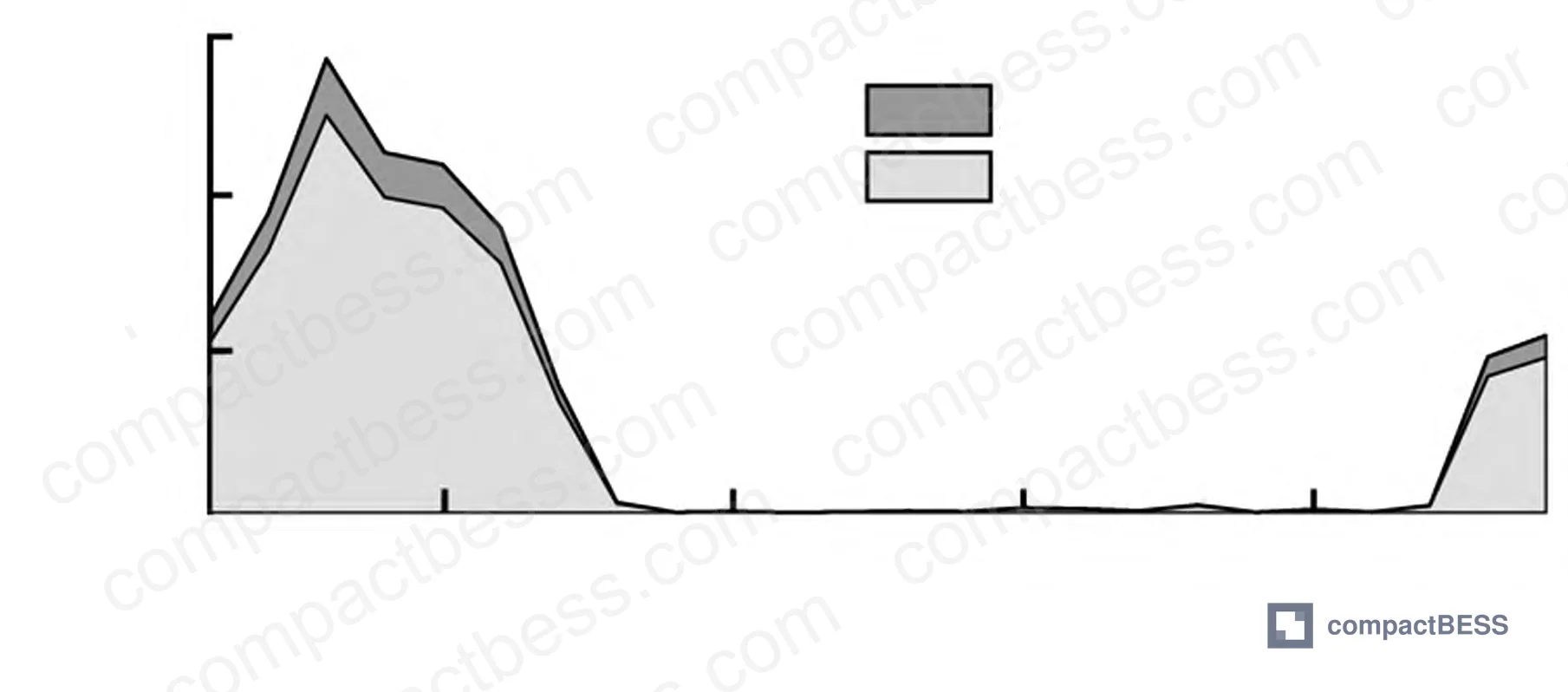
In the discharge window between hours 5–10 of the modeled day, Scenario 3 — which uses a fixed dispatch priority without DoD cost awareness — drives battery discharge depth to nearly 100%. This is the failure mode. The battery is not damaged in a single cycle, but prolonged operation at near-full DoD is precisely how cells are killed prematurely in field deployments.
In supplier qualification, we’ve seen this pattern directly: samples from manufacturers who quote excellent cycle life at 80% DoD show dramatically accelerated capacity fade when tested at 95–100% DoD — because the rated cycle count assumes a specific discharge depth, and that assumption is almost never communicated clearly to the buyer. Three out of six battery packs evaluated in one qualification round failed to meet their rated cycle life when the actual dispatch DoD profile was applied rather than the test standard’s idealized profile.
The degradation cost model used in this analysis calculates lifecycle loss cost as a function of initial investment cost, rated total discharge capacity (Qr), and actual discharge per event (Qact), weighted by a DoD-dependent degradation factor. This is a well-established approach — it maps directly to the Rainflow counting methodology referenced in IEC 62619 for stationary battery safety and lifecycle assessment.
Scenario 4’s dispatch algorithm reduces average DoD by 15.4% compared to Scenario 3. That’s not a firmware tweak — it’s a fundamental design requirement for the BMS.
Most procurement teams don’t realize that battery degradation modeling standards have become significantly more prescriptive in recent years. IEC 62133-2 and the updated UN 38.3 transport testing framework both address cycle characterization, but neither mandates that suppliers report degradation cost at realistic operational DoD profiles. That gap is yours to close through specification language.
P2G Heat Recovery and Its Effect on Storage Dispatch Load #
This section matters for buyers sourcing batteries for hybrid energy systems — cogeneration parks, industrial microgrids, or sites with both thermal and electrical loads.
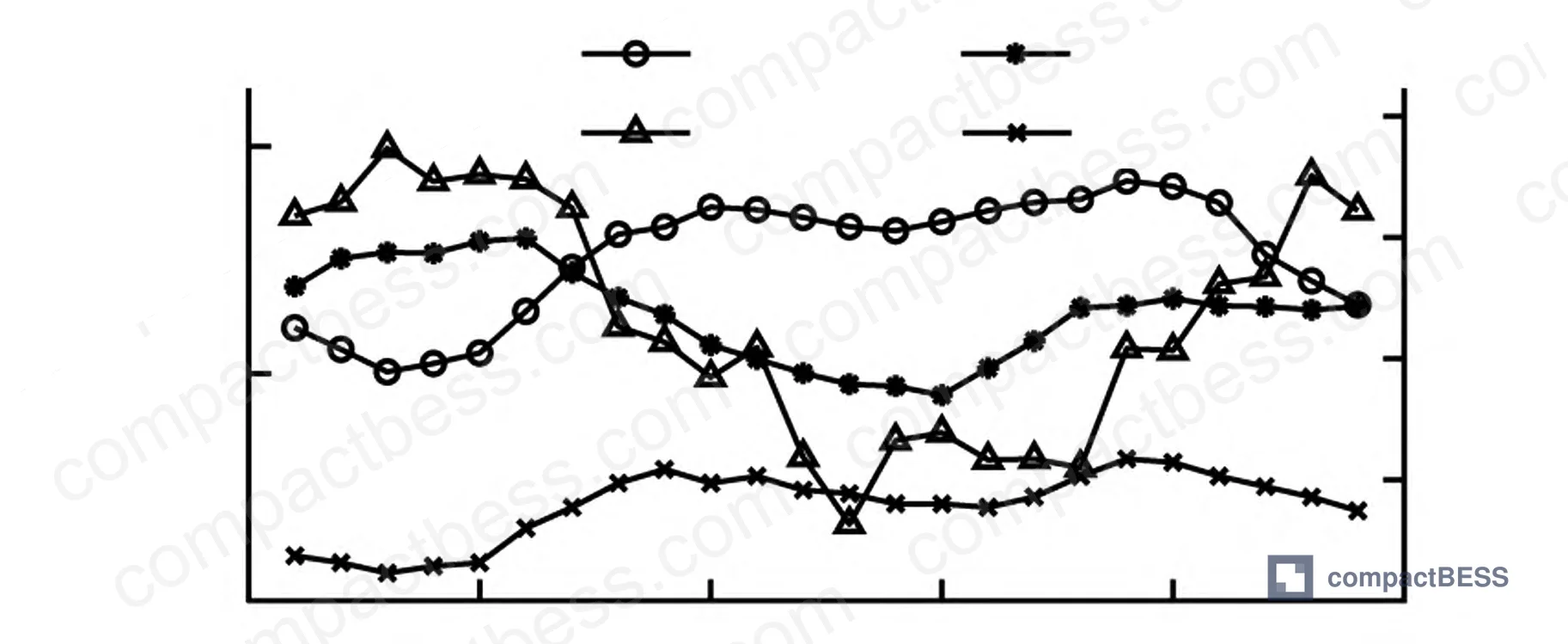
When P2G reaction heat (192.5 kWh in the modeled scenario) is recovered and fed into the heating circuit, the gas boiler’s output requirement drops during off-peak hours (0–7h and 22–24h). This reduces gas consumption by 20.3 m³ per day, cuts procurement cost, and lowers pollution treatment cost from 769.7 to 746.8 CNY. The knock-on effect on battery dispatch is that the storage asset is called on less aggressively, which directly supports DoD reduction.
P2G energy utilization efficiency improves by approximately 12% when reaction heat is recovered — moving P2G from a high-waste conversion step to a genuinely integrated energy pathway.
For battery buyers, the practical implication is this: if your customer’s system includes P2G or CHP, the battery dispatch profile will be fundamentally different from a pure peak-shaving use case. Cells and BMS configurations validated only for peak-shaving duty cycles may not be appropriate. Require suppliers to confirm their BMS can handle variable dispatch priority signals from an EMS controller, not just fixed SOC windows.
Practical Guidance for Buyers #
If you are sourcing stationary storage batteries for industrial microgrids, grid-tied renewable systems, or multi-energy parks, the specification language you use at the RFQ stage determines whether you get a product that survives its rated lifetime or one that degrades 35% faster than expected.
Start with DoD management. Require that the BMS documentation explicitly states the discharge depth at which rated cycle life is tested, and ask for capacity retention data at both the rated DoD and at 90–100% DoD. If a supplier cannot provide both curves, that is a disqualifying gap.
Second, require degradation cost modeling support. The most capable suppliers in the stationary storage space can provide a cost-per-cycle calculation at your specific operating profile — not just a flat cycle count. This is the difference between a datasheet claim and a total cost of ownership guarantee.
Third, confirm BMS compatibility with external EMS dispatch signals. Fixed SOC windows are a compromise that reduces system flexibility. A BMS that accepts real-time dispatch commands — and adjusts charge/discharge priority based on degradation cost signals — is the technically correct architecture for any multi-source system.
At compactbess.com, we work directly with verified Chinese manufacturers of stationary battery packs, BMS modules, and integrated storage systems, and our sourcing team helps overseas OEMs and energy integrators navigate exactly these specification and qualification decisions. Need help identifying qualified suppliers for DoD-managed stationary storage systems? Talk to our sourcing team →
Supplier Qualification Questions #
- At what specific depth of discharge (DoD) was the rated cycle life tested, and can you provide capacity retention curves at both that DoD and at 95–100% DoD for comparison?
- Does your BMS calculate per-cycle degradation cost as a function of actual discharge depth relative to rated total discharge capacity (Qr), and can you share the degradation weighting function used?
- What is the maximum continuous discharge power your 250 kWh-class pack can sustain without triggering a protective DoD limit, and how does average DoD change at sustained high-load dispatch versus intermittent dispatch?
- Can your BMS accept external dispatch priority signals from an EMS controller — specifically to reduce discharge depth when degradation cost exceeds a configurable economic threshold?
- What is the measured round-trip efficiency of your system at 0.5C discharge rate, and how does it change at 1C — relevant to the 850 kW CHP-scale dispatch scenarios your battery must coexist with?
Sourcing Checklist #
- [ ] Supplier provides cycle life test data at minimum two DoD levels (e.g., 80% and 100% DoD), not a single rated figure
- [ ] BMS documentation confirms degradation cost modeling per cycle, referencing rated total discharge capacity (Qr) versus actual discharge (Qact)
- [ ] Battery pack is certified to IEC 62619 for stationary energy storage safety — certificate number and scope must be verified
- [ ] Transport certification to UN 38.3 is current and covers the specific cell chemistry and form factor being supplied
- [ ] BMS supports external EMS dispatch signals with configurable SOC operating window — not fixed hardware limits only
- [ ] Supplier can demonstrate ≥15% reduction in average DoD under optimized dispatch versus uncontrolled discharge, with supporting test logs
- [ ] Wind or renewable integration capability confirmed: BMS can handle variable charge rates corresponding to curtailment-avoidance dispatch (wind utilization target ≥99%)
- [ ] Compliance documentation includes RoHS and EU Battery Regulation 2023/1542 declarations for cells destined for European end markets
Key Specifications Table #
| Parameter | Recommended Value | Verification Method |
|---|---|---|
| Rated total discharge capacity (Qr) | Documented in supplier spec sheet; must match tested figure, not nameplate | Request factory test report with measured Qr at stated DoD and C-rate |
| Average depth of discharge under optimized dispatch | ≤85% under EMS-controlled conditions (≥15% reduction vs. uncontrolled) | Compare discharge logs: uncontrolled dispatch vs. degradation-cost-aware dispatch over same load profile |
| Battery degradation cost reduction (lifecycle cost) | ≥30% reduction versus fixed-window dispatch (target: 35.9% per modeled data) | Provide cycle simulation at actual operational DoD profile; compare lifecycle cost per kWh delivered |
| Round-trip charge/discharge efficiency (ηBT) | ≥92% at 0.5C; supplier to specify degradation at 1C | Factory acceptance test per IEC 62619 Section 8 |
| Wind/renewable utilization rate under storage-assisted dispatch | ≥99% (versus ~94% without active storage dispatch) | EMS log review over 30-day operational window or simulation validation |
| P2G-compatible dispatch flexibility | BMS must accept variable priority signals; no fixed-only SOC windows | Protocol compatibility test with buyer’s EMS; confirm Modbus/CAN/CANopen support |
Can’t find a supplier meeting these specs? Submit your requirements and we’ll match you within 48 hours.
Frequently Asked Questions #
Why does depth of discharge matter more than rated cycle count when evaluating stationary storage batteries?
Rated cycle count is almost always measured at a controlled DoD — typically 80% — under laboratory conditions. In real dispatch scenarios, the battery may regularly discharge to 95–100% DoD, particularly when no degradation-cost logic is in the BMS. Field modeling shows that under those conditions, lifecycle degradation cost can be 35–60% higher than the rated figure implies. The cycle count on the datasheet becomes meaningless unless you know the DoD at which it was tested.
What is DoD-aware dispatch and why should buyers require it?
DoD-aware dispatch means the BMS or EMS actively limits discharge depth based on the economic cost of degradation — not just a fixed SOC floor. When degradation cost is factored into dispatch decisions, the system will avoid unnecessary deep discharge when the economic benefit doesn’t justify the lifecycle penalty. The modeled data shows average DoD drops by 15.4% and lifecycle degradation cost falls by 35.9% when this logic is active versus absent.
How does P2G heat recovery affect battery sizing and dispatch requirements?
When P2G reaction heat (192.5 kWh in the studied system) is fed into the heating circuit, the thermal load on gas boilers decreases — which reduces overall system operating cost and changes the dispatch priority for stored electrical energy. The battery is called on less aggressively, supporting lower average DoD. For buyers, this means battery specifications for hybrid P2G-storage systems should account for reduced peak discharge demand compared to a storage-only configuration.
Which certifications are non-negotiable for stationary storage batteries sold into European markets?
At minimum: IEC 62619 for stationary battery safety, UN 38.3 for transport, RoHS compliance for restricted substances, and EU Battery Regulation 2023/1542 declarations covering carbon footprint, recycled content, and due diligence. The EU Battery Regulation has added compliance complexity that many Chinese manufacturers are still catching up with — verify scope and effective date of each certificate, not just its existence.
Is a 250 kWh battery system the right scale for an industrial park microgrid?
It depends entirely on the load profile and renewable penetration. The modeled system — 1,000 kW wind, 850 kW CHP, 250 kWh storage — achieved 99.8% wind utilization with appropriate dispatch logic. But 250 kWh provides roughly 15–25 minutes of peak-load buffer at that generation scale. If the application requires islanding capability or longer renewable smoothing windows, capacity needs to be sized accordingly. Storage sizing is a dispatch logic problem, not just a kWh number.
Published by compactbess.com Technical Team | Request a sourcing quote
Data source: Lifecycle-Aware Multi-Objective Dispatch Optimization for Integrated Energy Systems with Power-to-Gas and Battery Storage, H. Zhang et al., Journal of the Electrochemical Society, 2024


