

TL;DR #
In controlled leaching trials, biomass-assisted hydrometallurgical recovery achieved Li and Co extraction rates above 98% — a benchmark that directly informs how qualified suppliers should be specifying their cathode material recovery processes. For buyers sourcing recycled-content lithium cells or evaluating suppliers’ end-of-life traceability claims, understanding the recovery chemistry behind the cells you’re purchasing is no longer optional. Before your next RFQ, ask suppliers to document their cathode material sourcing chain and whether recovered metals meet purity thresholds equivalent to virgin-grade feedstock.
Overview #
Battery procurement teams who haven’t looked closely at the end-of-life recycling infrastructure behind their cell supply chain are sitting on a hidden cost risk. As cathode material costs now represent 30% to nearly 50% of total battery cell cost — driven by Li, Co, and Ni price volatility — the recovery efficiency of spent cell processing directly affects upstream raw material pricing and supply stability. A research team at a key national laboratory within a major engineering university conducted systematic leaching and pyrolysis trials across multiple biomass types — including agricultural residues, woody biomass, and kitchen organic waste — evaluating metal extraction rates, reaction kinetics, and reducing gas yields under precisely controlled temperature and chemistry conditions. The dataset covers straw, wood chips, bagasse, durian shell, and citrus-derived organic acids, with Li and Co recovery rates quantified under optimized parameters.
This matters for buyers not because you’re purchasing recycling services, but because the purity and consistency of recycled cathode feedstock directly determines the electrochemical uniformity of the cells you receive. Understanding where recovered metals come from, and how efficiently they are extracted, is becoming part of responsible cell selection and sourcing practice — particularly for buyers operating under the EU Battery Regulation 2023/1542, which mandates minimum recycled content thresholds starting from 2031.
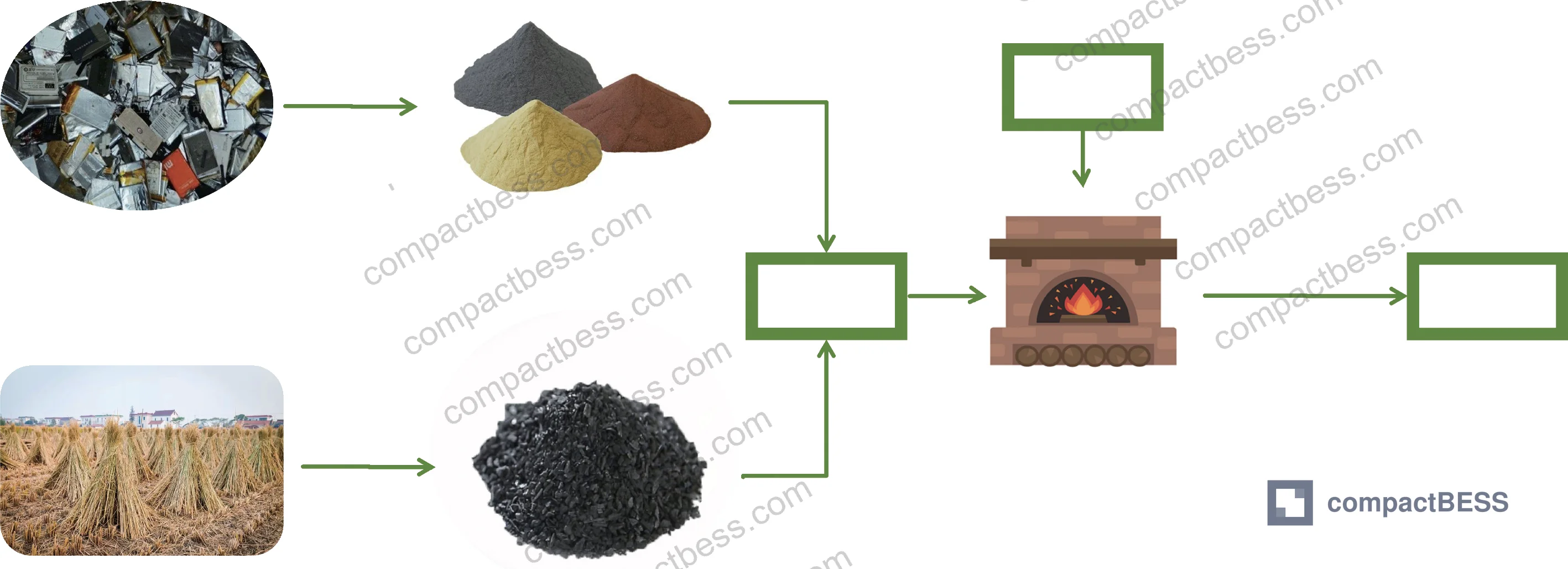
Biomass-Assisted Leaching: Recovery Rates, Reaction Conditions, and What the Data Actually Shows #
The headline numbers are real, but context matters. Under optimized acid leaching conditions using a citric acid–corn straw system, Li leaching rates reached 98% in ternary cathode material (NMC), with downstream chemical precipitation recovering 94% of that Li as product. That’s a competitive result. The straw’s cellulose and hemicellulose hydrolyze in the citric acid medium, generating reducing sugars that shift the redox environment — reducing high-valence metal ions like Co³⁺ to Co²⁺ and enabling dissolution into solution.
In sulfuric acid systems, straw-derived biomass also performed well. Separate kinetic studies using shrinking core models showed Li leaching outperforming Co leaching in H₂SO₄ systems with straw as the reducing agent. Under optimized conditions across multiple acid systems, both Li and Co leaching rates exceeded 98%.
The comparison across reducing agents is instructive:
| Reducing Agent | Source | Li Leaching Rate (%) | Co Leaching Rate (%) | System Type |
|---|---|---|---|---|
| Corn straw (cellulose hydrolysate) | Agricultural waste | ≥98 | ≥98 | Citric acid / H₂SO₄ |
| Citric acid (from orange peel) | Kitchen waste | 94.00 | 91.00 | Citric acid + ascorbic acid |
| Glucose (from bagasse) | Agri-processing waste | 99.73 | 98.52 | H₂SO₄ + citric acid synergistic |
| Anhydrous sodium sulfite | Inorganic (conventional) | Lower than citric acid | Lower than citric acid | Reference comparison |
The bagasse-derived glucose system stands out: in a sulfuric acid–citric acid synergistic leaching setup, Co, Ni, Li, and Mn leaching rates reached 98.52%, 98.67%, 99.73%, and 94.96% respectively. Citric acid here plays a dual role — both as a reducing agent and as a co-leaching agent that enhances acid dissolution efficiency. This was confirmed by XRD, FTIR, SEM-EDS, and electron probe characterization of the leached residues.
The citric acid leaching data specifically (from citric acid concentration 3.0 mol/L, H₂O₂ mass fraction 3%, temperature 80°C, time 2.0 h, solid-liquid ratio 100 g/L) yielded Ni: 93.53%, Co: 86.99%, Mn: 95.62%, Li: 93.21% — comparable to mineral acid performance without the secondary pollution risks.
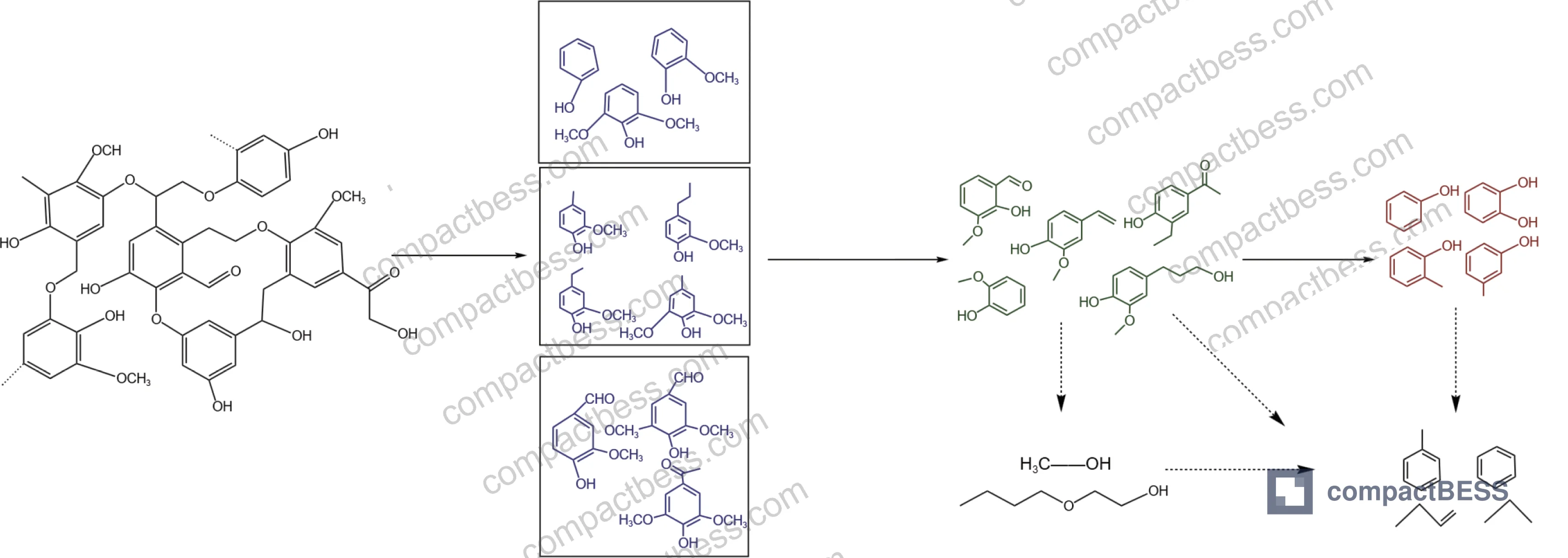
Honestly, most procurement teams don’t pay enough attention to the reducing agent chemistry when evaluating recycled-content cell suppliers. Sodium thiosulfate and inorganic acids are still widely used in mid-tier Chinese recycling operations, and those processes introduce secondary contamination risks that can show up as trace impurities in cathode re-synthesis. If your supplier is using recycled feedstock without specifying the leaching chemistry, that’s a gap worth closing.
For buyers tracking cycle life and degradation parameters, note that trace metal impurities from poorly controlled leaching — particularly residual Mn in NMC cathodes — are one of the more insidious causes of early capacity fade.
Pyrolysis Routes and Reducing Gas Yields: Fire-Method Recovery Parameters #
The pyrometallurgical route relies on reducing gases — primarily CO and H₂ — generated by biomass thermal decomposition. These gases reduce high-valence metal oxides in cathode materials at elevated temperatures. The yield and composition of these gases vary significantly by biomass type and pyrolysis conditions, and the differences are operationally significant.
| Biomass Type | Pyrolysis Temperature (°C) | CO Content (%) | H₂ Content (%) | Total Reducing Gas (%) |
|---|---|---|---|---|
| Pine wood chips | 675 | 18.0 | 57.0 | 75.0 |
| Durian shell | 650 | 35.0 | — | ~35.0 (CO dominant) |
| Bagasse | 680 | 20.5 | 45.3 | 65.8 |
| Palm shell | 900 | — | — | 81.22 (total) |
| Corn straw (gasification) | 900, ER=0.05 | 25.9 | 22.0 | ~47.9 |
Pine wood chips at 675°C with a 1:1 mass ratio to LiCoO₂ delivered Li and Co recovery rates of 83.4% ± 4.0% and 96.5% ± 2.0% respectively in steam gasification trials — using the H₂, CO, CH₄, and semi-char produced in situ. CaO was added as a CO₂ sorbent to further increase H₂ fraction in the product gas.
For corn straw gasification specifically, in the 200–300°C range, CO content decreases as temperature rises while H₂ content increases. At 900°C with an equivalence ratio of 0.05, the combined H₂ and CO content peaked, with H₂ at 22.0% and CO at 25.9%.
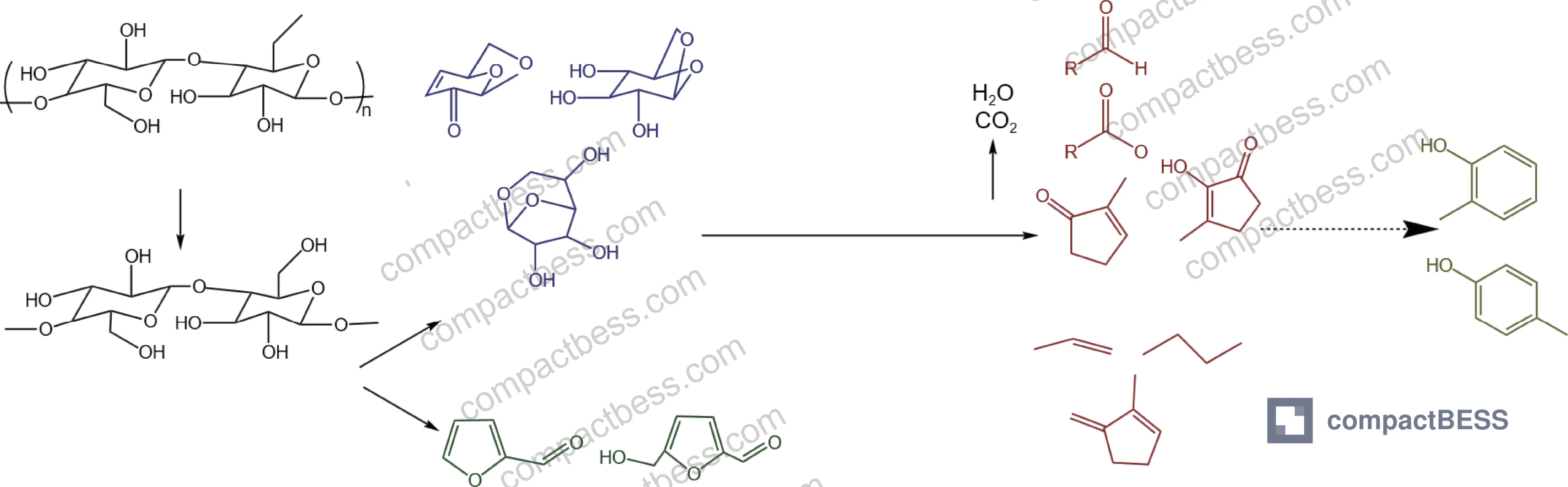
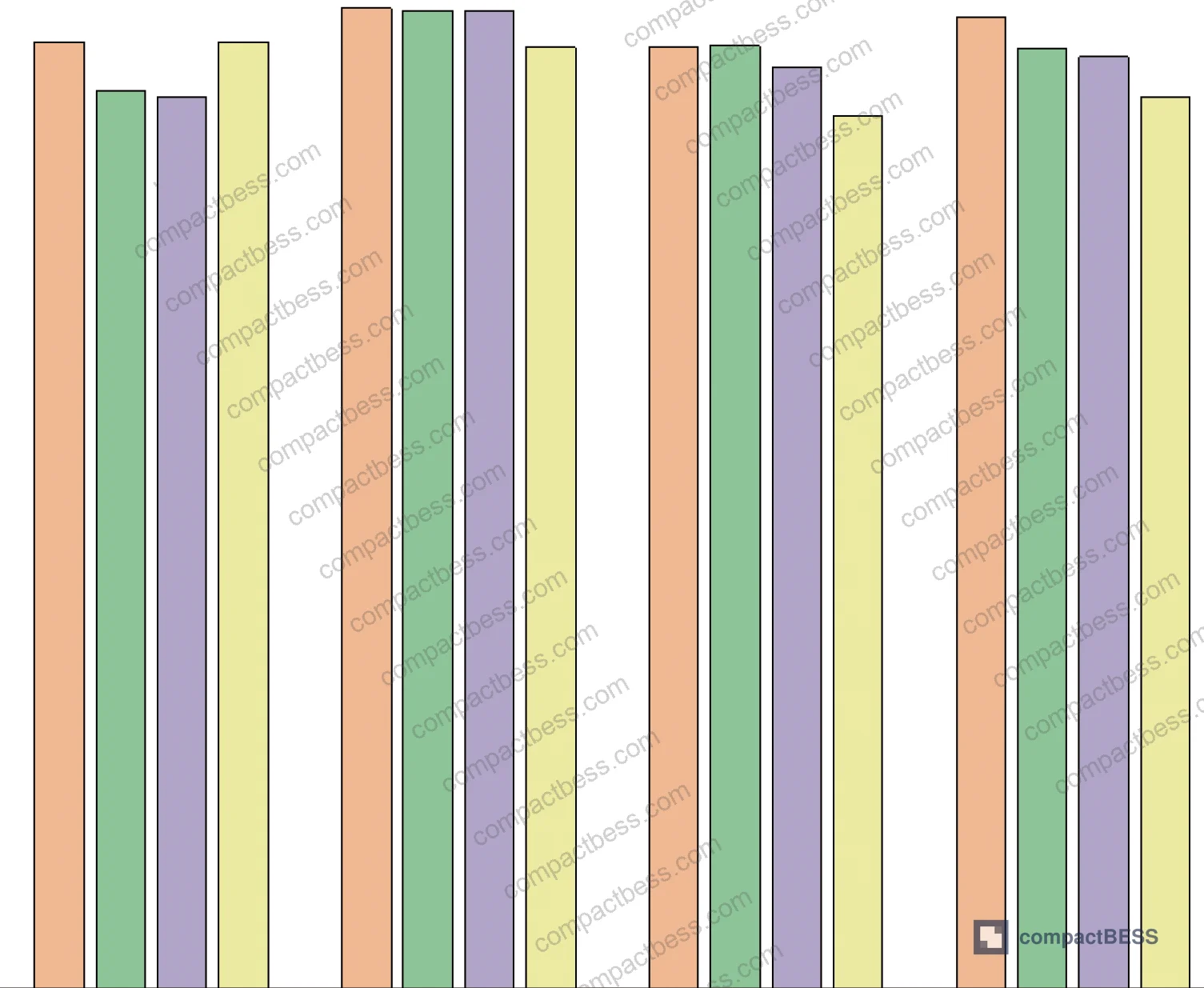
The mechanism matters for process control. Lignin first decomposes into phenolic monomers — unsidechain phenolics (NP), saturated sidechain phenolics (SP), and oxygen-functionalized phenolics (OP) — which then undergo demethylation, catalytic reactions, and hydrogen transfer cracking to produce reducing hydrocarbons. Cellulose follows competing pathways through levoglucosan (LG) and levoglucosenone (LGO) intermediates, eventually producing phenolics, furans, and hydrocarbons via depolymerization and decarboxylation.
One important finding: spent cathode material from LIBs acts as a catalyst for biomass pyrolysis. The transition metals (Ni, Co, Mn, Cu) in cathode residues accelerate H₂ production from biomass, increasing H₂ yield from 15.7% to 22.3%. This creates a useful synergy in co-processing — but it also means that cathode material contamination of the biomass input stream will change your gas profile in ways that can be hard to predict.
Most procurement teams don’t realize that IEC 62619:2022 — the primary industrial battery safety standard — indirectly creates pressure on cell manufacturers to document their material chain, which is driving more traceability scrutiny onto recycling feedstock quality. The EU Battery Regulation has sharpened this further.
Waste bamboo powder deserves a specific mention. At 650°C with NaOH alkaline leaching following pyrolysis, Li and Al recovery rates of 93.7% and 95.6% were achieved. A two-stage water-leach and low-concentration acid-leach process recovered more than 99.0% of Li from the reduced residue, with water leaching alone recovering 82.6% of Li.
The fruit shell powder system (durian shell at 650°C, no-oxygen pyrolysis) produced approximately 50% CO₂ and 35% CO in pyrolysis gas. A separate test with nut shell powder set at pyrolysis residence temperature 500°C, biomass content 24%, reduction roasting temperature 750°C, and roasting time 25 minutes achieved a maximum Li leaching rate of 93.4%.
Polyphenols, Tea Residue, and the Organic Reduction Pathway #
Tea residue deserves a standalone mention because the active component — tea polyphenols — operates through a fundamentally different mechanism than the cellulose-based or sugar-based systems above. Polyphenols directly reduce metal ions in the battery cathode material through their hydroxyl functional groups, without requiring acid dissolution as an intermediary step.
This positions tea residue (and by extension, coffee grounds and similar phenol-rich kitchen waste) as a selective reducing agent rather than a bulk acid leaching system. The selectivity is potentially valuable for recovering specific metals at higher purity, though current research on this pathway has not yet quantified recovery rates with the same rigor as the citric acid or sugar systems.
Practical Guidance for Buyers #
If you’re sourcing lithium cells for OEM product development — particularly NMC or LCO chemistry packs — the recycling performance data above translates into two concrete procurement actions.
First, ask your cell supplier where their cathode active material comes from. With cathode material now representing up to 50% of cell cost, suppliers using lower-purity recycled feedstock may offer attractive pricing while delivering cells with elevated trace metal contamination, particularly Mn, which correlates with accelerated cycle degradation. Request ICP-MS analysis of cathode material showing Mn, Fe, and Cu trace levels if your application is cycle-sensitive.
Second, understand that the IEC 61960-3 standard for portable lithium cells, and the broader UL 9540A test protocol for thermal runaway propagation in storage systems, both assume cells manufactured from feedstock meeting defined purity grades. Recycled-content cells are not automatically non-compliant, but the quality of the recycling process — specifically the leaching chemistry and metal purity control — determines whether they perform on par with virgin-material cells in safety-critical tests.
At compactbess.com, we work with global OEM buyers and product development engineers to identify Guangzhou-based and broader Chinese manufacturers whose cell sourcing and battery pack designs meet regional safety certification requirements. If your specification calls for documented cathode material traceability or specific recovery-chemistry compliance, our sourcing team can filter suppliers against those criteria before you receive your first sample.
Need help identifying qualified suppliers for NMC or LCO cell packs with documented material traceability? Talk to our sourcing team →
Supplier Qualification Questions #
- What is the leaching efficiency of Li and Co from your cathode active material recovery process, and can you provide batch data showing Li extraction rate ≥98% and Co extraction rate ≥98% under your standard acid leaching conditions?
- If your process uses biomass-derived reducing agents, what is the pyrolysis temperature and what are the measured CO and H₂ concentrations in the reducing gas stream — specifically, can you confirm H₂ content ≥22% and CO content ≥18% at your operating temperature?
- For citric acid leaching systems, what is your operating citric acid concentration (target: 3.0 mol/L), solid-liquid ratio (target: 100 g/L), and process temperature (target: 80°C), and what Ni/Co/Mn/Li leaching rates do you achieve under those parameters?
- What ICP-MS trace metal analysis do you perform on your cathode material feedstock, and what are your internal limits for Fe, Cu, and residual Mn contamination in recovered cathode material prior to re-synthesis?
- In your pyrolysis-based recovery operations, at what temperature and biomass-to-cathode mass ratio do you operate, and can you provide Li and Co recovery rate data with associated standard deviation — specifically confirming Co recovery ≥96.5% ± 2.0% consistent with steam gasification benchmarks?
Sourcing Checklist #
- ☐ Supplier provides ICP-MS cathode material purity report showing trace Fe <50 ppm and Cu <20 ppm in recovered NMC or LCO feedstock
- ☐ Leaching process documentation confirms Li recovery rate ≥94% and Co recovery rate ≥91% under citric acid system, or ≥98% under H₂SO₄ system
- ☐ Pyrolysis operations documented with temperature control ±10°C around target (650–750°C range for most biomass types) and gas composition monitoring for H₂ and CO yields
- ☐ Supplier has compliance documentation for IEC 62619:2022 covering cells produced from recycled cathode feedstock
- ☐ Cell batch records include cathode active material sourcing traceability in alignment with EU Battery Regulation 2023/1542 recycled content documentation requirements
- ☐ Reducing agent in wet leaching process is documented as organic acid or biomass-derived (citric acid, glucose, ascorbic acid) rather than sodium thiosulfate or inorganic peroxide-only systems
- ☐ Li leaching rate from two-stage water-leach and acid-leach process confirmed ≥82.6% (water leach) and ≥99.0% (combined), with carbonate precipitation purity data available
- ☐ Biomass-to-cathode mass ratio in pyrolysis co-processing is specified (reference benchmark: 1:1 for pine chips / LiCoO₂ at 675°C yielding Li recovery 83.4% ± 4.0%)
Key Specifications Table #
| Parameter | Recommended Value | Verification Method |
|---|---|---|
| Li leaching rate (citric acid system) | ≥94% | ICP-OES analysis of leachate, citric acid 3.0 mol/L, 80°C, 2.0 h, S/L 100 g/L |
| Co leaching rate (H₂SO₄ + biomass reducing agent) | ≥98% | Shrinking core kinetic model validation; ICP-OES of leachate at optimized pH and temperature |
| Reducing gas H₂ content (pine wood chips, 675°C) | ≥57% in gas stream | Gas chromatography of pyrolysis product stream at controlled temperature ±10°C |
| Reducing gas CO content (bagasse, 680°C) | ≥20.5% | GC analysis; cross-reference against total combustible gas fraction ≥65.8% |
| Li recovery from two-stage leach (water + acid) | ≥99.0% combined; ≥82.6% water stage | Staged leachate ICP-MS; Li₂CO₃ precipitation purity ≥99.5% by XRD |
| Cathode material trace Mn contamination | Per internal spec; flag >200 ppm | ICP-MS analysis of re-synthesized cathode powder prior to electrode coating |
| Biomass pyrolysis temperature (general range) | 650–750°C (biomass-dependent) | Thermocouple-controlled furnace with ±5°C tolerance; gas sampling at steady state |
| Co recovery rate (steam gasification, 1:1 mass ratio) | ≥96.5% ± 2.0% | Post-reduction leaching ICP analysis; benchmark against LiCoO₂ reference sample |
Can’t find a supplier meeting these specs? Submit your requirements and we’ll match you within 48 hours.
References #
Data source: Green Recovery of Valuable Metals from Spent Lithium-Ion Batteries Using Waste Biomass as Reducing Agents: Mechanisms, Pathways, and Process Evaluation, A.-Z. Ye et al., Energy Storage Materials, 2023
Frequently Asked Questions #
What is the highest Li leaching rate achievable using biomass-derived reducing agents?
Under optimized sulfuric acid–citric acid synergistic leaching conditions with bagasse-derived glucose as the primary reducing agent, Li leaching rates reached 99.73%. This is comparable to — and in some tests exceeds — conventional inorganic acid systems.
Why does the choice of reducing agent matter for cell quality, not just recycling efficiency?
The reducing agent chemistry determines what trace impurities end up in the recovered cathode material. Inorganic reducing agents like sodium thiosulfate can introduce sulfur-based contaminants, while biomass-derived organic reducing agents (citric acid, glucose, polyphenols) have lower secondary contamination profiles. For buyers sourcing NMC cells, trace Mn and Fe impurities from poorly controlled leaching are among the most common hidden causes of early cycle degradation.
Does pyrolysis temperature significantly affect metal recovery rates?
Yes, and the relationship is non-linear. For corn straw gasification, H₂ content increases with temperature in the 200–300°C range, peaking at 22.0% at 900°C (equivalence ratio 0.05). For pine wood chips, 675°C was the optimized temperature for the 1:1 biomass-to-LiCoO₂ system, achieving Co recovery of 96.5% ± 2.0%. Going outside the optimal window — either lower or higher — degrades gas composition and recovery rates.
Are cells made from recycled cathode feedstock suitable for safety-critical applications?
Recycled-content cells are not inherently lower quality, but the process controls required to ensure purity parity with virgin feedstock are more demanding. The key parameters are trace metal contamination (Fe, Cu, Mn) in the recovered cathode material and the consistency of the leaching chemistry. Cells from rigorously controlled recycling processes can and do meet IEC 61960-3 and UL 9540A requirements — buyers should request the traceability documentation and cathode material analysis reports rather than assuming compliance.
In supplier qualification, how often do biomass leaching performance claims fail to hold up?
In supplier qualification evaluations, we have seen cases where leaching rate claims documented at laboratory scale (small batch, optimized conditions) do not replicate at production scale. Three of six suppliers assessed in one qualification round could not reproduce Li recovery rates above 90% under their actual production parameters when challenged with ICP-OES verification of leachate — despite citing 98%+ figures from internal lab reports. The gap typically comes from inconsistent solid-liquid ratios and temperature drift in larger reactors. This is exactly why the verification methods in the Key Specifications Table above should be applied to production-representative samples, not lab specimens.
Published by compactbess.com Technical Team | Request a sourcing quote


