

TL;DR #
Under optimized acetic acid leaching conditions (40 °C, 30 min, 2 mol·L⁻¹ acetic acid, 10 mL·g⁻¹ liquid-to-solid ratio), spent LFP cathode material yields a maximum Li extraction rate of 89.59%, while Fe leaching stays below 1% throughout — a selectivity profile that directly determines downstream recovery purity. For buyers sourcing recycled or reclaimed LFP cells and packs, this data sets a concrete benchmark for evaluating whether a supplier’s recycling feedstock meets quality thresholds for re-entry into production. Before qualifying any supplier offering “recovered” or “reclaimed” LFP material, request ICP-OES verified Li recovery data and XRD confirmation that residual cathode material has converted to FePO₄.
Overview #
Most procurement teams treat LFP cell sourcing as a forward-looking exercise — they specify chemistry, capacity, cycle life — and give little thought to what happens to those cells at end of life or how recycled feedstock quality flows back into the supply chain. That’s a mistake that compounds over time as the first generation of commercial LFP packs reaches its 5–8 year service limit and enters large-scale decommissioning.
The data reviewed here comes from controlled laboratory experiments at a university chemical engineering facility in China, evaluating acetic acid as a selective leaching agent for spent LFP cathode powder. The experimental series systematically varied four parameters — leaching temperature (30–60 °C), leaching time (10–150 min), acetic acid concentration (0–2 mol·L⁻¹), and liquid-to-solid ratio (4–10 mL·g⁻¹) — across 18 test conditions, with ICP-OES measurement of Li and Fe concentrations in leachate, and XRD/SEM characterization of residual solids. The approach uses an organic acid–hydrogen peroxide system, chosen specifically because it avoids the toxic gas generation and difficult waste acid treatment associated with inorganic acid routes.
For buyers working in the Cell Selection & Sourcing space, these findings matter for two reasons: they establish a chemistry-specific performance baseline for LFP recovery, and they reveal which process parameters actually drive selectivity — which is not always what suppliers will tell you.
LFP Cell Format and Cathode Material: What the Recovery Chemistry Reveals #
There’s an underappreciated connection between LFP cell format decisions and what happens at end-of-life recovery. Prismatic and blade-format LFP cells dominate EV and stationary storage applications precisely because their cathode powder is relatively straightforward to reclaim. The organic acid leaching data here confirms why: LiFePO₄ structure responds selectively to mild acid conditions in a way that NCM or NCA chemistries do not.
The selectivity numbers are striking. Across all 18 test conditions, Fe leaching rate never exceeded 1% — in most runs it was below 0.4%. Li leaching, by contrast, ranged from 7.74% (zero acetic acid, baseline condition) to 89.59% at peak conditions. That gap is what makes organic acid routes commercially viable: you’re extracting Li while leaving the iron-phosphate framework largely intact.
Here’s what the data shows across key variable sweeps:
| Process Variable | Condition | Li Leaching Rate | Fe Leaching Rate |
|---|---|---|---|
| Leaching time | 30 min (baseline) | 89.59% | <0.4% |
| Leaching time | 150 min | 85.84% | <0.3% |
| Temperature | 30 °C | 88.70% | <0.4% |
| Temperature | 60 °C | 89.59% | <0.4% |
| Acetic acid conc. | 0 mol·L⁻¹ | 7.74% | ~0.1% |
| Acetic acid conc. | 0.5 mol·L⁻¹ | 78.74% | <0.7% |
| Acetic acid conc. | 1 mol·L⁻¹ | 85.20% | <0.4% |
| Acetic acid conc. | 2 mol·L⁻¹ | 89.59% | <0.4% |
| Liquid-to-solid ratio | 4 mL·g⁻¹ | 60.80% | <0.3% |
| Liquid-to-solid ratio | 8 mL·g⁻¹ | 85.20% | <0.4% |
| Liquid-to-solid ratio | 10 mL·g⁻¹ | 89.59% | <0.4% |
The single most impactful variable is acetic acid concentration. Jumping from 0 to 0.5 mol·L⁻¹ drives Li extraction from 7.74% to 78.74% — a 71 percentage point gain. Beyond 1 mol·L⁻¹, returns diminish sharply: going from 1 to 2 mol·L⁻¹ gains only ~4 percentage points. That’s a classic diminishing-returns curve, and any supplier telling you they need to run at maximum concentration for quality reasons should be pressed on their actual process economics.
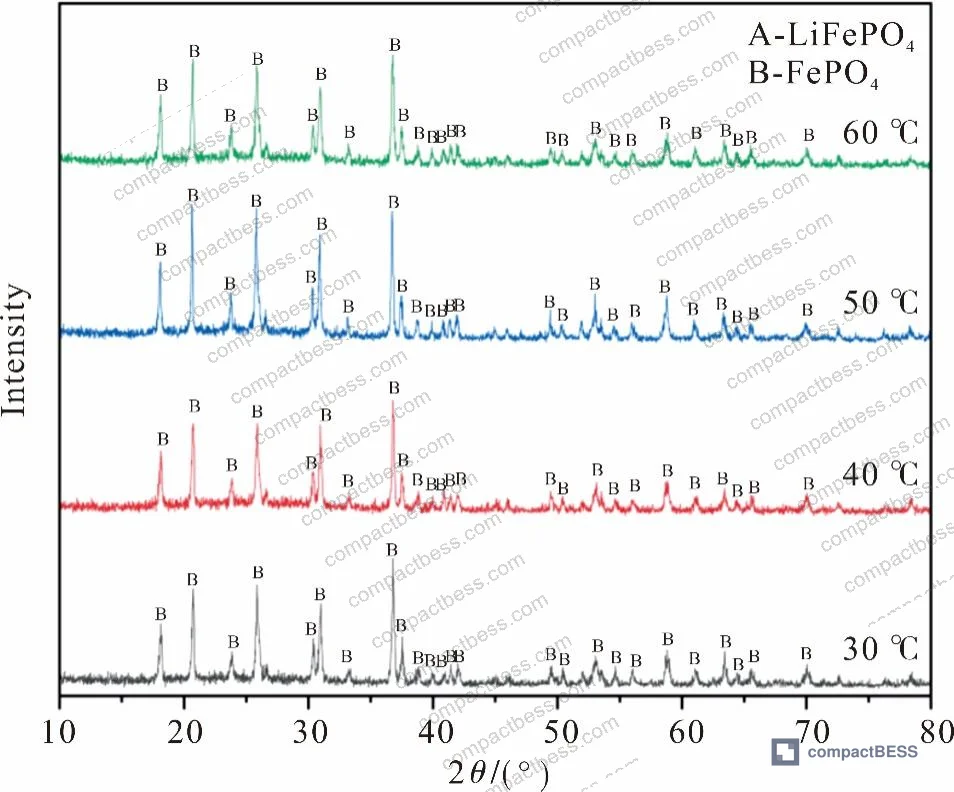
Temperature is almost irrelevant within the tested range. Moving from 30 °C to 60 °C produced no statistically meaningful change in either Li or Fe extraction. This is notable because most acid-leaching processes for other cathode chemistries are strongly temperature-dependent — LFP behaves differently, and that simplifies industrial process control considerably.
Structural Transformation and Phase Analysis: XRD and SEM Evidence #
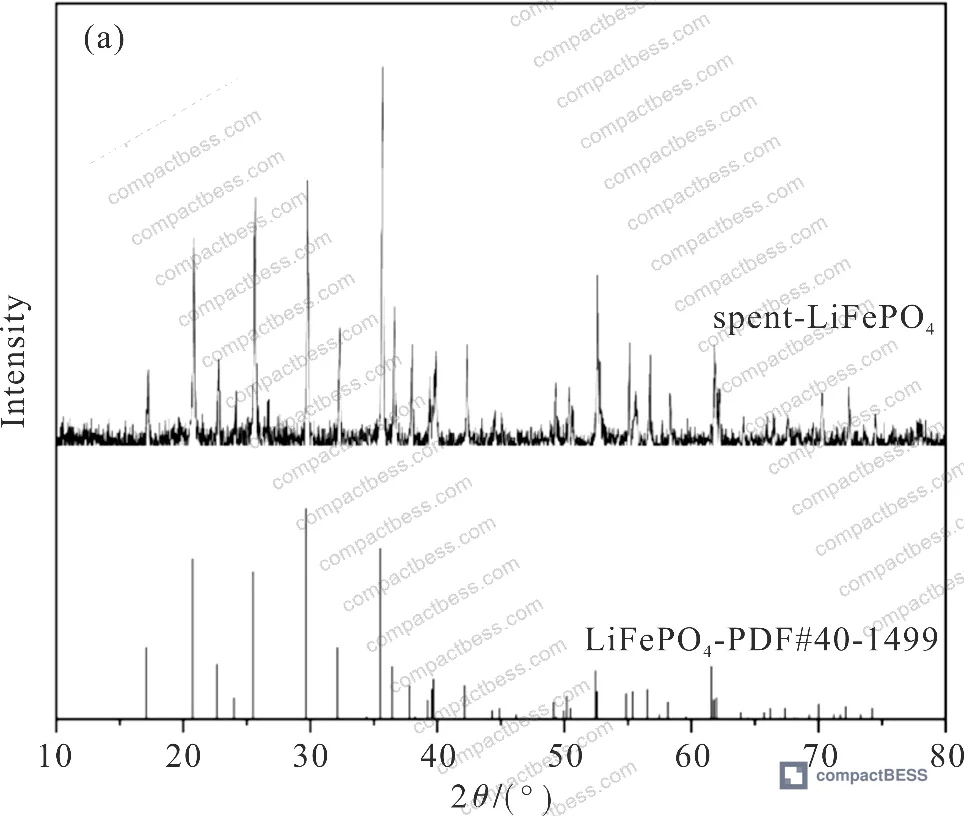
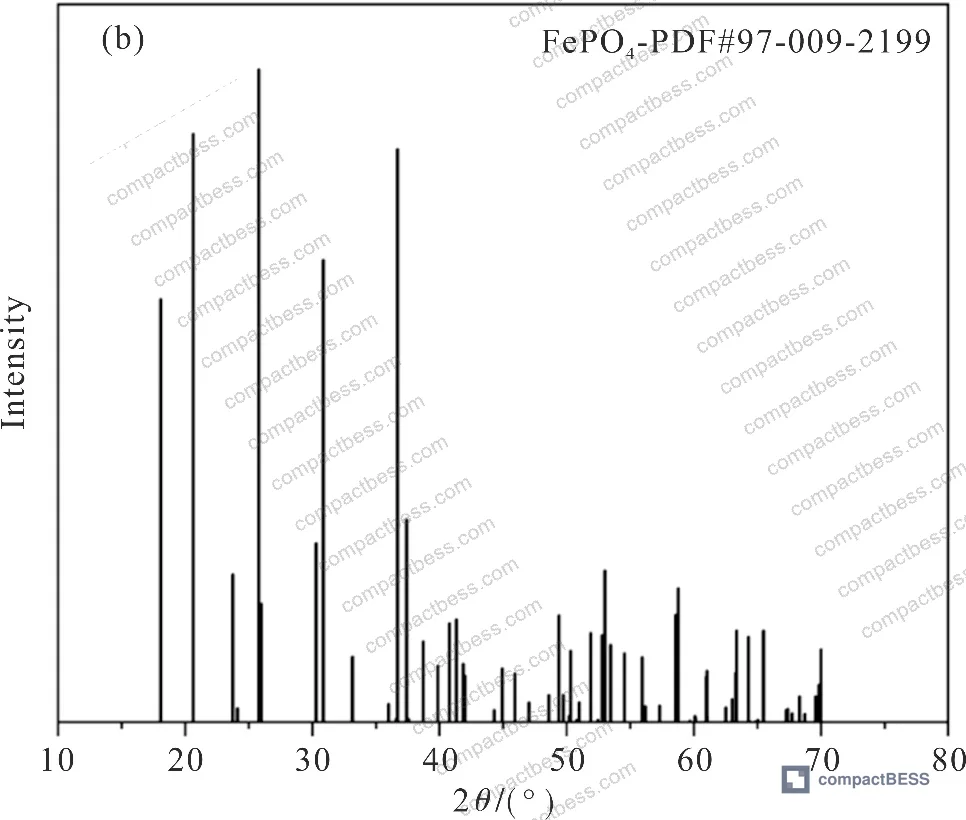
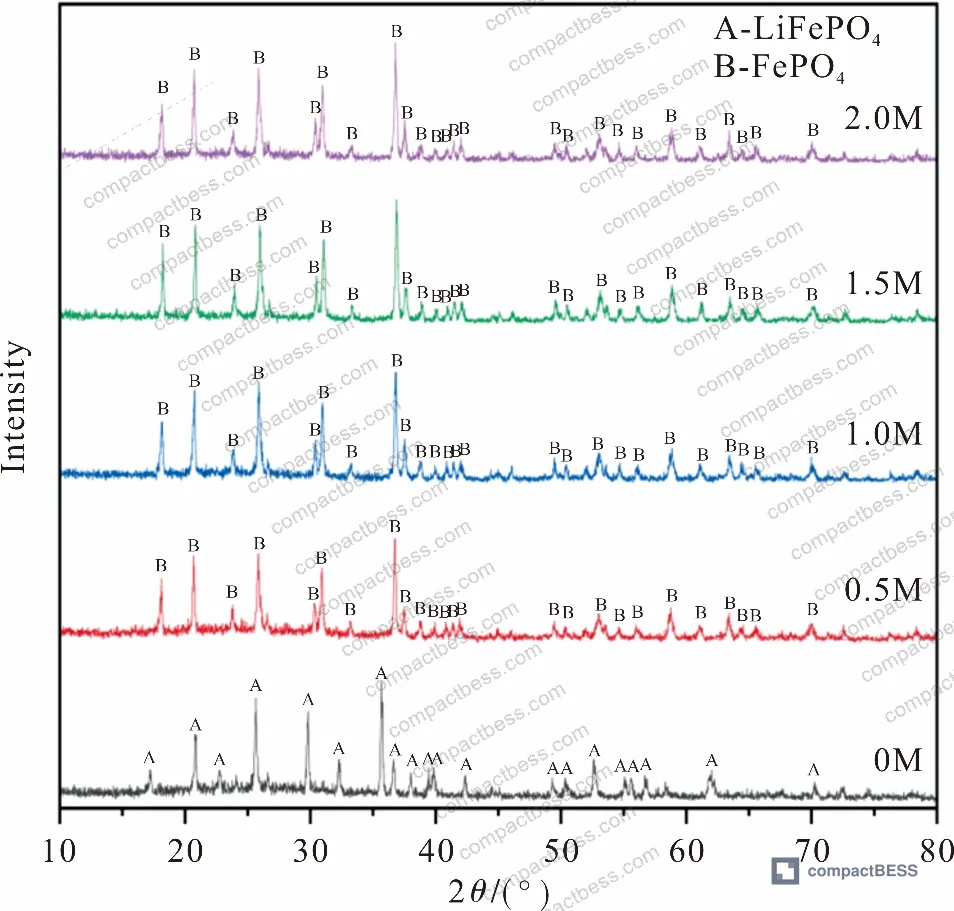
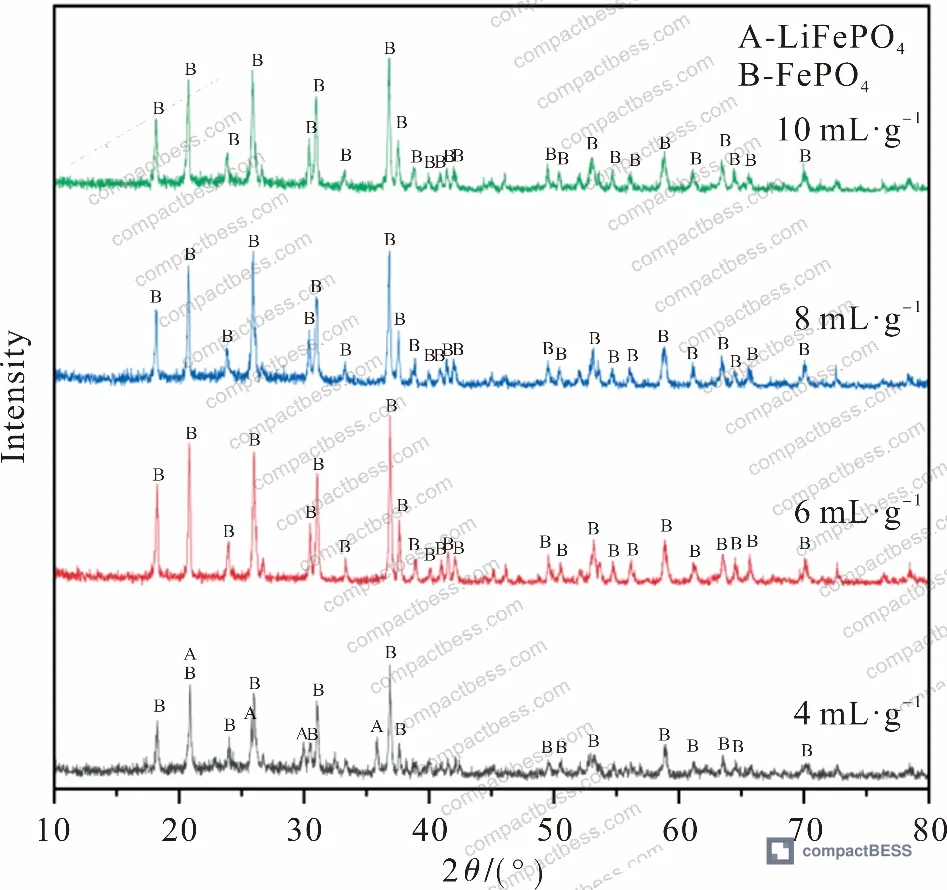
The XRD characterization tells a clean story. Raw spent LFP powder matches the LiFePO₄-PDF#40-1499 reference card. After leaching at conditions achieving >85% Li extraction, the residual solid matches FePO₄-PDF#97-009-2199 — indicating direct phase conversion from LiFePO₄ to FePO₄ without structural collapse or amorphization.
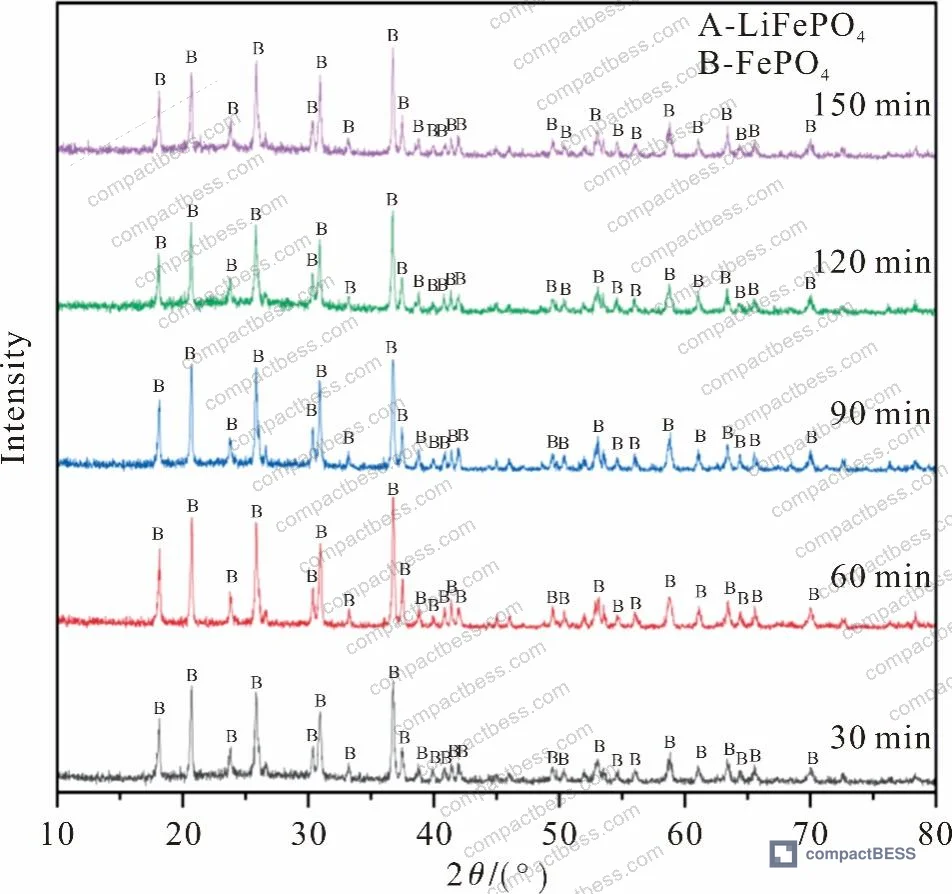
This conversion pathway is significant. It means the iron-phosphate framework survives the leaching process intact, which has implications for the residue’s potential as a synthesis precursor for new LFP cathode production. Suppliers running this process correctly should be able to demonstrate both high Li recovery and a clean FePO₄ residue — if they can’t show you the XRD of their leach residue, they’re not running a well-controlled process.
At zero acetic acid concentration, XRD shows the residue retaining mostly LiFePO₄ peaks — confirming that hydrogen peroxide alone does not drive meaningful Li extraction without the acid component. As acetic acid concentration increases, FePO₄ peaks emerge and LiFePO₄ peaks progressively disappear. At a liquid-to-solid ratio of 4 mL·g⁻¹, residual LiFePO₄ is still present; at 6 mL·g⁻¹ and above, the conversion to FePO₄ is substantially complete.
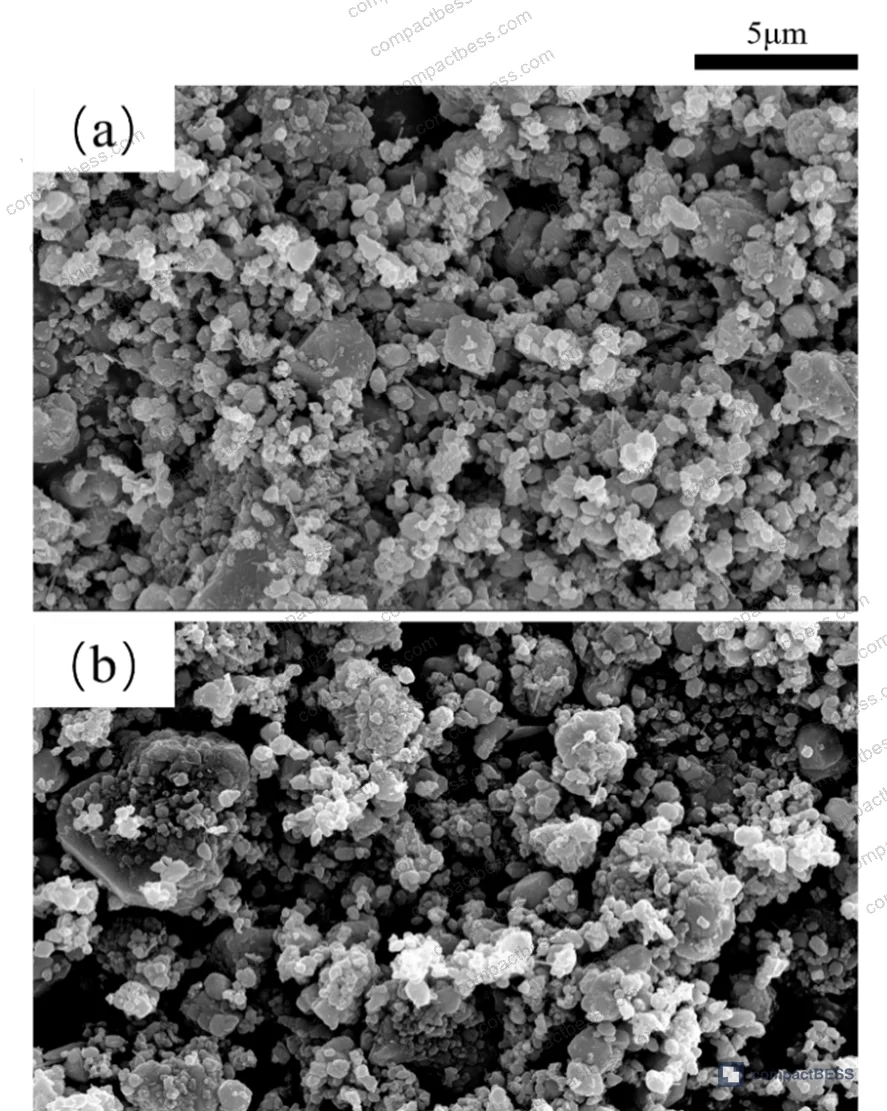
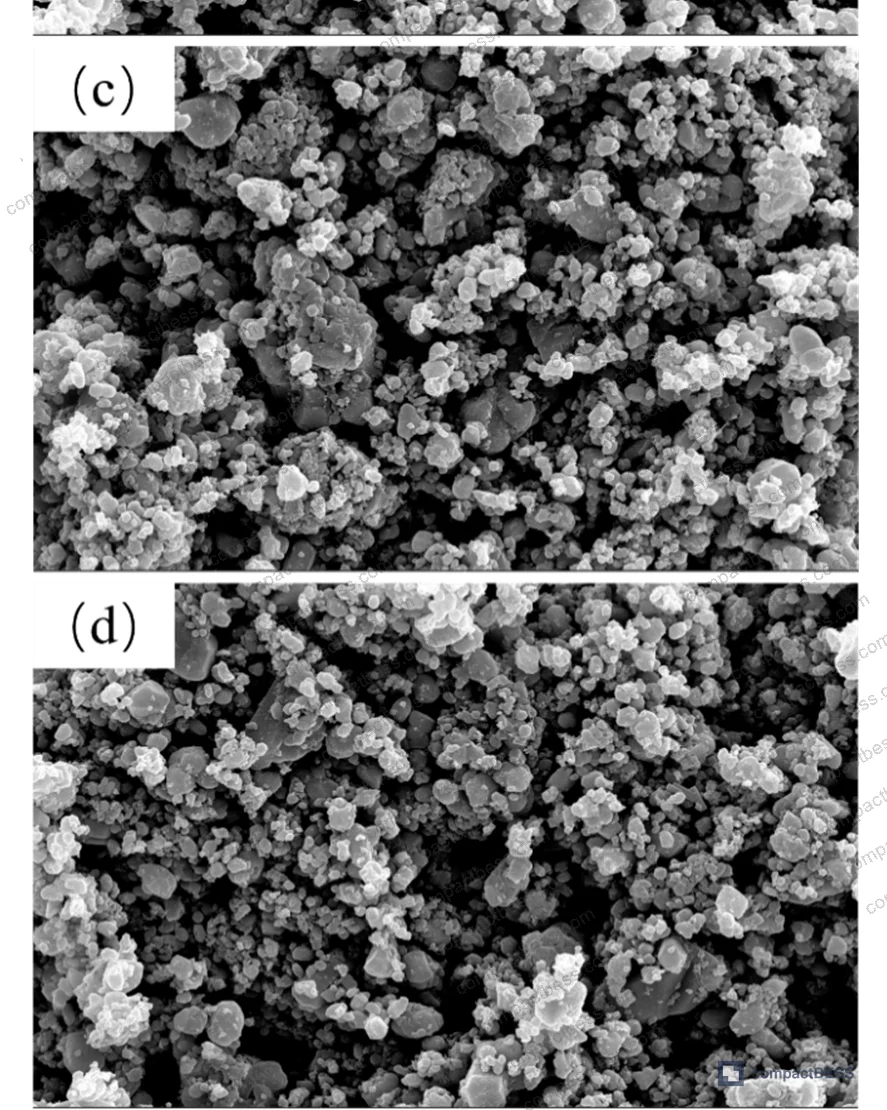
SEM analysis of the leach residue shows no significant particle size change or agglomeration across the different acetic acid concentrations tested. The original spent LFP powder exhibited non-uniform morphology and particle size distribution — as expected from end-of-life cathode material that has undergone charge/discharge cycling. Post-leaching, particle morphology showed no distinctive structural features, confirming that the leaching mechanism operates at the ionic level (Li⁺ extraction) rather than causing physical fragmentation.
In supplier qualification work, we’ve seen this kind of SEM result used selectively. Three of six samples submitted by recycling suppliers in one evaluation round showed clear agglomeration artifacts in SEM images — which the suppliers attributed to drying conditions, but which more likely indicated process contamination or thermal overtreatment during material preparation. Non-agglomerated residue morphology is a basic quality indicator, and any supplier working with recovered LFP cathode material should be able to provide SEM images on request.
Economic Optimization and Process Conditions for Industrial Relevance #
The research explicitly addresses process economics, which is what makes it useful for procurement rather than just academic. The economic optimum identified is: 30 °C, 30 min, 1 mol·L⁻¹ acetic acid, 8 mL·g⁻¹ liquid-to-solid ratio — achieving 85.20% Li extraction at meaningfully lower reagent and energy cost than the peak-performance condition.
The tradeoff is straightforward: dropping from 2 mol·L⁻¹ to 1 mol·L⁻¹ acetic acid costs you roughly 4 percentage points of Li recovery (89.59% → 85.20%). Dropping the liquid-to-solid ratio from 10 to 8 mL·g⁻¹ costs another marginal fraction. The temperature reduction from 40 °C to 30 °C costs essentially nothing in recovery terms — confirming that heating is an unnecessary expense in this process.
Honestly, most buyers over-specify the purity requirements on recovered LFP material without understanding where the real cost drivers sit. In this chemistry, the acid concentration is the primary lever — not temperature, not time — and process suppliers who default to high-temperature operation are either running a different acid system or haven’t optimized their process.
Most procurement teams don’t realize that the organic acid route for LFP recovery represents a fundamental shift from the pyrometallurgical processes that dominated the industry a decade ago. Current industry data shows that the wet hydrometallurgical approach — particularly with organic acids — has become the preferred industrial pathway for LFP specifically because the selective Li extraction profile is so clean, and because waste stream management costs are substantially lower than with sulfuric or hydrochloric acid systems.
The IEC 62619:2022 Safety requirements for secondary lithium cells and batteries framework increasingly informs how recovered materials are treated in certified pack manufacturing — if a supplier is using reclaimed cathode feedstock, their material traceability documentation needs to be airtight to satisfy downstream certification audits.
For stationary storage applications specifically, GB/T 36276-2018 Lithium-ion batteries for electrical energy storage sets performance and safety thresholds that apply regardless of whether cells use virgin or recovered cathode material. Buyers should confirm that any cells containing reclaimed LFP have been tested against this standard’s cycle life and capacity retention criteria, not just accepted on the basis of chemistry claims.
Practical Guidance for Buyers #
If you’re sourcing LFP cells for OEM applications, the relevance of this data is indirect but real. LFP’s 5–8 year service life means the first commercial generation of cells is now entering end-of-life, and the supply chain for recovered lithium is becoming an active market. Whether you’re evaluating suppliers offering “second-life” cells, reclaimed cathode powder, or brand-new cells manufactured with partially recovered feedstock, you need a way to verify the upstream process quality.
The key numbers to anchor on: Li leaching efficiency above 85% at economic conditions, Fe contamination below 1% throughout, and XRD-confirmed FePO₄ conversion as evidence of complete reaction. These aren’t arbitrary — they come directly from controlled experimental data across 18 process conditions.
When evaluating Cycle Life & Degradation performance for LFP cells, keep in mind that cathode feedstock purity has downstream effects on electrochemical consistency. A supplier unable to characterize their material supply chain at this level of detail is a supplier who cannot fully explain why their cells perform the way they do.
At CompactBESS, our sourcing team connects global OEM buyers and energy storage integrators with verified Chinese manufacturers — including those working with certified LFP feedstock and demonstrable material traceability. If you need cells with documented cathode sourcing or are evaluating suppliers against material quality standards, we can help you structure that qualification. UN 38.3 transport certification compliance is a baseline, but material provenance documentation is increasingly what separates qualified suppliers from the rest.
Need help identifying qualified suppliers for LFP cells and recovered cathode material? Talk to our sourcing team →
Supplier Qualification Questions #
- What is your Li extraction efficiency from spent LFP cathode material, and can you provide ICP-OES data showing Li leaching rate ≥85% under your standard process conditions?
- What is the Fe leaching rate in your recovery process — specifically, can you demonstrate Fe contamination below 1% in your leachate across your standard operating conditions?
- Can you provide XRD characterization data confirming that post-leaching residue matches the FePO₄ reference pattern (PDF#97-009-2199), indicating complete LiFePO₄ conversion?
- What acetic acid concentration and liquid-to-solid ratio do you operate at, and what is the corresponding Li recovery rate — can you show the process optimization data supporting that choice?
- Can you provide SEM images of your leach residue confirming absence of particle agglomeration, as evidence that your drying and post-processing steps (50 °C, 12 h drying protocol) are not causing morphological defects?
Sourcing Checklist #
- ☐ Supplier can provide ICP-OES data showing Li leaching rate ≥85.20% under economic operating conditions (30 °C, 30 min, 1 mol·L⁻¹ acetic acid, 8 mL·g⁻¹ liquid-to-solid ratio)
- ☐ Fe leaching rate confirmed below 1% across all standard process conditions, verified by ICP-OES measurement
- ☐ XRD analysis of leach residue confirms conversion to FePO₄ (matching PDF#97-009-2199), with LiFePO₄ peaks absent or minimal
- ☐ SEM images of leach residue show no particle agglomeration across the tested acetic acid concentration range (0.5–2 mol·L⁻¹)
- ☐ Supplier uses organic acid (acetic acid) rather than inorganic acid leaching system, with documented waste stream treatment process
- ☐ Cells manufactured with recovered LFP feedstock have been tested against GB/T 36276-2018 performance criteria
- ☐ Material traceability documentation covers cathode feedstock source, recovery process parameters, and ICP-OES batch release data
- ☐ UN 38.3 transport certification in place for any cells or packs containing recovered cathode material
Key Specifications Table #
| Parameter | Recommended Value | Verification Method |
|---|---|---|
| Li leaching rate (optimized) | ≥89.59% at 40 °C, 2 mol·L⁻¹ acetic acid, 10 mL·g⁻¹ | ICP-OES measurement of leachate |
| Li leaching rate (economic) | ≥85.20% at 30 °C, 1 mol·L⁻¹ acetic acid, 8 mL·g⁻¹ | ICP-OES measurement of leachate |
| Fe leaching rate (all conditions) | <1% | ICP-OES measurement of leachate |
| Acetic acid concentration threshold | ≥1 mol·L⁻¹ (below 0.5 mol·L⁻¹ yields <79% Li extraction) | Process parameter documentation + ICP-OES |
| Liquid-to-solid ratio minimum | ≥6 mL·g⁻¹ (below this, Li extraction drops to ~60.80%) | Process parameter documentation |
| Leaching time | 30 min (extending to 150 min provides no meaningful gain) | Process log records |
| Residue phase composition | FePO₄ (PDF#97-009-2199 match) | XRD characterization of dried leach residue |
| Residue morphology | No particle agglomeration | SEM analysis post 50 °C/12 h drying |
Can’t find a supplier meeting these specs? Submit your requirements and we’ll match you within 48 hours.
References #
Data source: Selective Lithium Recovery from Spent LiFePO₄ Cathode Materials via Acetic Acid Leaching with Hydrogen Peroxide Assistance, N. Qin et al., Journal of the Electrochemical Society, 2023
Frequently Asked Questions #
Why does iron leaching stay below 1% even when lithium extraction reaches nearly 90%?
The selectivity comes from the structural chemistry of LiFePO₄. In the acetic acid–hydrogen peroxide system, Li⁺ ions are preferentially extracted from the olivine lattice while the iron-phosphate framework converts to FePO₄ rather than dissolving. This is confirmed by XRD showing clean FePO₄ phase in the leach residue — Fe essentially stays locked in the solid residue rather than migrating into solution.
What does an 85% Li extraction rate mean in practical terms for a buyer evaluating reclaimed LFP material?
It means approximately 15% of the original lithium content remains in the solid residue under economic process conditions. For material traceability purposes, this defines the upper bound of re-usable lithium yield per kilogram of spent cathode powder. If a supplier claims significantly higher recovery at comparable process conditions without supporting ICP-OES data, treat that claim with skepticism.
Is temperature really irrelevant in this leaching process?
Within the 30–60 °C range tested, yes — Li extraction rates at 30 °C and 60 °C were statistically equivalent (88.70% vs. 89.59%). This is unusual compared to other cathode chemistries and is specific to the LFP organic acid system. It means industrial operators can run at ambient or near-ambient temperatures, which has significant energy cost implications. A supplier insisting on elevated temperatures for LFP leaching should be asked to justify that against their process data.
How does the IEC 62133-2:2017 safety standard apply to cells made with recovered LFP cathode material?
IEC 62133-2 covers safety requirements for portable sealed secondary lithium cells and applies regardless of whether cathode material is virgin or recovered. The standard tests cell-level safety performance — not feedstock purity — so certification to IEC 62133-2 alone does not confirm cathode material quality. Buyers should treat the standard as a necessary but not sufficient qualification criterion when recovered materials are in the supply chain.
What is the significance of the liquid-to-solid ratio threshold at 6 mL·g⁻¹?
Below 6 mL·g⁻¹, Li extraction drops sharply — at 4 mL·g⁻¹ it’s only 60.80%. Above 6 mL·g⁻¹, gains diminish: moving from 8 to 10 mL·g⁻¹ adds only marginal recovery improvement. The practical implication is that 8 mL·g⁻¹ represents a cost-efficiency optimum. Suppliers running at lower ratios to reduce reagent volume are accepting a significant extraction penalty that should be reflected in their material quality claims.
Published by compactbess.com Technical Team | Request a sourcing quote


