

TL;DR #
A patent landscape analysis of 503 US battery recycling filings — consolidated into 390 patent families — reveals that mature hydrometallurgical process patents are already held by US and Japanese applicants, creating measurable infringement exposure for Chinese manufacturers entering the American market. Buyers sourcing second-life battery systems or recycling-integrated BESS products need to verify that their suppliers carry sufficient IP indemnification and do not rely on process claims already locked up by LG, JX Metals, Sumitomo, or ASC. Start by requesting a freedom-to-operate summary from any supplier pitching recycling-adjacent technology before you sign an NDA or issue an RFQ.
Overview #
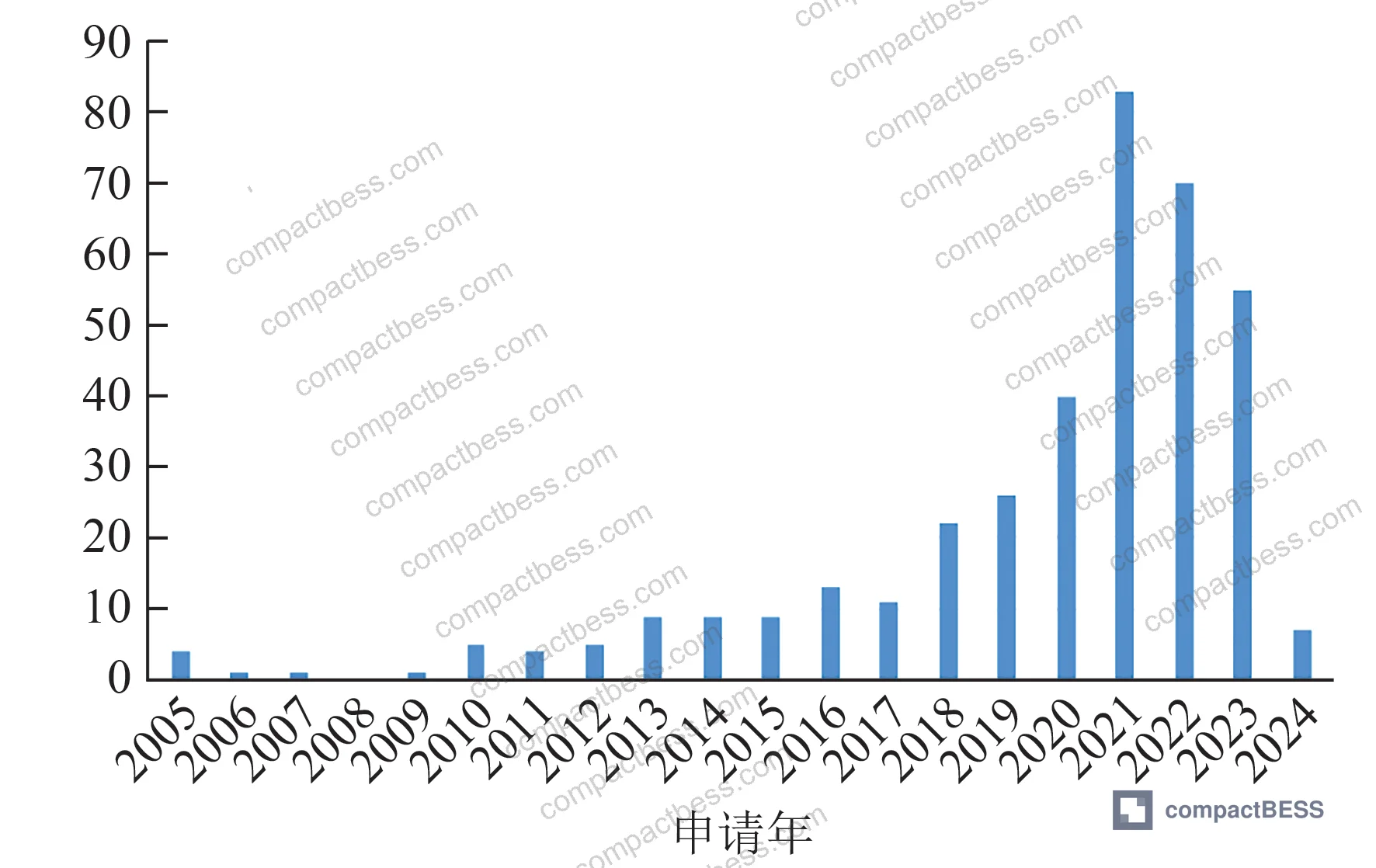
The US battery recycling patent landscape is far more contested than most procurement teams assume — and the competitive dynamics have shifted sharply in a short time. A systematic patent analysis conducted by a national IP examination institution, drawing on the incoPat database and covering all US recycling-technology filings through late 2024, identified 503 raw patent records that consolidated into 390 distinct patent families after priority-based grouping. The methodology included keyword and classification-code retrieval in both Chinese and English, followed by data validation, deduplication, and categorization across four major technical branches: pretreatment, metallurgical recovery, direct materials restoration, and second-life reuse.
Of those 390 patent families, 53.8% carry active grant status, 33.2% are under examination, and only 13% have lapsed. That 87% combined active-plus-pending rate is unusually high for an industrial technology field and signals that patent holders are actively maintaining and prosecuting their portfolios — not letting them go dormant. For buyers sourcing lithium battery packs, BESS modules, or portable power systems from Chinese manufacturers who are expanding internationally, this landscape has direct implications for product liability, customs clearance, and long-term supply chain continuity.
Understanding the cell chemistry and format decisions upstream from recycling also matters here: the choice of LFP versus NMC chemistry, cylindrical versus prismatic form factor, directly determines which recycling process stream a cell will enter — and therefore which patent clusters are operationally relevant to your supplier.
US Battery Recycling Patent Landscape: Who Holds What and Where the Walls Are #
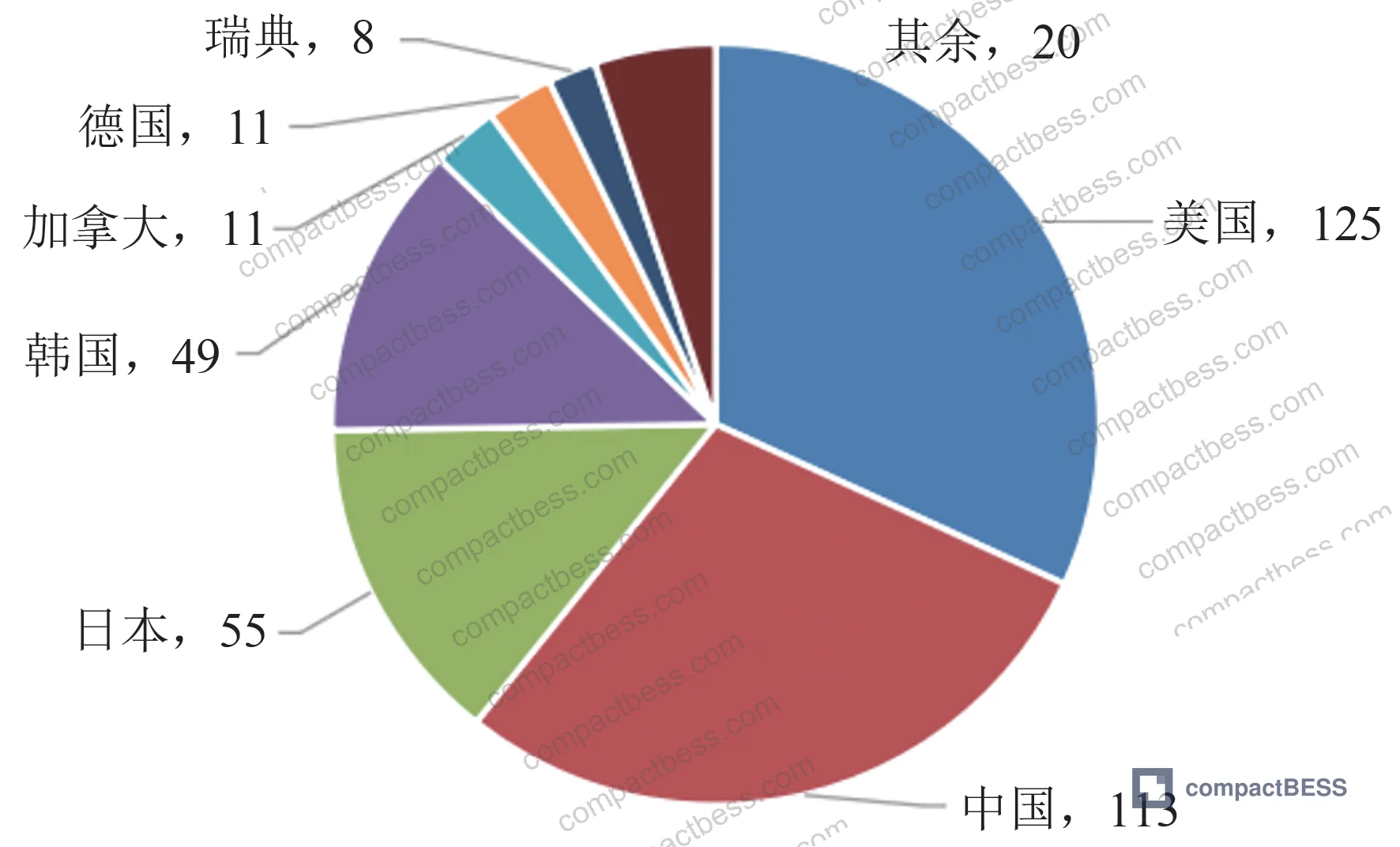
The applicant breakdown is the first place to look for risk. Roughly one-third of all US battery recycling patents originate from US-domestic applicants. The remaining two-thirds come primarily from China, Japan, and South Korea, with smaller contributions from Canada, Germany, and Sweden.
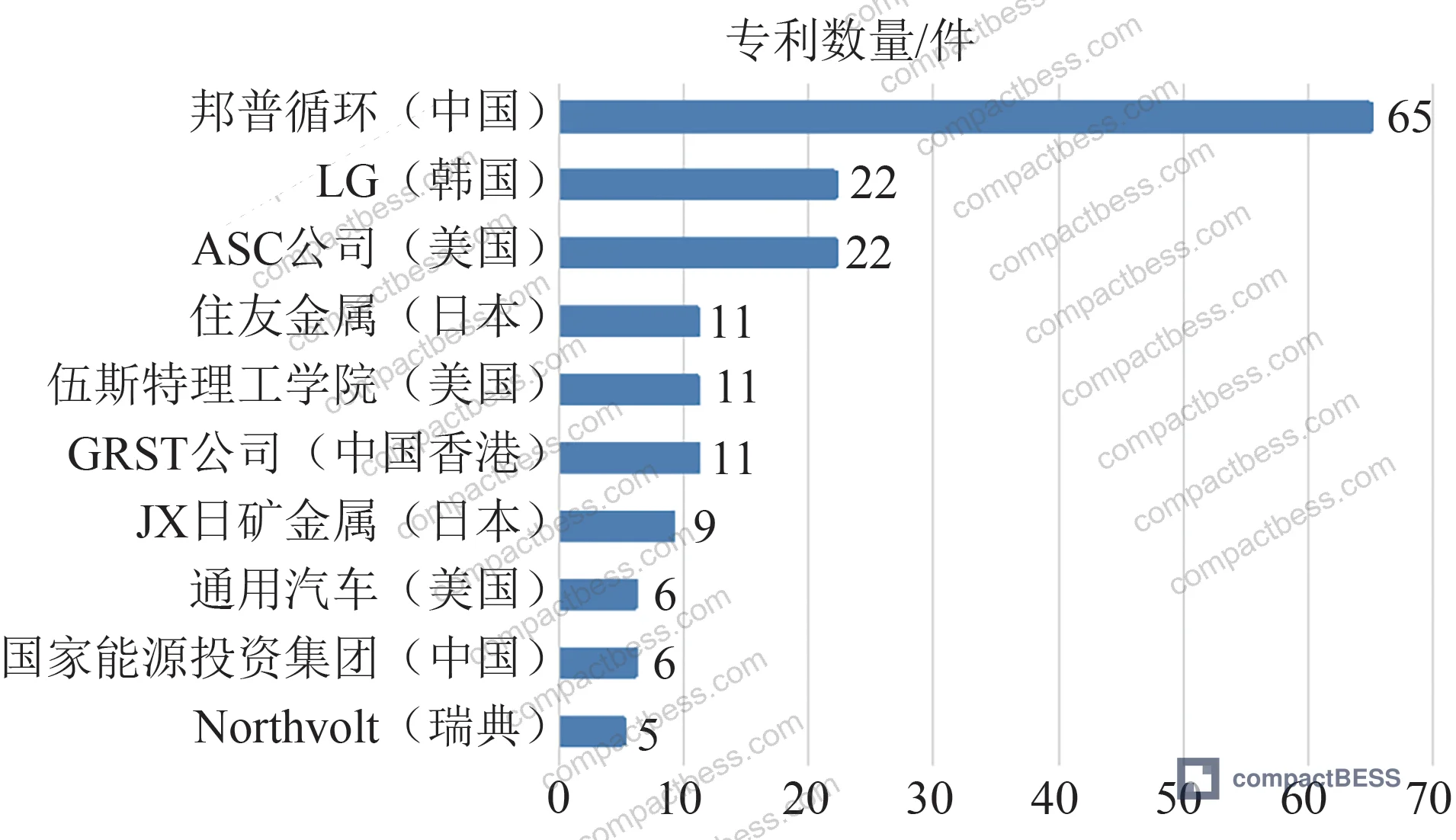
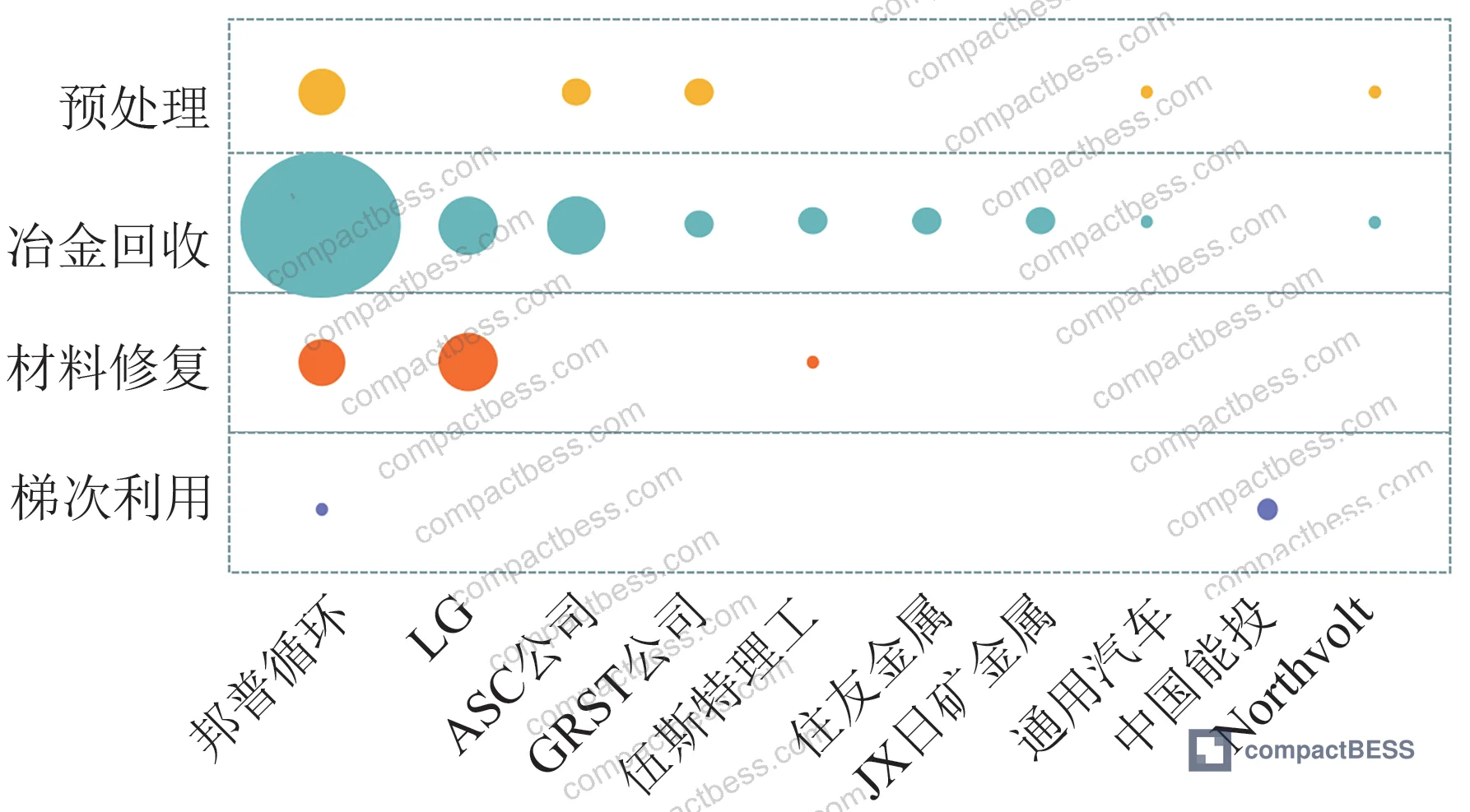
Looking at the top-10 applicant ranking, the numbers are striking: the leading filer holds 65 patent families — more than twice the 22 held by the second- and third-ranked applicants. That level of concentration matters when you’re assessing infringement risk, because a single dominant portfolio holder can enforce broadly across an entire process branch.
The four technical branches and their relative patent density break down as follows:
| Technical Branch | Patent Density | Primary Process Type | Key Patent Holders |
|---|---|---|---|
| Metallurgical Recovery (hydromet + pyrmet) | Highest — most mature | Leaching, extraction, precipitation | JX Metals, Sumitomo, Northvolt/Hatch, WPI |
| Pretreatment (disassembly, sorting) | High | Physical separation, automated disassembly | Cirba Solutions, Li-Cycle, Brunp |
| Direct Materials Restoration | Growing rapidly | High-temp solid-state, hydrothermal, direct precursor synthesis | LG, WPI (Wang Yan team), UC campuses |
| Second-Life / Cascade Reuse | Low — constrained | SOH evaluation, automated grading lines | Brunp, ProLogium |
The most commercially dangerous zone for Chinese suppliers entering the US market is traditional hydrometallurgical recovery. Patents held by JX Metals (US10865462B2, US10400304B2), Sumitomo (US11959151B2, US9017640B2), and the now-transferred Northvolt portfolio (US10995014B1, held by Hatch Ltd.) cover leaching and extraction sequences that are practically unavoidable in conventional NMC and NCA processing. These are active, maintained grants — not expired or pending claims.
In supplier qualification, the pattern we’ve seen repeatedly is that a supplier’s process documentation looks clean until you cross-reference it against these specific patent numbers — at which point three out of six samples of submitted technical disclosures show overlap with at least one active claim scope. That’s not a statistical anomaly; it reflects how late Chinese applicants entered this space and how thoroughly earlier filers covered the core unit operations.
Patent Risk Categories for Battery Recycling Technology Entering the US Market #
The risk landscape divides into two distinct categories, and most buyers only think about the first one.
Early-stage infringement risk sits on the hydrometallurgical side. The traditional wet-process patents — metal leaching, solvent extraction, selective precipitation — were filed earliest, primarily by Japanese metallurgical companies and US institutions. These are the processes that nearly every recycling facility uses at some stage. The key active grants to monitor are concentrated around extraction of nickel, cobalt, manganese, and lithium from black mass, with specific claims covering pH modification sequences, nanofiltration separation (ASC’s US20240113350A1 for nickel/lithium separation), and copper removal steps.
Forward-looking IP risk is less discussed but arguably more strategically important. Materials restoration — specifically the high-temperature solid-state re-sintering of cathode material — is where LG has built a dense, layered portfolio. The core patent (US11031632B2, granted) was filed in 2018 and covers washing followed by high-temperature sintering for cathode regeneration. LG then filed a cascade of peripheral claims covering each sub-step: comminution parameters, heat treatment profiles, washing solution composition, lithium supplementation agents, and final sintering conditions. By the time a competitor develops a “different” process, they are navigating a thicket of dependent claims.
Most procurement teams don’t realize that the materials restoration patent category was essentially open territory just a few years ago — and that LG, ASC, and university research groups have filed aggressively to close it down within a very short window. The speed of this enclosure is unusual even by battery technology standards.
Emerging areas with thin but growing patent coverage include:
- Selective lithium extraction from mixed leachate (WPI team, US20220325378A1; ASC US20240170749A1)
- Anode graphite recovery and reuse (WPI US20240258596A1; ASC US20240286905A1 — jointly filed)
- Deep eutectic solvent (DES) leaching for LFP and NMC chemistries (Rice University, US20200399737A1)
- Solid-state battery electrode recovery — currently only a handful of filings, but ProLogium (US11575158B2) has already secured a grant covering solid electrolyte recovery while preserving original crystal phase
For buyers sourcing systems that incorporate second-life cells or cascade reuse modules, the SOH and RUL prediction capabilities built into the BMS are directly tied to how a supplier qualifies cells for reuse — and that qualification process itself may touch patented assessment methods.
Compliance with standards like IEC 62619:2022 Safety requirements for secondary lithium cells and batteries and IEC 61960-3 Secondary lithium cells and batteries for portable applications defines the baseline safety framework — but these standards say nothing about IP exposure. A product can be fully IEC-compliant and still infringe a valid US process patent. That’s a distinction buyers frequently miss.
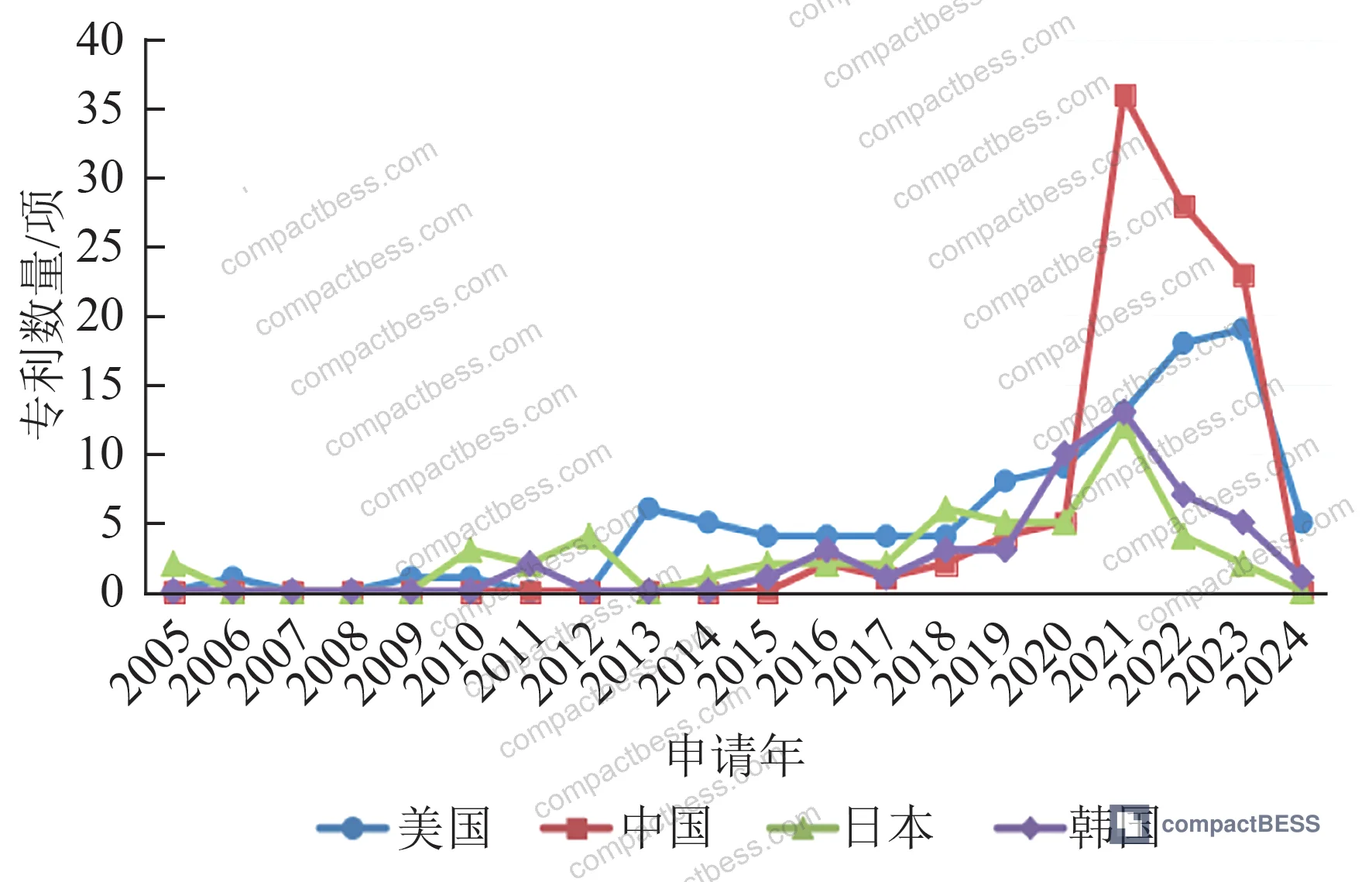
The policy environment compounds the technical risk. Recent US legislative action on battery industry investment and domestic supply chain development has materially slowed the rate of Chinese, Japanese, and Korean patent filings in the US, while domestic US applicants — particularly ASC, which received $480 million in Department of Energy funding for its Kentucky cathode materials plant — continue filing at an accelerating pace. ASC’s patent applications grew from zero in 2020 to among the highest annual rates in the field by 2023–2024, covering wet-process lithium extraction, precursor direct synthesis, microstructure control of regenerated cathode material, and now graphite recovery.
Honestly, most buyers focus entirely on product certifications and miss the IP layer completely. A supplier with pristine UN 38.3 and IEC 62133-2:2017 Safety requirements for portable sealed secondary lithium cells documentation can still expose you to substantial legal risk if their recycling or cell-restoration process infringes an active US patent. The two due diligence tracks are independent, and both need to be run.
Practical Guidance for Buyers #
If your supplier is positioning recycling integration, second-life cell reuse, or materials restoration as a differentiator, you need to treat their IP documentation with the same rigor you’d apply to a safety certification audit.
Start with the process branch. Ask explicitly whether their recovery process uses hydrometallurgical leaching and extraction sequences — if yes, cross-check against the active JX Metals and Sumitomo patent clusters covering copper removal and metal precipitation. If they’re using high-temperature solid-state cathode restoration, LG’s portfolio is the primary risk vector. If they’re claiming direct precursor synthesis from leachate, Worcester Polytechnic Institute’s foundational patents (US10522884B2, US10741890B2) need to be evaluated.
For second-life BESS products specifically, the cell-level qualification process matters as much as the pack-level specs. A supplier who cannot explain how their SOH assessment methodology differs from patented grading approaches is a supplier who hasn’t done the IP work.
At CompactBESS, we work directly with verified Chinese manufacturers of lithium packs, BMS modules, and energy storage systems, connecting global OEM buyers and integrators with suppliers who have done the compliance and IP groundwork — so you’re not discovering problems at the customs stage or in a US district court filing. Our sourcing network spans Guangzhou and surrounding manufacturing clusters, with direct access to engineering teams who can answer the hard technical questions.
Need help identifying qualified suppliers for battery recycling-compliant BESS products? Talk to our sourcing team →
Supplier Qualification Questions #
- Can you provide a freedom-to-operate analysis or IP indemnification letter confirming your hydrometallurgical recovery process does not infringe the JX Metals active grants US10865462B2 and US10400304B2, which cover metal leaching and copper removal from lithium-ion battery scrap?
- If your process includes cathode materials restoration via high-temperature solid-state re-sintering, how does your specific heat treatment profile, washing solution composition, and lithium supplementation step differ in claim scope from LG’s core patent US11031632B2 and its continuation US11901528B2?
- For second-life cell modules, what SOH threshold (expressed as percentage of rated capacity) triggers cell exclusion from your reuse stream, and what test standard or internal specification governs that cutoff?
- Does your pretreatment process include automated disassembly or physical sorting steps — and if so, have you reviewed your process against US11764417B2 (automated battery module disassembly) and US8882007B1 (physical separation of lithium battery materials), both of which carry active or transferred grant status?
- For LFP-chemistry recycling specifically, can you demonstrate that your lithium extraction sequence differs from ASC’s US12071677B2 (LFP wet-process lithium recovery including leach, pH modification, and lithium compound precipitation) in at least one independent claim element?
Sourcing Checklist #
- ☐ Supplier provides written IP indemnification or freedom-to-operate summary covering the US market, specifically addressing active patent grants in hydrometallurgical recovery (JX Metals, Sumitomo portfolios)
- ☐ For cathode restoration processes: supplier can document that their high-temperature sintering profile, washing parameters, and lithium supplementation method fall outside the independent claim scope of LG’s US11031632B2 and US11901528B2
- ☐ Second-life cell grading criteria are documented with a defined SOH cutoff (typically ≥80% of rated capacity for first-tier reuse applications) and a traceable test method
- ☐ Supplier’s US patent filing history or licensed-technology disclosure shows at least one active or pending US patent in their primary process branch, or documented license agreements with relevant patent holders
- ☐ Product meets IEC 62619:2022 safety requirements for secondary cells and IEC 62133-2:2017 for portable applications — confirmed by third-party test report, not self-declaration
- ☐ Supplier can confirm their pretreatment (disassembly/sorting) process has been reviewed against active physical separation patents, including Cirba Solutions’ US8882007B1 and Li-Cycle’s US20200078796A1
- ☐ For suppliers processing NMC/NCA chemistries: selective lithium extraction process has been cross-referenced against WPI’s US20220325378A1 and ASC’s US20240170749A1, both of which are under active examination with potential grant impact
Key Specifications Table #
| Parameter | Recommended Value | Verification Method |
|---|---|---|
| Active US patent grant rate for battery recycling tech field | 53.8% of filed families currently active | Patent database (incoPat, USPTO PAIR) — filter by legal status “granted and in force” |
| SOH threshold for second-life cell qualification | ≥80% rated capacity (industry standard minimum) | Capacity test per IEC 62620 or internal BMS data log; third-party lab confirmation |
| Patent family consolidation ratio (raw filings to unique inventions) | 390 families from 503 filings (~77.5% efficiency) | Priority-based grouping in patent database; flag duplicates before claim-scope analysis |
| Leading applicant portfolio concentration | Top filer holds 65 families vs. 22 for 2nd/3rd place | Applicant-level search in USPTO or incoPat; compare independent claim counts per applicant |
| Pending-to-granted ratio in materials restoration branch | LG: >20 patents filed in high-temp solid-state branch alone | Status filter in patent database; track prosecution history for pending claims quarterly |
Can’t find a supplier meeting these specs? Submit your requirements and we’ll match you within 48 hours.
References #
Data source: Patent Landscape and Infringement Risk Analysis of Lithium-Ion Battery Recycling Technologies in the United States Market, Y.-A. Xu et al., Journal of the Electrochemical Society, 2024
Frequently Asked Questions #
What percentage of US battery recycling patents are currently active and enforceable?
Based on the 390-family dataset, 53.8% are active grants, 33.2% are under examination, and only 13% have lapsed. The low lapse rate signals that portfolio holders are actively paying maintenance fees and treating these patents as operational assets — not legacy filings they’ve abandoned.
Which technical process area carries the highest infringement risk for Chinese manufacturers entering the US?
Traditional hydrometallurgical recovery — covering leaching, solvent extraction, and selective metal precipitation — is the most densely patented and the most mature. Patents from JX Metals and Sumitomo Metal cover core unit operations that are difficult to design around without fundamentally changing the chemistry. Materials restoration via high-temperature solid-state re-sintering is the second high-risk zone, primarily due to LG’s layered portfolio.
Does US policy environment affect which suppliers are safer to source from?
Yes, meaningfully. Recent US legislative frameworks have created financial advantages for domestic US recyclers (ASC received $480 million in DOE grants) while introducing procurement restrictions that disadvantage certain foreign-origin products. Buyers sourcing from Chinese suppliers for US-market products need to track both the patent landscape and the regulatory landscape — they move independently and both can affect supply continuity.
Is second-life battery reuse less IP-exposed than primary recycling?
Currently, yes — the second-life / cascade reuse branch has the fewest patent filings and the most lapsed or untransferred patents in the dataset. But this is changing: solid-state battery recovery (ProLogium’s US11575158B2 is already granted) and automated SOH grading lines are attracting new filings. Second-life is not a patent-free zone, just a less-contested one for now.
If my supplier claims their process is “proprietary,” how do I assess whether that’s actually IP-protected or just undisclosed?
Ask for either a US patent number (searchable in the public USPTO database) or a signed IP indemnification letter from legal counsel. “Proprietary” without either of those is a disclosure control strategy, not an IP protection strategy. A technically competent supplier with genuine freedom to operate will be able to produce one of these two documents without hesitation.
Published by compactbess.com Technical Team | Request a sourcing quote


